
























U.S. Army takes delivery of its first autonomous Black Hawk helicopter — and plans to retrofit hundreds more

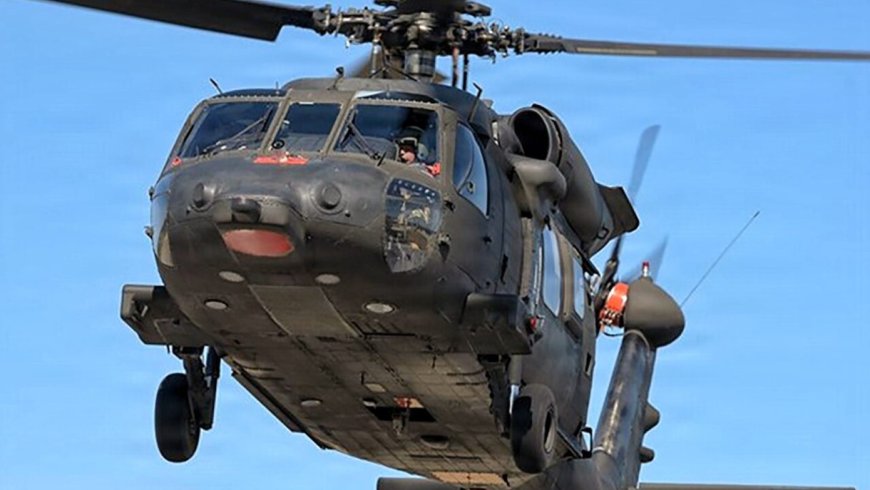
The U.S. Army has formally accepted its first optionally piloted Black Hawk helicopter — an aircraft capable of flying with a reduced crew or no crew at all. The handover marks what DARPA calls the “capstone achievement” of its multi-year Autonomous Flight Research program, translating laboratory milestones into a tangible military asset.
The H-60Mx can be operated from a tablet, and as early as 2022, a Black Hawk completed a fully unmanned flight with no safety pilots aboard. Now that the aircraft has moved from research into Army hands, the harder question begins: what does autonomous flight actually look like in real-world operations?
From DARPA lab to Army hangar: the H-60Mx arrives
The path from research demonstration to operational hardware took years. DARPA and Sikorsky developed the MATRIX autonomy system through sustained testing under the Assured Autonomous Systems for Long-range Operations (ALIAS) program, culminating in February 2022 when a Black Hawk completed a fully unmanned flight with no safety pilots aboard. That milestone validated the core technology. The formal handover of the H-60Mx to the Army now closes the research chapter entirely.
The practical implications are already visible. Last fall, a U.S. Army soldier used an autonomous helicopter to conduct logistics missions at a military exercise — the first operational use of the capability by a soldier. The tablet-based control interface Sikorsky developed makes that kind of hands-on use accessible without requiring specialized training infrastructure.
What the autonomy system actually does
The MATRIX technology at the heart of the H-60Mx isn’t designed to remove pilots from the equation entirely. The stated goal is to reduce the complexity of flying, enhance safety, and let pilots focus on higher-level mission tasks rather than managing routine aircraft functions.
The system supports a full spectrum of operation. A fully crewed aircraft can use MATRIX as a co-pilot assist, while a reduced crew can hand off more workload to the automation. In the right conditions, the aircraft can fly fully autonomously. That flexibility is central to its value — the same architecture adapts to different mission profiles without requiring a separate platform for each use case.
Advanced testing begins: what comes next
With the H-60Mx now in Army hands, the R&D phase is formally over. The aircraft transitions to Army Combat Capabilities Development Command (DEVCOM) for advanced operational testing — a meaningfully different environment than a controlled research program.
Over the coming months, test pilots and engineers will work through a structured validation process. Focus areas include ground-based control, autonomous performance in complex real-world scenarios, and how the technology can improve soldier safety and effectiveness. DARPA has also indicated that this next phase will integrate advanced mission-specific sensors and explore the operational flexibility that reduced-crew and fully autonomous configurations could provide. The shift from lab to field testing typically surfaces challenges that controlled demonstrations don’t. That’s precisely the point.
Scaling to hundreds of Black Hawks: the SAFE program
The H-60Mx isn’t just one aircraft — it’s the testbed for something considerably larger. The Army has designated it the primary platform for the Strategic Autonomy Flight Enabler, or SAFE, program. The goal is to develop a universal, scalable autonomy kit that could be installed across the Army’s entire fleet of hundreds of Black Hawks, and eventually folded into the design of future aircraft.
That ambition is backed by real investment. In August 2025, the Army awarded Sikorsky a $43 million contract covering engineering work that includes airframe enhancements, development of a digital backbone capability, and integration with launched effects. The Army has stated it plans to continue flying Black Hawks for decades, making fleet-wide modernization a practical priority rather than a distant aspiration.
What DEVCOM learns from the H-60Mx in testing will determine whether SAFE delivers on its promise. The single aircraft currently in Army hands is, in that sense, carrying a lot of weight.
A new model for military aviation
Officials have been careful to frame the H-60Mx handover not as a step toward replacing soldiers, but as a step toward augmenting them. Rich Benton, vice president and general manager of Sikorsky, described the delivery as furthering the Army’s vision to “mature and qualify pilot supported autonomy” — language that emphasizes human-machine teaming rather than full automation.
The Army’s own statement reinforced that framing. “The delivery of this first OPV Black Hawk is more than just a hardware handover,” the Army said. “It’s a tangible step toward a future where technology and soldiers work together in new and powerful ways to ensure mission success.”
That vision is embedded in the broader Army Transformation Initiative, which identifies pilot-supported autonomy as a core capability to develop. The ALIAS program’s capstone achievement is, by that logic, also a starting point. What to watch in the months ahead is whether operational testing validates the performance claims made during the research phase — and whether the SAFE program can translate a single prototype’s lessons into a kit scalable enough for an entire fleet. The Army’s autonomous aviation ambitions now rest on what happens in the field, not the lab.
What's Your Reaction?
 Like
0
Like
0
 Dislike
0
Dislike
0
 Love
0
Love
0
 Funny
0
Funny
0
 Angry
0
Angry
0
 Sad
0
Sad
0
 Wow
0
Wow
0