


























RISC Architecture? Is it still in use after 40 years
RISC Architecture? Is it still in use after 40 years

Article by John David Freeman
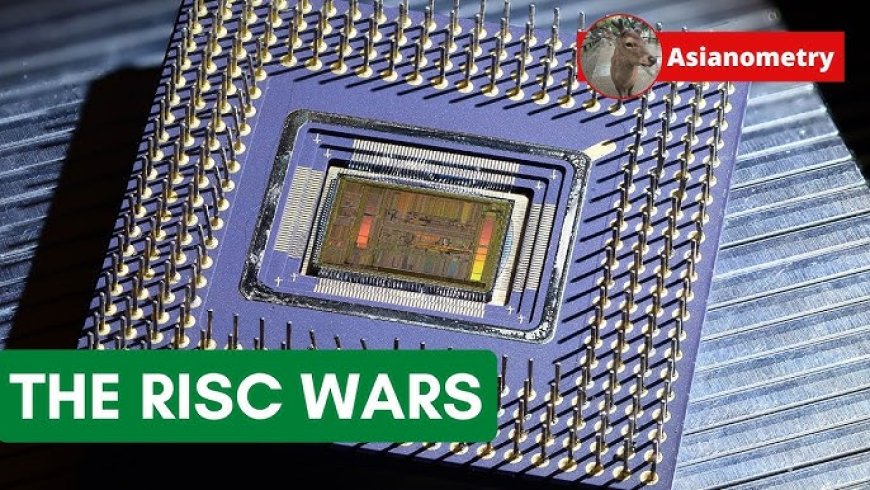
The "RISC Wars" refers to intense competition in the computer chip industry, primarily from the late 1980s to early 1990s, when various Reduced Instruction Set Computer (RISC) architectures vied for dominance against established CISC (Intel x86) chips. Key players like Sun (SPARC), MIPS, DEC (Alpha), and IBM (PowerPC) battled with performance benchmarks, while Intel ultimately retained desktop dominance through software compatibility, leading to a fragmented early RISC market.
The original RISC (Reduced Instruction Set Computer) CPU is generally considered to be the IBM 801, designed by John Cocke starting in 1975 and completed in 1980. It aimed to achieve high performance by using simple instructions executed in a single cycle. Other pioneering early RISC designs included the UC Berkeley RISC-I and Stanford MIPS.
Key Details of the First RISC CPUs:
IBM 801 (1980): Developed at IBM's Thomas J. Watson Research Center (building 801). While not immediately sold as a standalone computer, its principles informed later designs, including the IBM ROMP processor.
Berkeley RISC-I (1980): Developed by David Patterson and Carlo H. Séquin, this project coined the term "RISC".
Stanford MIPS (1981): Led by John L. Hennessy, this project emphasized compiler-led optimization to streamline the instruction set.
Philosophy: These projects rejected the trend of increasing CISC (Complex Instruction Set Computer) complexity, focusing on simple, hardwired instructions that allowed for efficient pipelining.
These foundational projects, emerging in the late 70s to early 80s, shifted computer architecture toward the efficient, high-performance designs common today
So in 2026. Is RISC architecture still used.
Yes, RISC (Reduced Instruction Set Computer) architecture is not only still used, but it dominates the modern computing landscape. It is the foundation of mobile devices (ARM processors), IoT, automotive systems, and high-performance, power-efficient systems like Apple’s M-series chips. Furthermore, the open-source RISC-V architecture is currently experiencing rapid growth in data centers and embedded systems.
Key Areas Where RISC is Used Today:
Mobile and Embedded Devices: Almost all smartphones and tablets use ARM (Advanced RISC Machine) architecture, which is a key RISC implementation.
High-Performance Computing: RISC architectures power some of the world's fastest supercomputers.
Apple Silicon: Apple's shift from Intel (CISC) to its own Apple Silicon (M1/M2/M3 chips) is a major move to RISC.
RISC-V (Open Source): An open-source RISC ISA is gaining massive traction, with over 10 billion cores shipped by 2022.
Modern Hybrid Approaches: While distinct RISC chips are prevalent, many modern CPUs (including Intel/AMD x86) blend principles, using RISC-like internal structures to improve efficiency.
Why RISC Remains Popular:
Power Efficiency: Simplified instruction sets require fewer transistors and lower power consumption, making them ideal for battery-operated devices.
High Performance: Increased register sets and parallelism allow for rapid execution of instructions.
Customization: The rise of RISC-V allows companies to create custom processors for specific tasks.
While CISC (Complex Instruction Set Computer) architectures like x86 remain strong in desktop computing, the world has heavily embraced RISC for its efficiency and speed in the modern era.
What's Your Reaction?
 Like
0
Like
0
 Dislike
0
Dislike
0
 Love
0
Love
0
 Funny
0
Funny
0
 Angry
0
Angry
0
 Sad
0
Sad
0
 Wow
0
Wow
0