




























In The Greek Islands, Divers Have Discovered More Than 50 Remarkably Preserved Artifacts from a Shipwreck Beneath the Seafloor

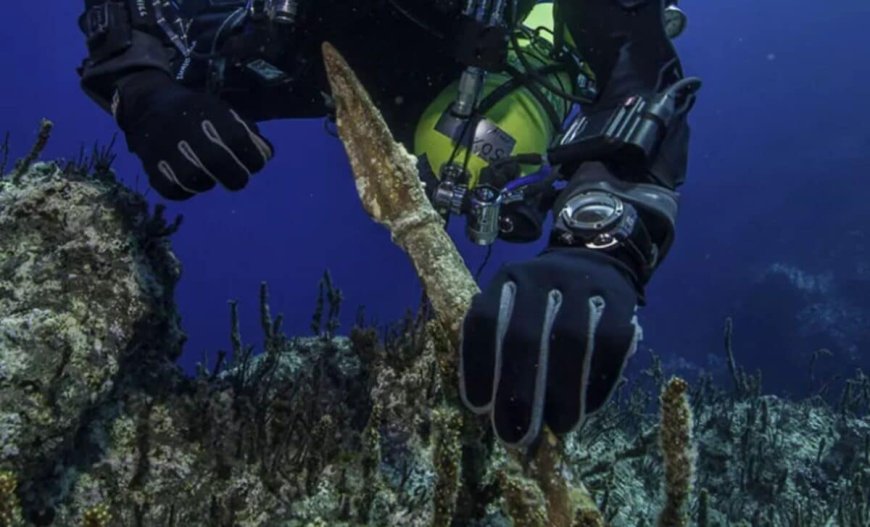
More than fifty new artifacts have been recovered from the famous Antikythera shipwreck. The finds range from luxury items to everyday objects, all preserved beneath the seabed for over two millennia. Discovered off a remote Greek island, the wreck continues to stand out as one of the richest underwater archaeological sites ever explored.
The wreck dates back about 2,050 years and has fascinated archaeologists for decades because of the scale and diversity of its cargo. The ongoing Return to Antikythera project, launched in 2014, focuses on carefully excavating what remains buried under layers of sediment.
The work is led by the Woods Hole Oceanographic Institution and carried out under the supervision of the Greek Ephorate of Underwater Antiquities.
A Dense Concentration Of Artifacts Beneath The Seabed
The Antikythera expedition marked a step forward in understanding the wreck. Divers spent around 40 hours on the seafloor, using specialized equipment to carry out controlled excavations. Based on a report published by Science, metal detectors revealed many buried objects spread across the site, confirming that a large part of the cargo is still hidden under the sediment.
Many of these items were recorded using 3D modeling both before and after recovery, which helps keep track of their exact position. Dr. Theotokis Theodoulou, a maritime archaeologist with the Ephorate of Underwater Antiquities of the Hellenic Ministry of Culture and Sports, explained that:
“We were very lucky this year, as we excavated many finds within their context, which gave us the opportunity to take full advantage of all the archaeological information they could provide.”

Among the discoveries were more than fifty artifacts, including a bronze armrest that may have belonged to a throne. Smaller finds such as nails, a possible utensil fragment, and a fragile bronze mass found next to a blue bead add to the overall picture.
Luxury Goods or Traces of Daily Life?
Archaeologists identified fragments of mosaic glass, clear glass vessels, and an ornate lagynos used as a table jug. According to Dr. Theodoulou, recovering objects in their original setting makes a real difference in understanding how they were used. Some finds feel more personal, like parts of a bone flute or a pawn from an ancient board game, hinting at moments of leisure during the journey. Other items include a stone statuette base and ceramics such as a Rhodian amphora neck with a stamped handle and a Koan demi-amphora.

Lab Analysis Tracks Origins
The team is also relying on scientific analysis to go further. Fifteen lead artifacts, including a large salvage ring and parts of anchors, were recovered for isotopic analysis. The researchers found that this could help identify where the lead was mined and possibly where the ship came from. At the same time, DNA samples were taken from wooden parts of the hull and from intact ceramic vessels.
Sediment samples were collected as well, with plans to study starch grains and phytoliths. These details may seem small, but they can reveal what the ship was carrying and even aspects of ancient diets.
“The 2015 expedition has left the team with the best understanding yet of this unique shipwreck and its cargo. A metal detection survey of the site revealed that metallic targets are dispersed over an area of about 40×50 meters. This is thought to match the wreck’s debris field, indicating the vast size of the ship that sank off the forbidding cliffs of Antikythera,” as mentioned in a press release avaliable on the Woods Hole Oceanographic Institution‘s website.
Enjoyed this article? Subscribe to our free newsletter for engaging stories, exclusive content, and the latest news.
What's Your Reaction?
 Like
0
Like
0
 Dislike
0
Dislike
0
 Love
0
Love
0
 Funny
0
Funny
0
 Angry
0
Angry
0
 Sad
0
Sad
0
 Wow
0
Wow
0