





























NASA Pulls Plug on Mars Mission, Leaving China to Chase Signs of Life

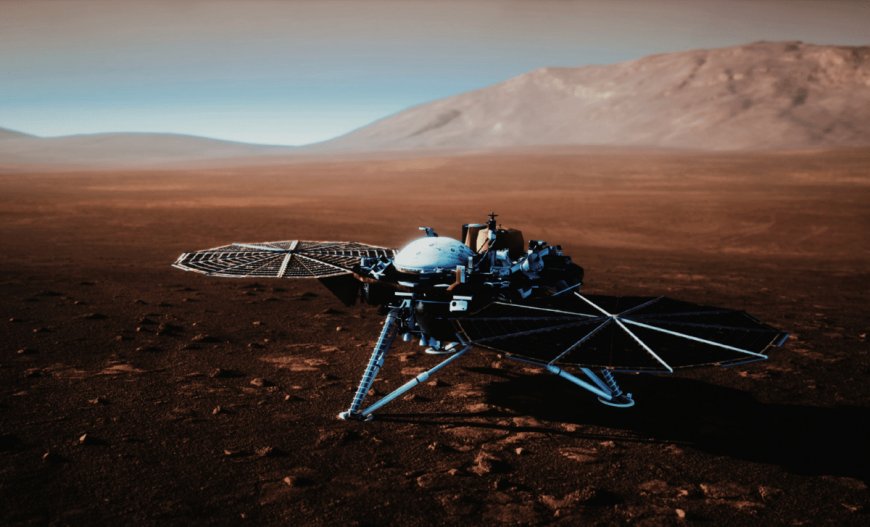
NASA’s ambitious plan to bring Martian soil and rock samples back to Earth has been officially scrapped. The decision marks a major turning point in interplanetary exploration, signaling that the United States might be stepping back from one of the most technically demanding space missions ever conceived. With NASA’s Mars Sample Return (MSR) project effectively dead, attention now shifts toward China, which could become the first nation to retrieve physical evidence of life or its traces from the Red Planet.
A Dream Deferred: NASA’s Mars Sample Return Canceled
For decades, NASA scientists envisioned the Mars Sample Return (MSR) mission as the next leap in planetary exploration. The plan was to retrieve geological samples collected by the Perseverance rover and bring them back to Earth for detailed analysis, a task that would confirm once and for all whether life ever existed on Mars. Yet, the mission has now been declared unviable after years of technical, logistical, and financial challenges.
Lawmakers made their position clear in a report released on January 6:
“The agreement does not support the existing Mars Sample Return (MSR) program,” lawmakers wrote in an accompanying report published on Jan. 6.
According to LiveScience, the MSR program’s ballooning costs, estimated to exceed $10 billion, coupled with long delays and interagency disputes, led Congress to cut its funding entirely. Without that backing, NASA cannot continue developing the complex series of missions needed to retrieve and transport Martian samples back to Earth.

NASA/JPL-Caltech
Scientific Disappointment and Political Fallout
The scientific community reacted with deep frustration. For many researchers, the cancellation is more than a budgetary issue; it represents a strategic retreat from decades of progress in planetary science. Dr. Victoria Hamilton, a leading scientist at the Southwest Research Institute and chair of NASA’s Mars Exploration Program Analysis Group (MEPAG), expressed her disappointment bluntly:
“It is difficult to understand how the cancellation of MSR is anything but an admission that returning samples from Mars is too hard for the United States,” Victoria Hamilton told Space.com on Jan. 12. “How do we expect to be successful at something orders of magnitude more ambitious and costly as the Moon to Mars program, where human lives are at stake?”
Her words highlight a growing concern within NASA and beyond: if the U.S. cannot manage an unmanned sample return mission, what does that mean for the agency’s Moon-to-Mars initiative, which aims to send astronauts to Mars within the next two decades?

Credit: NASA/JPL-Caltech/MSSS
China’s Advantage in the New Space Race
While NASA regroups, China’s space agency (CNSA) is moving swiftly forward with its Tianwen-3 mission, an ambitious plan to return Martian samples to Earth as early as 2031, potentially years before the U.S. could reassemble a similar program.
If successful, China would become the first nation in history to bring back material from another planet. That achievement could reshape global perceptions of leadership in space exploration. Beijing has steadily advanced its capabilities, from lunar landings to orbital space stations, and the cancellation of NASA’s MSR might open the door for China to claim the scientific prestige once expected to belong to the United States.
What This Means for the Future of Space Exploration
The end of the Mars Sample Return mission is not just a setback; it’s a strategic redirection for NASA. The agency must now decide whether to pursue smaller, more achievable projects or recommit to a grand, unified vision of interplanetary exploration.
The cancellation also raises a critical question: can spacefaring nations sustain complex, multibillion-dollar scientific programs in an era of tightening budgets and growing competition? The answer will define not just who reaches Mars first, but who controls the narrative of human exploration in the decades ahead.
Enjoyed this article? Subscribe to our free newsletter for engaging stories, exclusive content, and the latest news.
What's Your Reaction?
 Like
0
Like
0
 Dislike
0
Dislike
0
 Love
0
Love
0
 Funny
0
Funny
0
 Angry
0
Angry
0
 Sad
0
Sad
0
 Wow
0
Wow
0