




























This Solar Telescope Could Reveal Hidden Earth-Like Worlds Scientists Keep Missing

A new instrument developed by ESO is redefining how astronomers search for distant planets by turning our own Sun into a calibration tool, offering a breakthrough path to detect Earth-like worlds previously lost in stellar noise.
A Telescope Designed To Decode Stellar Noise
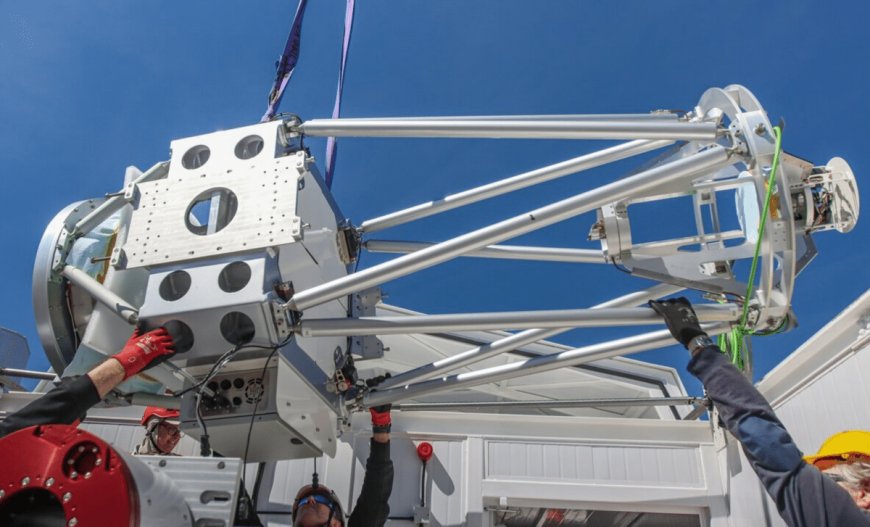
At the Paranal Observatory in Chile’s Atacama Desert, the newly operational Paranal Solar ESPRESSO Telescope (PoET) has achieved its first observations, marking a major step forward in exoplanet science. Unlike traditional telescopes that focus directly on distant stars, PoET looks inward, toward the Sun, to solve one of astronomy’s most persistent challenges: distinguishing real planetary signals from stellar interference. The project, developed under the direction of ESO, connects solar observations with one of the most precise spectrographs ever built, ESPRESSO, already known for detecting subtle variations in starlight.
The core issue lies in what astronomers call astrophysical “noise,” caused by stellar activity such as sunspots, flares, and surface turbulence. These phenomena distort the light emitted by stars, often mimicking or masking the signals of orbiting planets.
“One of the greatest challenges for the detection of other Earths orbiting other suns is the astrophysical ‘noise’ coming from the host stars,” explains Nuno Santos, Principal Investigator for PoET at the Institute of Astrophysics and Space Sciences and the University of Porto. “PoET observations could be key to the discovery and characterization of exoplanets, which may currently be hidden in the noise.”
By studying these effects on the Sun in unprecedented detail, scientists aim to build a reference model that can be applied to distant stars, effectively filtering out false signals and revealing hidden planets.

Image credit: ESO
Turning The Sun Into A Laboratory For Exoplanet Science
PoET’s design allows astronomers to observe the Sun in two complementary ways, making it uniquely suited for this task. Its primary 60-centimeter mirror can isolate and analyze specific regions of the solar surface, including individual sunspots, while a secondary instrument simultaneously captures light from the entire solar disk. This dual approach enables researchers to compare localized activity with the Sun’s overall spectral output in real time, offering a level of precision never achieved before in solar observations.
“We will be able to analyze very specific areas of the sun, with a very high resolution, in a way never done before,” says Alexandre Cabral, co-Principal Investigator from the University of Lisbon. By linking localized features like sunspots directly to changes in the Sun’s spectrum, researchers can quantify exactly how stellar activity distorts light signals. These findings are critical because similar distortions occur in other stars, often leading to false detections or missed planets. With PoET, the Sun becomes a controlled testing ground, allowing astronomers to refine their methods before applying them to distant systems where direct measurements are far more difficult.

ESPRESSO Expands Its Reach From Night To Day
A key strength of the project lies in its integration with ESPRESSO, the high-resolution spectrograph mounted on ESO’s Very Large Telescope (VLT). Traditionally used at night to study distant stars, ESPRESSO is now being utilized during the day through PoET, dramatically increasing its scientific output. This continuous operation bridges solar and stellar observations, creating a unified dataset that enhances the search for exoplanets.
“It is a great advantage to have ESPRESSO working in this way. By switching from the VLT at night to PoET during the day, we maximize the usage of this instrument to help us find and characterize exoplanets,” says Alain Smette, VLT Operations Staff Astronomer at ESO. “Thanks to the exceptional location of the Paranal Observatory, the number of available days when weather conditions are suitable for observations of the sun is expected to be very similar to that for nighttime observations.” This near-continuous observing capability allows scientists to gather consistent, high-quality data, accelerating progress in understanding stellar behavior and improving detection techniques.
First Light Marks The Beginning Of A New Detection Era
PoET recently completed its “first light” phase in early April, confirming that the system meets all operational requirements. Initial tests demonstrated its ability to capture detailed spectra from both the full solar disk and targeted surface regions, validating the concept behind the instrument. Over the coming weeks, the team will refine and optimize the system before transitioning into full scientific operations.
The project reflects a broad international collaboration, with key contributions from Portugal, Italy, and Chile. It is now operated remotely from the Centre for Astrophysics of the University of Porto, with all data processed through ESPRESSO and made available via the ESO Science Archive Facility. This open-access approach ensures that researchers worldwide can leverage PoET’s findings to improve exoplanet detection methods.
By transforming the Sun into a high-precision reference source, PoET may unlock a new generation of discoveries, revealing planets that have remained invisible until now, hidden within the noise of their own stars.
Enjoyed this article? Subscribe to our free newsletter for engaging stories, exclusive content, and the latest news.
What's Your Reaction?
 Like
0
Like
0
 Dislike
0
Dislike
0
 Love
0
Love
0
 Funny
0
Funny
0
 Angry
0
Angry
0
 Sad
0
Sad
0
 Wow
0
Wow
0