



























This Australian Fossil is So Well-Preserved, Scientists Can Even See What the Fish Ate!

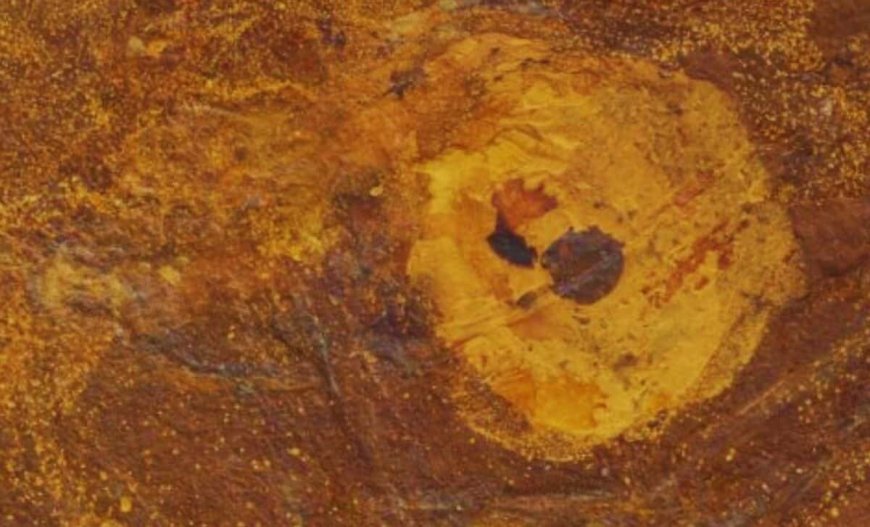
Paleontologists have made an exciting discovery with the uncovering of a 15-million-year-old fish fossil in the Australian desert. This extraordinary specimen, found in the renowned McGraths Flat fossil bed, revealing detailed information about the fish’s appearance, diet, and even the parasites it carried.
What makes this find particularly significant is that it marks the first time a vertebrate has been discovered at this fossil-rich site, which has yielded many remarkable specimens over the years. The fish, named Ferruaspis brocksi, was identified by paleontologist Jochen Brocks of the Australian National University, who praised the fossil’s remarkable preservation and its potential to shed light on ancient aquatic ecosystems.
A Rare Fossilization Process
Fossilization is a rare and often destructive process, requiring specific conditions for preservation. While bone preservation is more common, the preservation of soft tissue is incredibly rare. In McGraths Flat, however, the iron-rich goethite rock has allowed the preservation of delicate structures such as the fish’s skin, revealing remarkable details. Paleontologists were able to examine tiny, subcellular structures in the skin of the fish, known as melanosomes, which provide insight into the creature’s coloration.

According to Matthew McCurry from the Australian Museum Research Institute, this is the first time fossilized melanosomes have been used to reconstruct the coloration of an extinct fish species. The preservation of such fine details, right down to the fish’s last meal, makes this find even more extraordinary.
As stated by the researchers, the stomach contents reveal a diet primarily consisting of insects and small invertebrates, with the most abundant item being midge larvae.
An Unexpected Window into Ancient Life
The discovery is part of a larger effort to understand the ancient ecosystems that existed in Australia millions of years ago. At the time the fish lived, the region was a temperate, wet rainforest, an environment vastly different from the arid desert landscape that exists today. As McCurry noted, this find helps prove that life in Australia was once rich and abundant, even in what is now a dry and inhospitable region.
“The discovery of the 15 million-year-old freshwater fish fossil offers us an unprecedented opportunity to understand Australia’s ancient ecosystems and the evolution of its fish species.”
Prior to this research, published in Journal of Vertebrate Paleontology, the early stages of fish species like the Australian grayling and the Australian smelt were not well understood.
“But, without fossils it has been hard for us to tell exactly when the group arrived in Australia and whether they changed at all through time,” he said.

A Find That Keep on Giving
Along with the freshwater fish, various other specimens have been found, including plant life, insects, and even a bird feather. The area is a Lagerstätte, a site of exceptional fossil preservation that offers insights into life.
“The fossils found at this site formed between 11 and 16 million years ago and provide a window into the past.” he added, “They prove that the area was once a temperate, wet rainforest and that life was rich and abundant in the Central Tablelands.”
Jochen Brocks of the Australian National University, who made the initial discovery of the fish fossils, expressed awe at the stunning beauty of the specimens, describing them as “one of the most beautiful fossils” he had ever encountered.
Enjoyed this article? Subscribe to our free newsletter for engaging stories, exclusive content, and the latest news.
What's Your Reaction?
 Like
0
Like
0
 Dislike
0
Dislike
0
 Love
0
Love
0
 Funny
0
Funny
0
 Angry
0
Angry
0
 Sad
0
Sad
0
 Wow
0
Wow
0