


























Scientists Discover Massive 20,000-Year-Old Freshwater Reservoir off the East Coast Capable of Supplying NYC for 800 Years

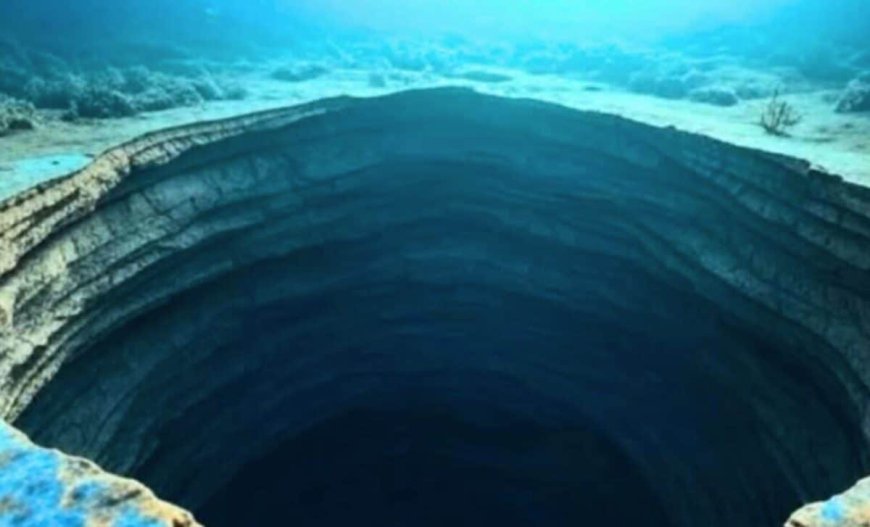
For sixty years, it sat in the archives as a geological oddity, a faint signal on aging USGS records suggesting something unexpected beneath the saltwater of the Atlantic. Fresh water, deep under the seafloor, off the coast of New Jersey. The data was fragmentary. The idea seemed counterintuitive. And for decades, no one pursued it.
Then, last summer, a drillship returned to those coordinates. What the team found buried hundreds of meters below the seabed, sealed beneath layers of clay and silt, was not a minor anomaly but a submerged system vast enough to supply a major metropolis for centuries. The confirmation has turned a Cold War–era footnote into one of the most consequential hydrological discoveries of the decaden and raised questions no existing regulations are equipped to answer.
The water has been sitting there since the last ice age. It is untouched by industrial contaminants. And it lies directly off one of the most densely populated coastlines in the United States, beyond any state’s jurisdiction and beneath waters governed by no framework for freshwater extraction.
Expedition 501
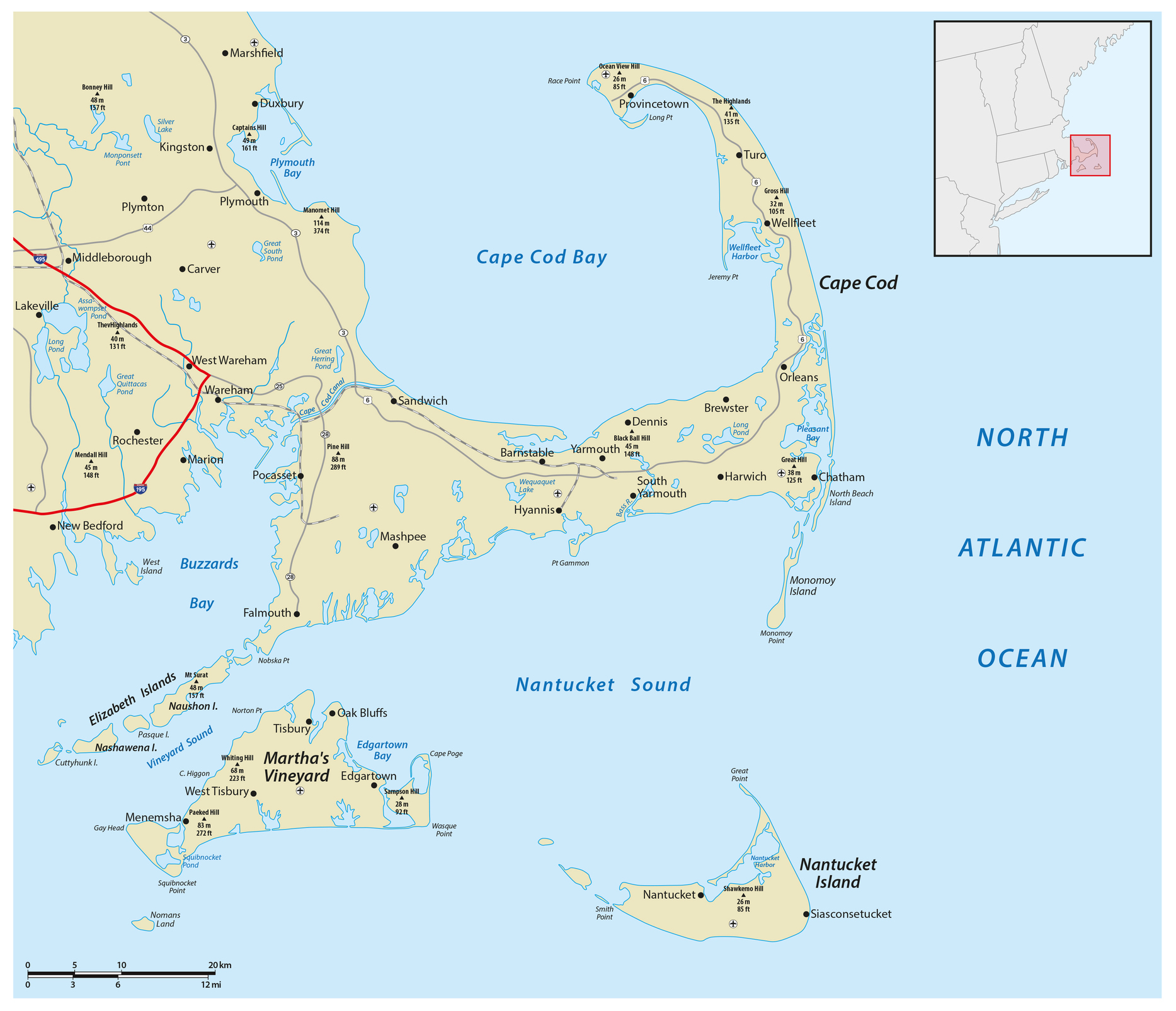
Between May and August 2025, an international team aboard the liftboat L/B Robert drilled three test holes off the coast of Massachusetts, targeting locations near Martha’s Vineyard and Nantucket. The operation, designated IODP³-NSF Expedition 501 , retrieved more than 13,000 gallons of water from as deep as 400 meters below the seafloor. The samples confirmed a massive reservoir of low-salinity water, trapped by an impermeable cap of clay and silt that isolates it from the ocean above.
Salinity varied by distance from shore. At the site closest to Nantucket, the water registered one part per thousand—within the safe limit for drinking. At the outermost site, salinity reached 17 to 18 parts per thousand, roughly half that of typical seawater. Expedition co-chief scientist Brandon Dugan , a professor of geophysics at the Colorado School of Mines, described the significance: “We were excited to see that freshened water exists in multiple kinds of sedimentsn both marine and terrestrial. Freshened water in such different materials will help us understand the conditions that emplaced the water.”
The expedition culminated work that began two decades earlier. In 2003, Dugan and Mark Person published a study in the Geological Society of America Bulletin modeling how glacial meltwater could have been forced into coastal sediments during the last ice age. Dugan explained the origins of the project in a detailed interview with Live Science following the expedition’s return: “It was quite the project and sort of a lifelong dream.”
Trapped Since the Pleistocene
The leading hypothesis, supported by preliminary isotopic and noble gas analyses, points to the last glacial maximum roughly 20,000 years ago as the formation period. At that time, sea levels were significantly lower, exposing the continental shelf. Massive ice sheets covered the region, and the immense weight of the glaciers forced meltwater deep into the underlying sediments. When the ice retreated and sea levels rose, the ocean inundated the land, capping the freshwater-charged aquifers with layers of marine clay that have preserved them ever since.

Dugan explained the current thinking: “We kind of ruled out the large topography for New England, because we don’t have big mountains next to the coast. There might be a rainfall component blended in the glacier water. You can imagine that in front of a glacier you have rainfall, so it’s probably a mixed system.”
The sealing mechanism proved critical to the reservoir’s preservation. Dugan described the process: “We have a seal at the top that keeps the seawater above from the fresh water below. Whatever emplaced that water didn’t care if there was a seal. There was enough energy to flush it with fresh water.”
A Contaminant-Free Anomaly
One of the most consequential aspects concerns water quality. Because the reservoir has been isolated for millennia, it predates the industrial era and the proliferation of synthetic contaminants that plague many groundwater sources. René Price, a professor at Florida International University, told Newsweek: “If the freshwater in this undersea aquifer is hundreds or thousands of years old, it would be expected to be free of those industrial age contaminants.”

However, isolation carries its own implications. Holly Michael, director of the Delaware Environmental Institute and a member of the scientific team, offered a more cautious assessment: “I suspect that the water is not suitable for drinking as it is, as it has had time for the rocks to actually dissolve into it, so it likely has high concentrations of solutes.” She noted that established treatment processes exist to address mineral content.
The Laws Don’t Exist Yet
The reservoir lies entirely within the U.S. Exclusive Economic Zone, the waters between three and 200 nautical miles from shore where the federal government holds sovereign rights over resources. But those rights have never been exercised for freshwater. No federal statutes or regulations address the extraction of sub-seabed aquifers. There are no permitting processes, no environmental review frameworks, and no precedents for how such extraction would interact with existing laws governing offshore drilling.
Dugan addressed this gap: “As these resources are offshore and in federal waters or exclusive economic zones, we need to develop policies and procedures for water rights and management in a way we have not had to do before.” The science has moved faster than the governance. The resource exists. The technology to reach it exists. The legal architecture to decide whether and how to use it does not.
What Pumping Would Require
Even if the policy questions were resolved, significant technical unknowns remain. Accurately estimating the reservoir’s total volume requires detailed modeling of porosity, sediment composition, and hydraulic connectivity across a formation that may stretch from offshore New Jersey to Maine. Those variables are still being evaluated through post-expedition analysis at the Bremen Core Repository in Germany, where scientists are studying pore space and microbial data to refine their understanding.
The mechanics of extraction present further challenges. Conventional groundwater pumping cannot be directly translated to a marine setting. Any withdrawal would need to account for the risk of sediment collapse, saltwater intrusion from above, and disturbance to benthic ecosystems. The holes drilled during Expedition 501 were designed to be temporary; Dugan noted: “When we’re done drilling and we pull our equipment out, the holes collapse back in and seal themselves up.” Commercial extraction would require permanent infrastructure with consequences never modeled at this scale.
Enjoyed this article? Subscribe to our free newsletter for engaging stories, exclusive content, and the latest news.
What's Your Reaction?
 Like
0
Like
0
 Dislike
0
Dislike
0
 Love
0
Love
0
 Funny
0
Funny
0
 Angry
0
Angry
0
 Sad
0
Sad
0
 Wow
0
Wow
0