



























Saturn’s Moon Enceladus Reveals Hidden Giant Electromagnetic Web

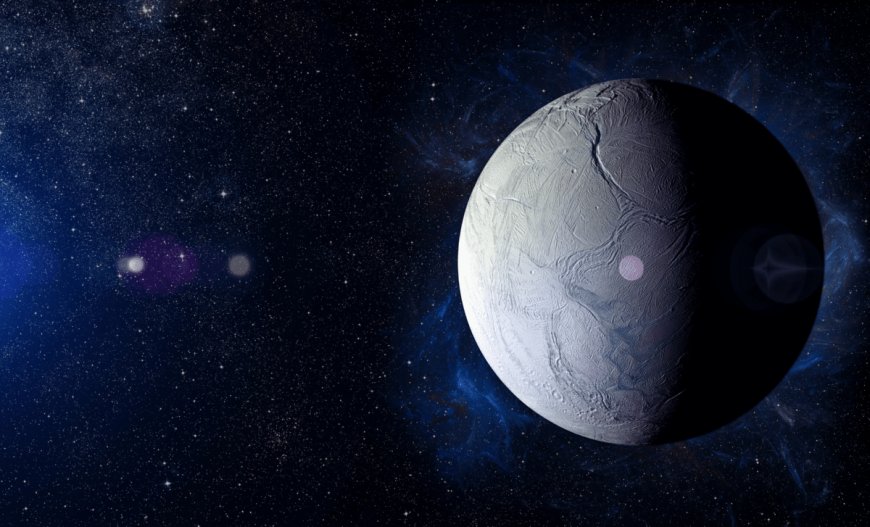
Enceladus, one of Saturn’s smallest moons, has long fascinated scientists with its icy surface and mysterious geysers. Recently, a surprising discovery revealed that this tiny moon wields a massive electromagnetic influence, far exceeding expectations. Thanks to data from NASA’s Cassini spacecraft, researchers uncovered that the moon’s water plumes are not only a source of intrigue but also key to generating vast electromagnetic waves that stretch across hundreds of thousands of kilometers. This new understanding opens exciting doors for studying planetary systems and their interactions, both in our solar system and beyond.
Enceladus: A Tiny Moon with Massive Electromagnetic Reach
Enceladus, with a diameter of only 500 kilometers, is one of Saturn’s smallest moons. Despite its modest size, recent research reveals that Enceladus exerts an influence that stretches across distances of over 500,000 kilometers, far beyond its physical reach. This newfound electromagnetic power comes from the interaction between the moon’s water geysers and Saturn’s powerful radiation environment. When these geysers erupt, they release charged particles, creating a plasma that interacts with Saturn’s magnetic field. This phenomenon generates Alfvén waves, which are like vibrations traveling along the magnetic field lines. These waves travel in all directions, reflecting back and forth, creating a complex electromagnetic web.
The scale of these waves is astonishing. Researchers were initially surprised to find that the Alfvén waves didn’t just dissipate after reaching Saturn. Instead, they reflected and continued to travel, forming a lattice-like structure of crisscrossing electromagnetic waves. As Thomas Chust, co-author of the study from the Laboratoire de Physique de Plasmas (LPP), explains:
“This is the first time such an extensive electromagnetic reach by Enceladus has been observed.” This discovery highlights how a small moon can have a much larger influence on its surrounding space environment than previously thought.

Alfvén Waves: The Key to Enceladus’ Electromagnetic Influence
The study found that the Alfvén waves generated by Enceladus are not just simple waves; they form a dynamic, ever-changing system. The waves travel from Enceladus through Saturn’s magnetosphere, reflecting off the planet’s ionosphere and plasma torus, an area of charged particles that encircle the moon’s orbit. Each reflection of these waves creates new ripples, which build on one another to create a complex and interconnected network of electromagnetic structures.
What makes this discovery, published in the Journal of Geophysical Research: Space Physics, so significant is the scale and complexity of the system. Unlike typical waves, which dissipate after a single reflection, the Alfvén waves around Enceladus create a continuous cycle of energy flow, stretching across vast distances. This allows the moon to act as a “planetary-scale Alfvén wave generator,” circulating energy and momentum across Saturn’s space environment. As Thomas Chust puts it, “The findings demonstrate that this small moon functions as a giant planetary-scale Alfvén wave generator, circulating energy and momentum throughout Saturn’s space environment.”

How Enceladus’ Electromagnetic Web Affects Saturn’s Space Environment
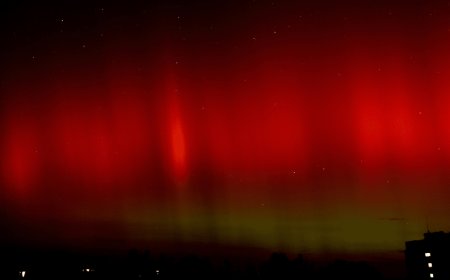
The impact of these electromagnetic waves extends far beyond Enceladus itself. The waves interact with Saturn’s ionosphere, producing auroras that have been linked to the presence of the moon. These auroras are a visual manifestation of the energy being transferred between the moon and Saturn’s atmosphere. The waves also play a crucial role in shaping the dynamics of Saturn’s magnetic field, influencing the movement of charged particles and contributing to the planet’s overall space weather.
By studying these electromagnetic interactions, scientists can gain insights into similar systems in our solar system. For example, Jupiter’s moons, Europa, Ganymede, and Callisto, are also known to interact with the planet’s magnetic field in similar ways. Understanding the behavior of these systems, especially in the case of Enceladus, could lead to new discoveries about how moons interact with their parent planets. This research also has implications for exoplanetary systems, where moons around distant planets may exhibit similar electromagnetic behaviors.
Enjoyed this article? Subscribe to our free newsletter for engaging stories, exclusive content, and the latest news.
What's Your Reaction?
 Like
0
Like
0
 Dislike
0
Dislike
0
 Love
0
Love
0
 Funny
0
Funny
0
 Angry
0
Angry
0
 Sad
0
Sad
0
 Wow
0
Wow
0