

























NASA Successfully Flies First Laminar Flow Scaled Wing Design

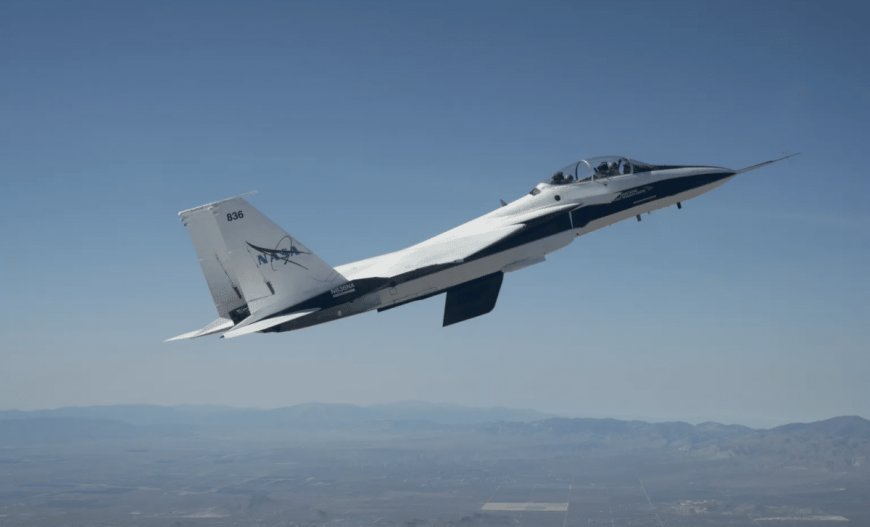
NASA successfully conducted the first flight of a new wing design that could pave the way for more fuel-efficient commercial aircraft. Published on NASA’s official website, the article “NASA Completes First Flight of Laminar Flow Scaled Wing Design” highlights the agency’s innovative efforts to enhance laminar flow technology, which could significantly reduce drag and improve fuel economy. This test is a critical step in developing more sustainable aviation technologies.
The CATNLF Wing: A Revolutionary Design
NASA’s new wing technology, known as the Crossflow Attenuated Natural Laminar Flow (CATNLF), aims to revolutionize aerodynamics by maintaining smooth airflow over aircraft wings, a key factor in reducing drag. The CATNLF wing is a scale model, designed with advanced aerodynamics to improve laminar flow on large, swept-back components like wings and tails. This is particularly significant because laminar flow can drastically reduce the fuel burn of aircraft, leading to major cost savings in the aviation industry. The concept behind this technology has been developed through years of research, wind tunnel tests, and advanced computer simulations.
During the test flight, which took place on January 29 at NASA’s Armstrong Flight Research Center in California, the new wing was attached to the underside of an F-15B research jet. The flight lasted about 75 minutes, during which the NASA team ensured the safe operation of the aircraft with the additional wing model.
“It was incredible to see CATNLF fly after all of the hard work the team has put into preparing,” said Michelle Banchy, research principal investigator for CATNLF. “Finally seeing that F-15 take off and get CATNLF into the air made all that hard work worth it.”
The flight’s success marked a milestone in NASA’s aeronautical research, proving that the technology works as expected and demonstrating its potential for future applications in commercial aircraft design.

Credit: NASA/Carla Thomas
The First Flight Test: Key Objectives and Results
The main objective of the first flight was not to evaluate the performance of the wing model in high-speed maneuvers, but to test its behavior in flight. According to Michelle Banchy,
“First flight was primarily focused on envelope expansion. We needed to ensure safe dynamic behavior of the wing model during flight before we can proceed to research maneuvers.”
This cautious approach ensured that the aircraft remained stable and safe while carrying the new wing, allowing researchers to gather important data for future tests.
The flight took place at altitudes ranging from 20,000 to 34,000 feet and involved a series of basic maneuvers, including turns, steady holds, and gentle pitch changes. These maneuvers provided the team with valuable insights into the aerodynamic characteristics of the new wing, confirming that the technology works as expected. The data gathered during the flight, including measurements of laminar flow, will be used to refine the design further and validate its potential for future aircraft designs.
The Potential Impact on Commercial Aviation
One of the most exciting aspects of this breakthrough is the potential impact it could have on the commercial aviation industry. By reducing drag through improved laminar flow, the CATNLF technology has the potential to significantly reduce fuel consumption and operational costs for airlines.
“CATNLF technology opens the door to a practical approach to getting laminar flow on large, swept components, such as a wing or tail, which offer the greatest fuel burn reduction potential,” Banchy explained.
This reduction in fuel consumption could lead to lower ticket prices for passengers, as airlines would be able to pass on the savings from decreased fuel costs. Additionally, the environmental impact of aviation could be reduced, contributing to global efforts to lower carbon emissions. Given the increasing pressure on industries to reduce their environmental footprint, innovations like the CATNLF wing could play a crucial role in making air travel more sustainable.
Enjoyed this article? Subscribe to our free newsletter for engaging stories, exclusive content, and the latest news.
What's Your Reaction?
 Like
0
Like
0
 Dislike
0
Dislike
0
 Love
0
Love
0
 Funny
0
Funny
0
 Angry
0
Angry
0
 Sad
0
Sad
0
 Wow
0
Wow
0