



























Tropical peatland fires had been fading for over a thousand years, then the 20th century pushed them to levels not seen in two millennia

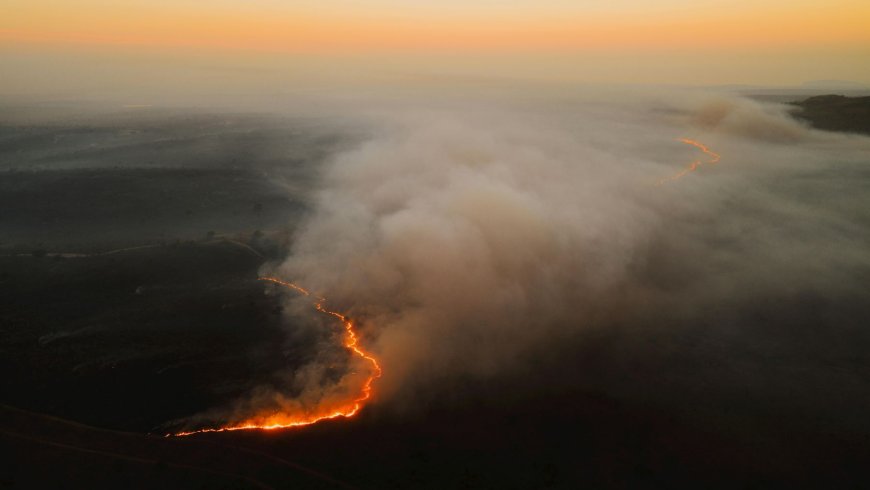
Beneath the world’s tropical wetlands lies a carbon archive built over thousands of years — peat deposits so vast they store more carbon than all the planet’s forests combined. For most of recorded history, fires in these ecosystems were declining, slowly and steadily, shaped by natural shifts in climate.
Then something broke the pattern.
A new study, drawing on ancient charcoal records from four continents, found that tropical peatland fires had been retreating for over a millennium — until the 20th century, when they surged to levels unseen in 2,000 years. What changed, and why these particular ecosystems, is the question the data now forces researchers to answer.
Ancient charcoal, modern answers
To understand why peatland fires surged, researchers had to look far beyond the reach of satellites or weather stations. The team examined charcoal preserved in peat deposits across Central and South America, Africa, Southeast Asia, and Australasia. Peat accumulates in layers over centuries, so the charcoal embedded within it functions as a record of past burning events — preserving fire history that no instrument ever captured.
This approach allowed the team to reconstruct wildfire patterns spanning more than 2,000 years. Published in Global Change Biology and led by Dr. Yuwan Wang at the University of Exeter, the study drew on peat core data from multiple continents, making it one of the most geographically comprehensive fire reconstructions of tropical peatlands attempted to date.
A millennium of decline, then a sudden reversal
What those cores revealed wasn’t what researchers expected. For over 1,000 years, fire activity in tropical peatlands had been declining — and that decline tracked closely with natural climate conditions, particularly the severity and duration of droughts. Global temperature shifts and other natural variables were the dominant forces shaping when and where peat burned. That pattern held consistently across the entire record.
Then, in the 20th century, it collapsed.
Wildfire activity surged to levels unprecedented in the 2,000-year dataset — not a gradual drift, but a sharp departure from the climate-driven rhythm that had governed these ecosystems for centuries. The natural drivers that had shaped peatland fires for a millennium could no longer account for what was happening.
Where fires surged — and where they didn’t
The geographic distribution of the data is where the human signal becomes difficult to dismiss. The most dramatic increases occurred in Southeast Asia and parts of Australasia — regions where peatlands have been heavily drained, cleared, and converted for agriculture and development over the past century.
When peat soils are drained, they dry out. Dried peat is far more susceptible to ignition than waterlogged peat, which resists burning almost entirely. Land-use practices that strip away the moisture buffer effectively prime these ecosystems for fire.
More remote peatlands in South America and Africa told a different story. Those regions, less affected by intensive land conversion, largely maintained patterns closer to the long-term historical baseline. Where human intervention has been most intensive, fires have increased most sharply; where human presence remains limited, older patterns persist. That distinction points to land use, rather than climate, as the dominant modern driver.
A carbon time bomb beneath the surface
The consequences extend well beyond the peatlands themselves. These ecosystems store more carbon than all the world’s forests combined — carbon accumulated over centuries and millennia of slow organic decomposition. When peat burns, that stored carbon is released rapidly into the atmosphere, compressing what nature took thousands of years to sequester into a matter of days or weeks.
Tropical peatland fires are a meaningful amplifier of global warming, not merely a symptom of it. Each fire event releases a pulse of carbon that feeds back into the climate system, potentially raising the likelihood of future droughts and, with them, future fires.
Dr. Wang cautions that regions currently showing lower fire rates may not stay protected. As populations expand and agriculture pushes into South America and Africa, peatlands there could face the same pressures that have already reshaped Southeast Asia. The absence of a spike in those regions today reflects their relative remoteness — not any inherent resistance to the pattern seen elsewhere.
“To avoid large carbon emissions that further contribute to global warming, we urgently need to protect these carbon-dense ecosystems,” Dr. Wang said. Meaningful reductions in peatland burning, the study notes, would require conservation, sustainable resource management, and ecosystem restoration — carried out collaboratively and at a scale large enough to matter.
What the record now demands
The 2,000-year charcoal record has answered one question clearly: the surge in tropical peatland fires isn’t a continuation of natural variability. It’s an anomaly — a break from a millennium-long trend, concentrated precisely where human land use has been most intensive.
What comes next depends largely on choices not yet made. The peatlands of South America and Africa represent an early warning: ecosystems still largely intact, still tracking closer to historical norms, but potentially standing at the same threshold that Southeast Asia crossed decades ago. Whether they follow the same trajectory will depend on how land development proceeds in the coming decades — and whether the lessons preserved in ancient charcoal are acted upon before the pattern repeats.
What's Your Reaction?
 Like
0
Like
0
 Dislike
0
Dislike
0
 Love
0
Love
0
 Funny
0
Funny
0
 Angry
0
Angry
0
 Sad
0
Sad
0
 Wow
0
Wow
0