



























Treasure Hunter Who Refused to Reveal Location of Shipwreck’s 500 Gold Coins Is Released After 10 Years in Prison

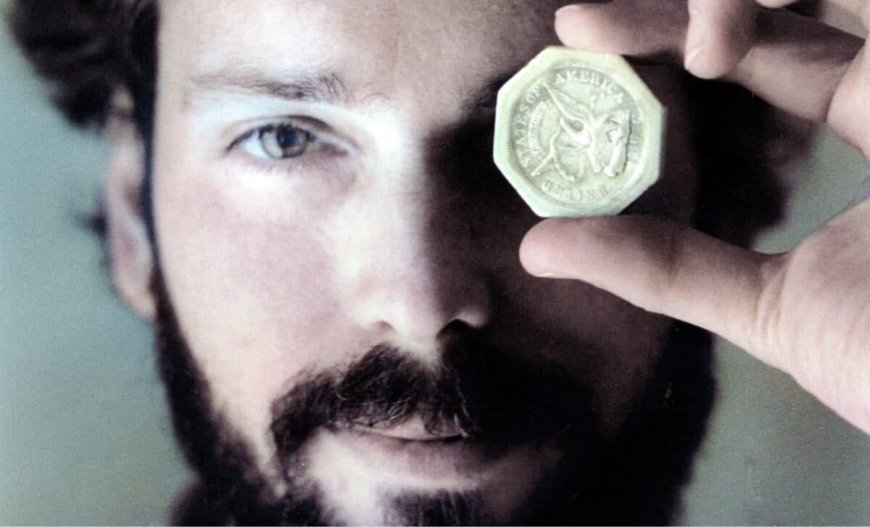
Tommy Thompson walked out of federal prison, ending one of the strangest custody battles tied to a treasure hunt in modern American history. For years, the engineer who helped find the S.S. Central America had been locked in a legal fight that outlasted the celebration over his discovery and reshaped the story around it. By the time he was released, the man once praised for deep-sea recovery work had become better known for a question the courts never managed to close.
That question followed Thompson longer than the Atlantic expedition that made him famous. The prison term was not the usual ending for someone tied to a shipwreck recovery, and it was not driven by a fresh treasure find. It grew out of a dispute that kept circling back to property already recovered, sold, and fought over in court.
Long before Thompson disappeared into that legal maze, the wreck itself had already earned a name that carried its own drama. The S.S. Central America, often called the Ship of Gold, sank in September 1857 after running into a hurricane off the Carolina coast. The ship was carrying passengers, crew, and a huge cargo of gold moving east from San Francisco at a moment when the U.S. economy was already under severe strain.
A Shipwreck Tied to a Financial Panic
The timing made the loss far larger than a maritime disaster alone. The Library of Congress notes that the major financial catalyst for the Panic of 1857 came on August 24, 1857, when the New York branch of the Ohio Life Insurance and Trust Company failed. The sinking of the S.S. Central America followed only weeks later, sending one more shock through a country already gripped by fear over money, credit, and collapsing confidence.
When the S.S. Central America went down, 425 people died, and thousands of pounds of gold vanished with them. That loss helped turn the wreck into a legend long before anyone had the tools to reach it. For more than a century, the cargo sat on the seafloor as both a historical symbol and a practical mystery of where all that Gold Rush wealth had gone.
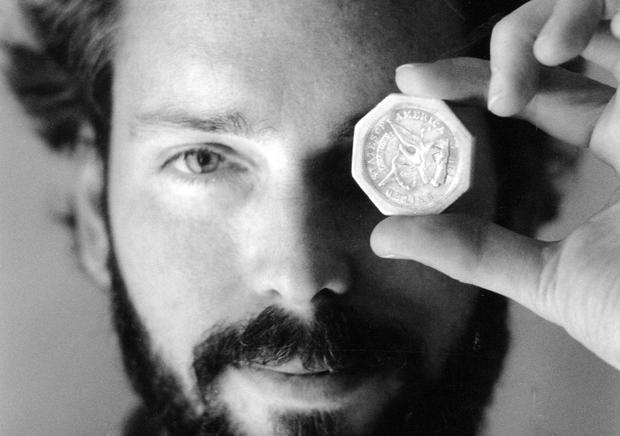
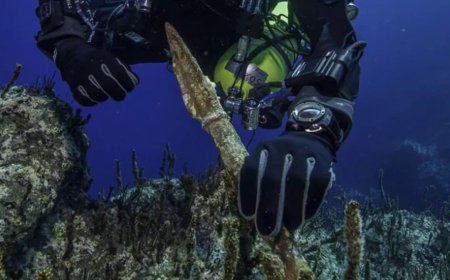
Then, in 1988, Thompson and the Columbus-America Discovery Group found the wreck more than 7,000 feet (2.13 km) below the Atlantic surface. The recovery became one of the most closely watched deep-sea operations of its era because it produced what many searchers had chased for generations: coins, bars, and ingots linked directly to the California Gold Rush. For a time, Thompson looked less like a defendant than a technical pioneer who had solved a problem the ocean had kept sealed since the 1850s.
Where the Treasure Story Changed
The turn came years later, after investors said they had not been paid what they were owed from the treasure recovery. Reporting cited by CBS News says those investors sued in 2005, arguing they never received their share from about $50 million in recovered gold sales. The court fight did not center on whether Thompson had found the wreck. It centered on what happened to proceeds and to a cache of coins that authorities and investors wanted produced.
By 2012, Thompson had missed a court appearance and gone on the run. He was arrested in 2015 in Florida after living under an assumed name, and the case took on a new identity: no longer just a shipwreck dispute, but a prolonged standoff over what he would disclose. At the center of that standoff were 500 gold coins, valued at about $2.5 million, that remained unaccounted for.

For years, Thompson told the court he could not give the answer it wanted. According to recent AP and CBS News reporting, he said the coins had been placed in a trust in Belize and that he no longer controlled them. Judges were unconvinced, and what followed became a rare confinement saga in which Thompson spent nearly a decade in custody while still refusing, or claiming he was unable, to provide the missing information.
The Prison Term Ended, but the Question Did Not
That is what made the release so unusual. The underlying question had never been fully resolved, yet Thompson was no longer in prison. Earlier reporting showed that Judge Algenon Marbley concluded continued confinement was no longer likely to force an answer, after which Thompson served a separate two-year sentence tied to skipping the 2012 hearing before finally leaving custody this month.
Even after Thompson left prison, the wreck’s gold kept proving how much value still clings to the S.S. Central America name. In 2019, Numismatic News reported that five of the six top lots in Heritage Auctions’ Long Beach sale were ingots from the wreck. The leading piece, a 174.04-ounce Harris, Marchand & Co. ingot, sold for $528,000, part of a sale that topped $11 million.

The biggest prices came from even larger bars. Heritage Auctions sold a Justh & Hunter ingot weighing 866.19 ounces (32.74 kg) on January 14, 2022, for $2,160,000, describing it as the largest Justh & Hunter ingot recovered and the largest S.S. Central America ingot ever offered at auction. That sale showed how the wreck continues to move through a second life, not on the ocean floor but through catalogs, collectors, and public fascination.
The Gold Still Outlived the Case
Some pieces drew attention long before that 2022 auction. In 2001, SFGATE reported that an 80-pound bar known as Eureka sold for $8 million. That ingot was made by Kellogg & Humbert, not Justh & Hunter, and its sale showed that relics from the S.S. Central America could become prize objects in their own right, separate from the court battles surrounding Thompson.
That is what gives the story its unusual shape now. Thompson is out of prison, but the 500 gold coins that defined his later years are still missing. Nearly 169 years after the S.S. Central America sank, the wreck is still producing two kinds of value at once: gold that keeps reaching the auction block, and a mystery the courts never fully solved.
Enjoyed this article? Subscribe to our free newsletter for engaging stories, exclusive content, and the latest news.
What's Your Reaction?
 Like
0
Like
0
 Dislike
0
Dislike
0
 Love
0
Love
0
 Funny
0
Funny
0
 Angry
0
Angry
0
 Sad
0
Sad
0
 Wow
0
Wow
0