



























Trapped in Lava for 44 Million Years, A Lost Tropical Island Resurfaces from the Atlantic, and This Nation Moves to Seize It

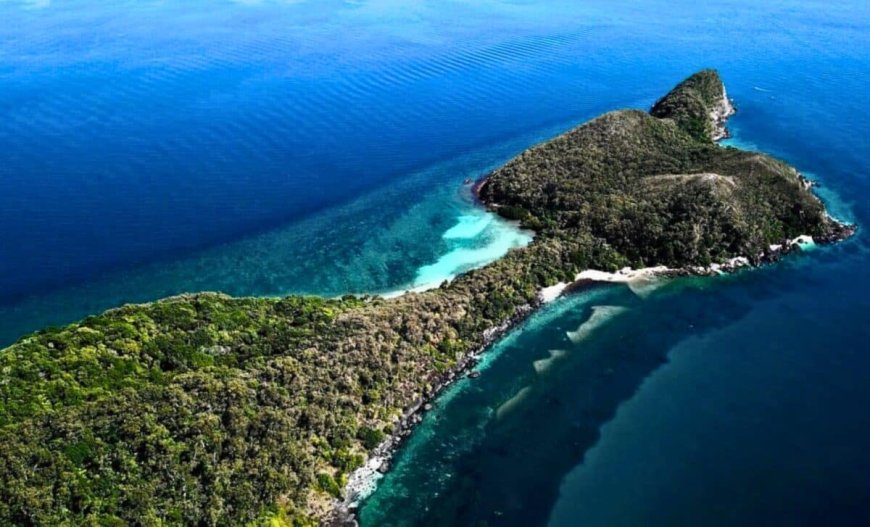
A vast underwater plateau off the coast of Brazil was once a tropical island covered in red soil and lush vegetation. That discovery is now fueling a high-stakes battle over minerals critical for electric vehicle batteries.
Scientists have confirmed that the Rio Grande Rise, a massive submerged feature in the South Atlantic, stood above sea level as a tropical island for millions of years before sinking beneath 650 meters of water. The evidence comes from red clay recovered from the seafloor, which could only have formed through prolonged exposure to air and rain.

The clay has a chemical weathering index of 93 out of 100. That level of alteration does not happen underwater or through transport from distant continents. It happens when volcanic rock sits in a warm, humid environment and gets broken down over vast stretches of time.
What the Red Clay Actually Tells Us
The research, published in Scientific Reports in November 2023, came from a collaboration between the University of São Paulo and the UK’s National Oceanography Centre. During deep-sea expeditions aboard the RRS Discovery and the Brazilian research vessel Alpha Crucis, the team dredged up samples of reddish-brown clay sandwiched between horizontal lava flows.
Those lava flows date to the Eocene epoch, roughly 44 million years ago. The clay trapped between them contains kaolinite, hematite, and goethite. These are minerals that form through intense chemical weathering in tropical conditions. According to lead researcher Luigi Jovane of the University of São Paulo, the clay’s position and mineral composition confirm it formed in place when the island was above sea level.

The team also found that the lava erupted in phases. Periods of volcanism were followed by long pauses during which erosion and soil formation occurred. That pattern is well documented in large continental volcanic provinces like India’s Deccan Traps. But this is the first time it has been observed on a submerged oceanic plateau.
Brazil’s Claim and the Minerals at Stake
The scientific discovery has quickly drawn geopolitical attention. Brazil has formally requested an extension of its continental shelf to include the Rio Grande Rise. This would give the country sovereign rights over the seabed and its resources.
The area is believed to hold significant deposits of tellurium, nickel, cobalt, and lithium. These minerals are essential for green energy technologies, including electric vehicle batteries. If Brazil secures access, it could become a major player in the global supply chain for those materials.

But the claim faces substantial legal hurdles. The Rio Grande Rise currently lies in international waters under the jurisdiction of the International Seabed Authority (ISA) , a United Nations body that regulates deep-sea mining. To win territorial rights, Brazil must prove the rise is a natural extension of its continental shelf, not an independent geological feature.
The Deep-Sea Environmental Catch
The ISA requires extensive environmental impact studies before approving any seabed mining operation. Brazil has begun those assessments, but researchers caution that the deep-sea ecosystems on the rise remain poorly understood.
“You have to know how this will affect animals, fungi, and corals,” Jovane said in an interview. Scientists are dealing with ancient marine systems that have evolved in isolation for millions of years. Rushing into extraction could disturb habitats that have never been studied.
The Rio Grande Rise today sits about 1,200 kilometers off Brazil’s southeastern coast. At its peak during the Eocene, the island likely stood between 180 and 2,000 meters above sea level. Over time, tectonic subsidence slowly pulled it back beneath the waves. It was eventually buried under layers of marine sediment and volcanic ash.
So, What’s Next
The Brazilian government’s request will likely take years to resolve through the ISA and the United Nations. Meanwhile, the same red clay that proved the island once existed is now central to an international debate about resource rights, environmental protection, and the future of green energy supply chains.
The Rio Grande Rise remains submerged. But its rediscovery has already changed how scientists understand oceanic plateaus and how nations view the seabed.
Enjoyed this article? Subscribe to our free newsletter for engaging stories, exclusive content, and the latest news.
What's Your Reaction?
 Like
0
Like
0
 Dislike
0
Dislike
0
 Love
0
Love
0
 Funny
0
Funny
0
 Angry
0
Angry
0
 Sad
0
Sad
0
 Wow
0
Wow
0