


























The Theology of Endless War.

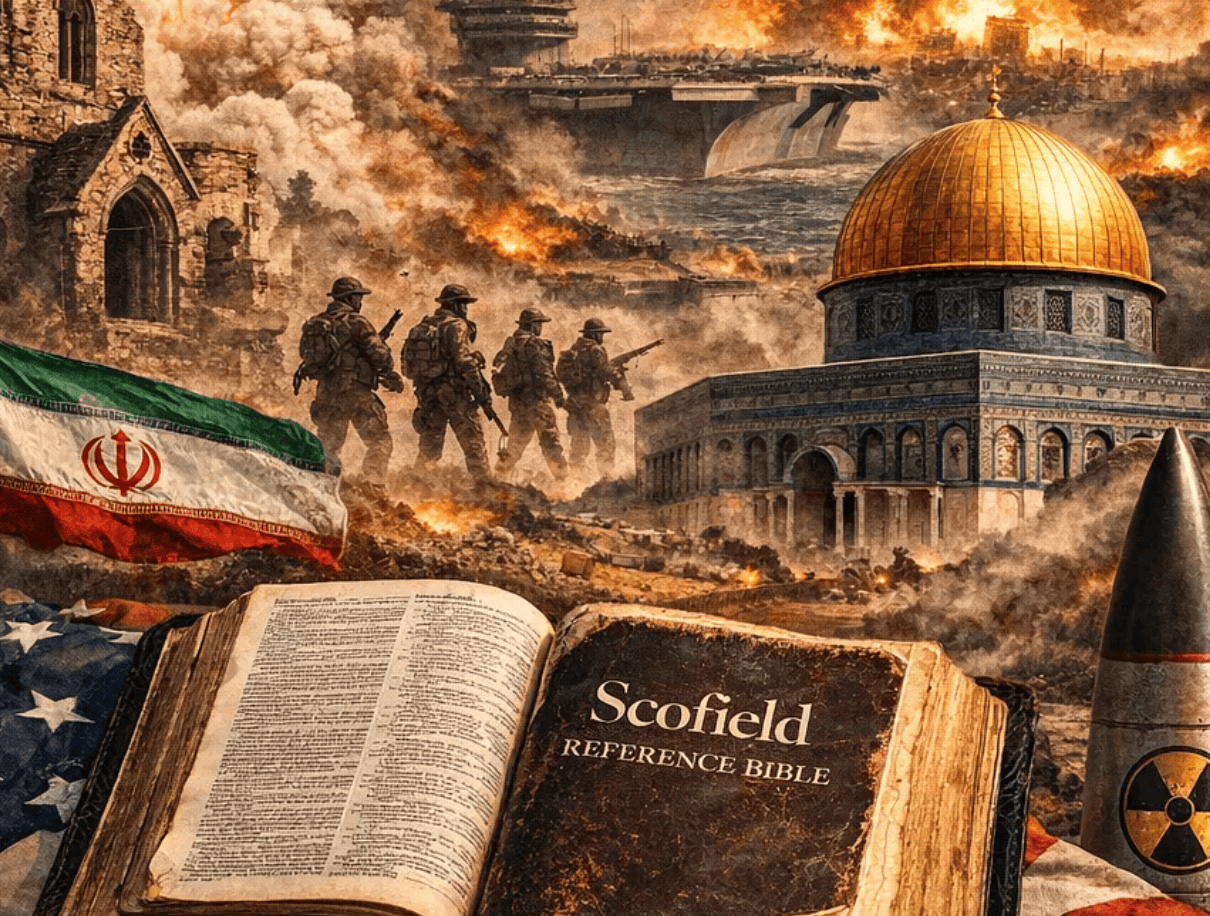 From Plymouth to Persia — How Dispensationalism Brought Us to the Brink
By John Mappin
There are many explanations offered for the present crisis — oil, power, geopolitics, history, revenge. All of them are, in their way, true. And yet all of them are secondary.
For beneath the machinery of statecraft — beneath the speeches, the sanctions, the missiles and the moral posturing — lies something far more potent, and far more dangerous:
A theology.
Not Christianity as it has been understood for nearly two millennia. But a modern construct — systematised, exported, industrialised — and, ultimately, weaponised.
To understand how we have come within inches of nuclear war with Iran, one must begin not in Tehran… nor in Washington…
…but in Plymouth.
The Birth of a Doctrine: The Plymouth Brethren
In the early 19th century, a small and austere Christian movement emerged in Britain: the Plymouth Brethren.
It was here that John Nelson Darby, an Anglo-Irish clergyman of formidable intellect and rigid conviction, began to articulate a new reading of scripture — one that would fracture Christian theology and, in time, reshape geopolitics.
Darby’s central innovation was deceptively simple, yet utterly transformative:
He divided history into distinct “dispensations” — epochs in which God interacts with humanity according to different rules.
More importantly, he separated Israel from the Church — insisting that the Jewish people retained a unique, prophetic role that must be fulfilled in history.
This was no longer theology as moral guidance.
It was theology as timeline.
A script.
A schedule.
And crucially — an unfinished one.
From Doctrine to Distribution: The Scofield Bible
Ideas alone do not change the world.
Distribution does.
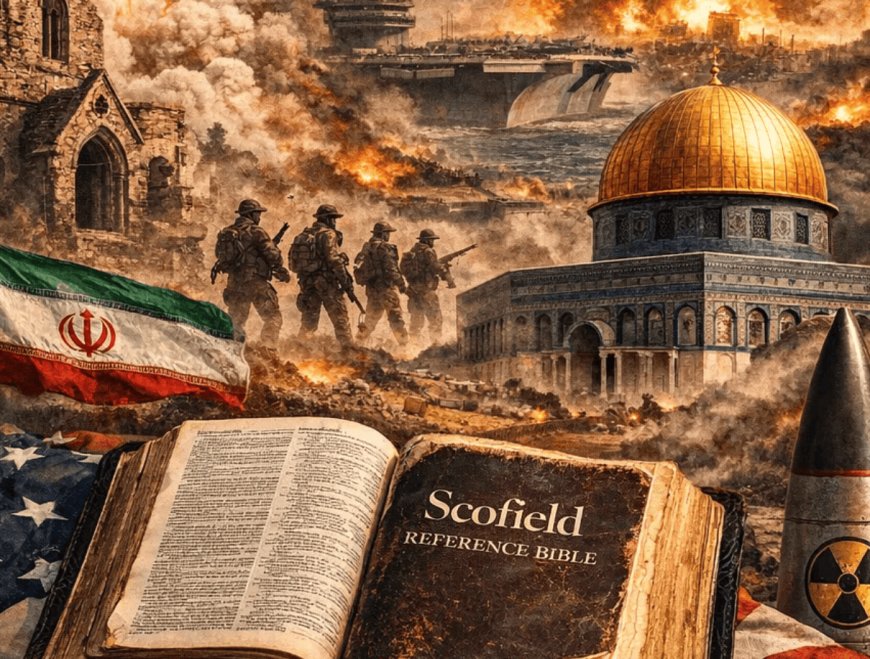
Enter the Scofield Reference Bible, first published in 1909 by Cyrus I. Scofield — a text that did something unprecedented.
It embedded Darby’s dispensational framework directly into the biblical text itself, through annotations and cross-references that gave interpretation the authority of scripture.
For millions of readers, the distinction vanished.
The notes became the Word.
And the Word became a roadmap.
Through seminaries, churches, and eventually mass media, the Scofield Bible spread this framework across the United States with extraordinary success.
By the mid-20th century, a significant portion of American evangelical Christianity had absorbed — often unknowingly — a worldview in which:
• Israel’s restoration was prophetically required
• Middle Eastern conflict was inevitable
• Global crisis was a precursor to divine intervention
In short:
History was not to be guided — but fulfilled.
The Americanisation of Prophecy
As the United States rose to global dominance, it did not merely export democracy, capitalism, or culture.
It exported belief.
Dispensationalism, once a niche theological system born in British dissent, became an American political force.
Through televangelism, political lobbying, and the emergence of the Christian Right, it embedded itself within the bloodstream of public life.
This gave rise to Christian Zionism — not as a fringe idea, but as a powerful electoral reality.
A worldview in which:
• Support for Israel is not strategic, but sacred
• Opposition to Israel is not political, but heretical
• Conflict in the region is not tragic, but prophetic
Politicians, ever attuned to the currents beneath them, adapted accordingly.
Not always consciously.
Not always cynically.
But inevitably.
From Jerusalem to Tehran: The Logic of Escalation
Once one accepts the premises of dispensationalism, the logic unfolds with chilling clarity:
If Israel must be central to the end-times narrative…
If conflict in the region is foretold…
If great war precedes divine resolution…
Then tension is not something to defuse.
It is something to expect.
Perhaps even to facilitate.
And so the political posture hardens:
• Diplomacy becomes delay
• De-escalation becomes denial
• War becomes, quietly, the unfolding of destiny
Iran, in this framework, is not merely a nation-state.
It is a character in a script.
From Plymouth to Persia — How Dispensationalism Brought Us to the Brink
By John Mappin
There are many explanations offered for the present crisis — oil, power, geopolitics, history, revenge. All of them are, in their way, true. And yet all of them are secondary.
For beneath the machinery of statecraft — beneath the speeches, the sanctions, the missiles and the moral posturing — lies something far more potent, and far more dangerous:
A theology.
Not Christianity as it has been understood for nearly two millennia. But a modern construct — systematised, exported, industrialised — and, ultimately, weaponised.
To understand how we have come within inches of nuclear war with Iran, one must begin not in Tehran… nor in Washington…
…but in Plymouth.
The Birth of a Doctrine: The Plymouth Brethren
In the early 19th century, a small and austere Christian movement emerged in Britain: the Plymouth Brethren.
It was here that John Nelson Darby, an Anglo-Irish clergyman of formidable intellect and rigid conviction, began to articulate a new reading of scripture — one that would fracture Christian theology and, in time, reshape geopolitics.
Darby’s central innovation was deceptively simple, yet utterly transformative:
He divided history into distinct “dispensations” — epochs in which God interacts with humanity according to different rules.
More importantly, he separated Israel from the Church — insisting that the Jewish people retained a unique, prophetic role that must be fulfilled in history.
This was no longer theology as moral guidance.
It was theology as timeline.
A script.
A schedule.
And crucially — an unfinished one.
From Doctrine to Distribution: The Scofield Bible
Ideas alone do not change the world.
Distribution does.
Enter the Scofield Reference Bible, first published in 1909 by Cyrus I. Scofield — a text that did something unprecedented.
It embedded Darby’s dispensational framework directly into the biblical text itself, through annotations and cross-references that gave interpretation the authority of scripture.
For millions of readers, the distinction vanished.
The notes became the Word.
And the Word became a roadmap.
Through seminaries, churches, and eventually mass media, the Scofield Bible spread this framework across the United States with extraordinary success.
By the mid-20th century, a significant portion of American evangelical Christianity had absorbed — often unknowingly — a worldview in which:
• Israel’s restoration was prophetically required
• Middle Eastern conflict was inevitable
• Global crisis was a precursor to divine intervention
In short:
History was not to be guided — but fulfilled.
The Americanisation of Prophecy
As the United States rose to global dominance, it did not merely export democracy, capitalism, or culture.
It exported belief.
Dispensationalism, once a niche theological system born in British dissent, became an American political force.
Through televangelism, political lobbying, and the emergence of the Christian Right, it embedded itself within the bloodstream of public life.
This gave rise to Christian Zionism — not as a fringe idea, but as a powerful electoral reality.
A worldview in which:
• Support for Israel is not strategic, but sacred
• Opposition to Israel is not political, but heretical
• Conflict in the region is not tragic, but prophetic
Politicians, ever attuned to the currents beneath them, adapted accordingly.
Not always consciously.
Not always cynically.
But inevitably.
From Jerusalem to Tehran: The Logic of Escalation
Once one accepts the premises of dispensationalism, the logic unfolds with chilling clarity:
If Israel must be central to the end-times narrative…
If conflict in the region is foretold…
If great war precedes divine resolution…
Then tension is not something to defuse.
It is something to expect.
Perhaps even to facilitate.
And so the political posture hardens:
• Diplomacy becomes delay
• De-escalation becomes denial
• War becomes, quietly, the unfolding of destiny
Iran, in this framework, is not merely a nation-state.
It is a character in a script.
What's Your Reaction?
 Like
0
Like
0
 Dislike
0
Dislike
0
 Love
0
Love
0
 Funny
0
Funny
0
 Angry
0
Angry
0
 Sad
0
Sad
0
 Wow
0
Wow
0