


























Self-Repairing Spacecraft Could Revolutionize Space Travel: Here’s How

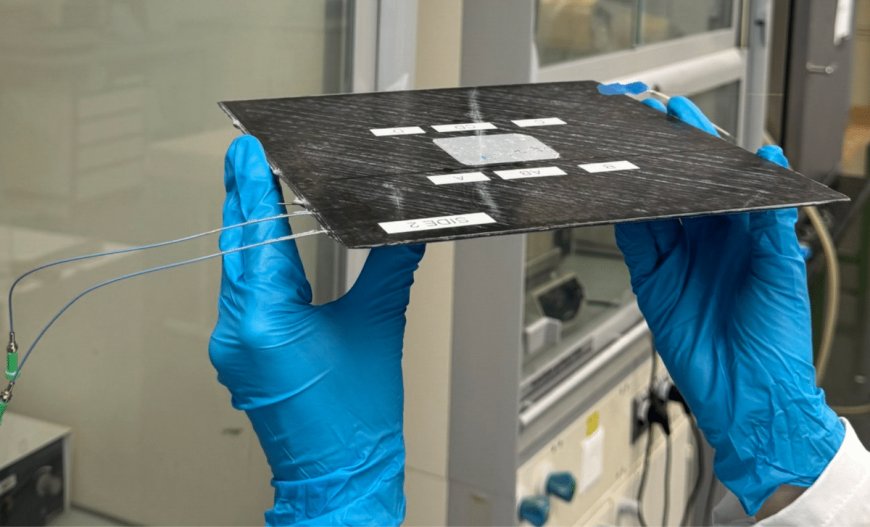
The European Space Agency (ESA) is working on an innovative self-repairing spacecraft technology. This project, created in collaboration with Swiss companies CompPair and CSEM and Belgian firm Com&Sens, focuses on developing a self-healing composite material for space transportation systems. This material, HealTech, is capable of autonomously repairing damage that may occur during space missions. It promises to enhance spacecraft durability, reduce mission costs, and ensure a more sustainable approach to space exploration.
The Technology Behind HealTech: A Self-Repairing Composite
At the heart of this development is a specially designed composite material, which combines carbon fiber reinforced polymers with advanced self-healing properties. As highlighted by the ESA, composite materials are increasingly used in spacecraft because of their strength, lightness, and resistance to corrosion. However, they are also vulnerable to damage, especially when subjected to repeated stresses or impacts during space missions. HealTech has been designed to address these vulnerabilities by incorporating an autonomous repair system. The composite material contains a healing agent that activates when the material is heated, enabling it to repair cracks and minor damages.

Credit: CompPair
The key to HealTech’s effectiveness lies in the integration of sensors and a heating element into the material. These sensors monitor the structural integrity of the spacecraft and detect damage early on. Once a crack or microfracture is identified, the material is heated through an integrated system of 3D-printed aluminum grids. The heat activates the healing agent inside the composite, allowing the material to self-repair. This self-healing process could significantly reduce the need for costly and time-consuming manual repairs during and after space missions.
Why HealTech Is a Game Changer for Space Transportation
One of the most exciting aspects of HealTech is its potential to transform space transportation. “Implementing this technology into our systems could have enormous benefits for space transportation,” says ESA’s Bernard Decotignie. “It will help develop reusable space infrastructure and reduce mission costs. This really proves what European innovation can do for the space sector.” With reusable launchers and spacecraft becoming an integral part of future space missions, the ability to repair materials autonomously could reduce maintenance costs and improve the longevity of these systems.

Credit: CompPair
The technology could prove especially valuable for missions that involve frequent launches and landings, as it helps reduce the wear and tear that typically occurs with repeated use. In traditional space missions, spacecraft components often suffer from micro-cracking or other forms of stress damage. HealTech addresses these issues by providing a solution that allows spacecraft to repair themselves, thereby extending their operational life and reducing waste.
The Role of CompPair in Revolutionizing Spacecraft Materials
CompPair, the company responsible for developing HealTech, has been at the forefront of innovation in composite materials for space travel. According to Robin Trigueira, CompPair’s Chief Technology Officer, the development of HealTech represents a major leap forward for space technology.
“I’m excited by the autonomy and durability benefits we can bring for future spacecraft and launchers, closing the gap between science fiction and reality! This project is a major step for CompPair in the space sector,” he says. “HealTech is unlocking unprecedented technological advancement for composite material health monitoring and management, clearly highlighting the possibilities brought by healable composites for reusable space structure costs efficiency.”
CompPair’s technology not only promises to make spacecraft more durable but also more autonomous. This autonomous damage repair system will be critical for future space exploration missions, as it reduces the need for human intervention and ensures that spacecraft can operate for longer periods in harsh space environments without the risk of critical damage.

Credit: CompPair
Advancing Spacecraft Durability and Performance
The development of HealTech is not just about improving the repairability of spacecraft; it’s also about enhancing overall spacecraft performance. Cecilia Scazzoli, the Head of Research and Development for CompPair, highlights the potential of HealTech for ensuring the integrity of spacecraft during challenging missions. “I’m thrilled that we have demonstrated that HealTech composites with health monitoring and heating systems show autonomous damage sensing and healing and high resistance to micro-cracking. This makes them suited to the demanding requirements of propellant tanks and reusable space structures, and paves the way for lighter, more maintainable spacecraft components,” she explains.
The integration of self-healing technology into spacecraft could lead to the creation of lighter, more resilient spacecraft components that can withstand the extreme conditions of space travel. This could ultimately help to make space missions more cost-effective and sustainable, as spacecraft will require fewer repairs and replacements over time. The ability to maintain spacecraft in space without the need for frequent service missions or manual repairs could also make long-term missions, such as those to Mars or beyond, more feasible.
Enjoyed this article? Subscribe to our free newsletter for engaging stories, exclusive content, and the latest news.
What's Your Reaction?
 Like
0
Like
0
 Dislike
0
Dislike
0
 Love
0
Love
0
 Funny
0
Funny
0
 Angry
0
Angry
0
 Sad
0
Sad
0
 Wow
0
Wow
0