



























Scientists Stunned as Comet 41P Flips Its Spin: What Could This Mysterious Reversal Mean?

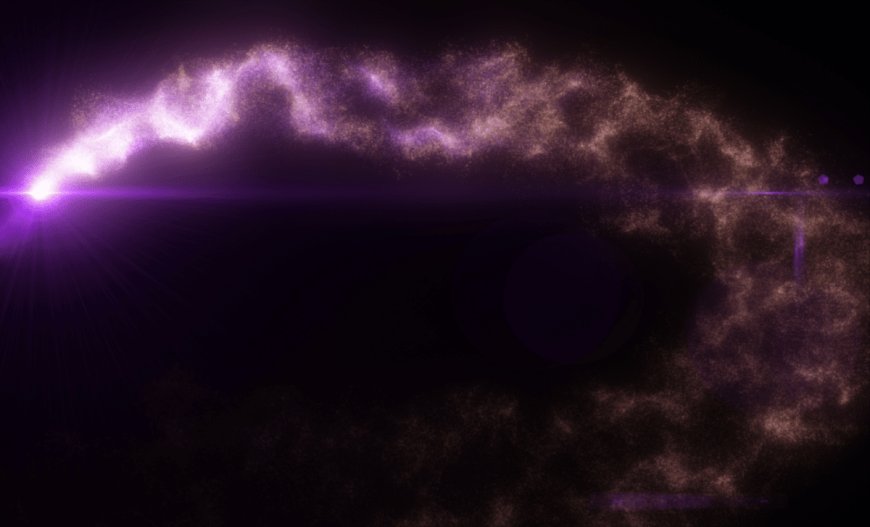
Comet 41P/Tuttle-Giacobini-Kresak, long a subject of intrigue, has left astronomers stunned by an unexpected twist: its rotation has slowed and even reversed direction. This strange behavior challenges our understanding of comets, sparking new questions about their life cycles and the forces at play.
The Astonishing Spindown of Comet 41P
Comet 41P/Tuttle-Giacobini-Kresak has been no stranger to astronomical intrigue, but recent observations have taken its behavior to a new level of mystery. In 2017, NASA’s Swift spacecraft detected an abrupt slowing in the comet’s rotation, causing it to spin three times slower than it did during previous observations. Initially, the comet was rotating once every 20 hours, but over just 60 days, it slowed down to once every 53 hours. This dramatic spindown is unprecedented in cometary studies.
“The previous record for a comet spindown went to 103P/Hartley 2, which slowed its rotation from 17 to 19 hours over 90 days,” said Dennis Bodewits, a former associate research scientist at the University of Maryland. “By contrast, 41P spun down by more than 10 times as much in just 60 days, so both the extent and the rate of this change is something we’ve never seen before.”
This significant difference in the rate of rotation change sets 41P apart, leaving astronomers with more questions than answers.

Credit: D. Jewitt/University of California, Los Angeles
Reversal of Spin: What’s Behind This Shift?
What’s even more puzzling is that after slowing down, the comet’s rotation direction appeared to reverse. This is highly unusual for comets, as they typically exhibit slow, gradual changes in their movement. So, what could have caused this abrupt reversal? According to David Jewitt’s study, the most likely explanation is the torque created by the comet’s outgassing. As the comet approaches the Sun, it heats up, causing it to release gas in the form of jets. This anisotropic outgassing, where gas escapes unevenly from the comet’s surface, exerts a force on the nucleus, gradually changing its spin.
“The simplest explanation of the changing period is that the nucleus was torqued by recoil forces from anisotropic outgassing, as has been widely demonstrated in other comets,” Jewitt explains in his paper.
Jewitt’s research suggests that the size of the nucleus, estimated to be less than 0.7 km in radius, makes it particularly susceptible to such rapid rotational changes caused by the outgassing forces.

Image credit: Chris Schur/NASA Goddard Space Flight Center
The Implications of Rapid Spin Evolution
The study also raises significant questions about the long-term stability of Comet 41P. According to Jewitt, the rotational instability of the comet’s nucleus might be short-lived.
“The lifetime of the nucleus to rotational instability (a few decades) is short compared to the dynamical lifetime (∼ 103 years) in its current orbit,” Jewitt states.
This suggests that while 41P’s orbit might remain stable for thousands of years, its physical stability, specifically in terms of its rotation, could be much more fragile.
The comet’s survival may depend on whether its outgassing activity is unusually high, or whether the nucleus is the remnant of a much larger, older body that has been gradually losing material over time. Jewitt speculates that either scenario could explain why 41P continues to exist despite the extreme rotation changes it is undergoing. The data also implies that comets might not last as long as previously believed, with their internal forces eventually causing them to break apart.
The Role of Outgassing in Comet Behavior
Outgassing, the process of a comet releasing gas and dust as it approaches the Sun, is a well-known feature of cometary behavior. However, what is extraordinary about Comet 41P is the nature and intensity of its outgassing. Instead of a slow, steady release of material, the comet appears to be expelling gas in more intense, jet-like bursts. This irregular outgassing could be a key factor in the comet’s rapidly changing rotation and may even play a role in its eventual disintegration.
Jewitt’s paper, available as a preprint on arXiv, offers new insights into how cometary outgassing can influence a comet’s spin, potentially leading to instability. The findings suggest that understanding these processes could help predict the lifespan and eventual destruction of comets in ways that were not previously possible.
Enjoyed this article? Subscribe to our free newsletter for engaging stories, exclusive content, and the latest news.
What's Your Reaction?
 Like
0
Like
0
 Dislike
0
Dislike
0
 Love
0
Love
0
 Funny
0
Funny
0
 Angry
0
Angry
0
 Sad
0
Sad
0
 Wow
0
Wow
0