



























Scientists studying the universe’s first light have discovered a strange hidden twist that could point to an unknown dimension

We know that our reality is made of three distinct dimensions.
But as our scientific capabilities enhance, we are finding that this may not be true. A group of scientists has been studying the first light of the universe and may have stumbled on something that theoretically points to an unknown dimension in space and time.
How may this development reshape astrophysics and cosmology?
How light traverses the universe has become easier to understand
The universe is constantly expanding; that much we have proven to be true over the last 100 years.
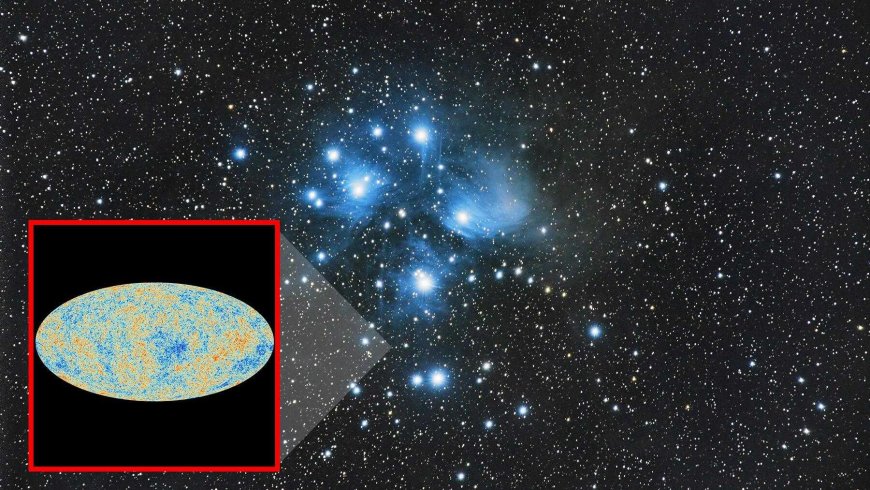
However, our ability to study light and how it navigates the cosmos has been dramatically enhanced by high-resolution mapping of what is known as the Cosmic Microwave Background.
CMB is the remnant of the cooled-down light right after the Big Bang.
It’s sometimes referred to as the “baby picture” of the universe and can be identified as a faint glow that exists in all of space. So what has taken place when a team of researchers started studying it?
A new era of space exploration and study has emerged from the darkness
The world is facing many almost constant issues at the moment.
The war in the Middle East has devastated the global price of oil. Climate change is becoming a serious problem that threatens millions around the world. But space is one of only a few aspects of modern-day life that still excites and renews our collective sense of hope for the future.
Space study brings together the best and brightest minds around the world.
And it’s not even the eggheads at NASA that are making revelations about the cosmos come true. A father-daughter team of citizen scientists recently deciphered an odd signal that mystified scientists around the world.
And our ambition to reach into the stars has come full circle as public attention turns back to space exploration.
The Artemis II mission to slingshot around the Moon represents the first real manned space flight to pass by the rocky, cheese-like celestial body in over 50 years. But there is so much more to discover and study that exists out in the deepest regions of space.
So what is next on our space to-do list?
And a recent study, “A strange twist in the universe’s oldest light may be bigger than we thought,” published in the Kavli Institute for the Physics and Mathematics of the Universe via ScienceDaily, has found the latest space mystery for science to unravel.
The universe’s oldest light is far larger than we initially thought
The aforementioned study points to the recent discovery of a significant twist in the polarization of the Cosmic Microwave Background.
This means that scientists have found that the CMB, which is the earliest light in the universe, has been twisted by space and time. What implications may this have on us down here on Earth?
Black holes are a mystifying celestial body that we know extremely little about, but they are certainly not the only space-based mystery that we need to understand.
There may be a third dimension in space that has recently been hypothesized

Scientists have studied the earliest light in the universe, right after the Big Bang took place.
And they found the light is being rotated and is far larger than we initially thought. Some have theorized that this may point to the existence of hidden dimensions in space and time.
Think of the Interstellar movie. Many have noted that if such a dimension exists, it could twist light in exactly the way these researchers have found.
So while some astronomers are searching for answers to what the “cosmic concrete” is that is holding the universe together, this finding may point to a hidden dimension that we can only dream about.
What's Your Reaction?
 Like
0
Like
0
 Dislike
0
Dislike
0
 Love
0
Love
0
 Funny
0
Funny
0
 Angry
0
Angry
0
 Sad
0
Sad
0
 Wow
0
Wow
0