



























Scientists Studied the Soil Beneath a 2,400-Year-Old Tree, What They Found Surprised Even Them

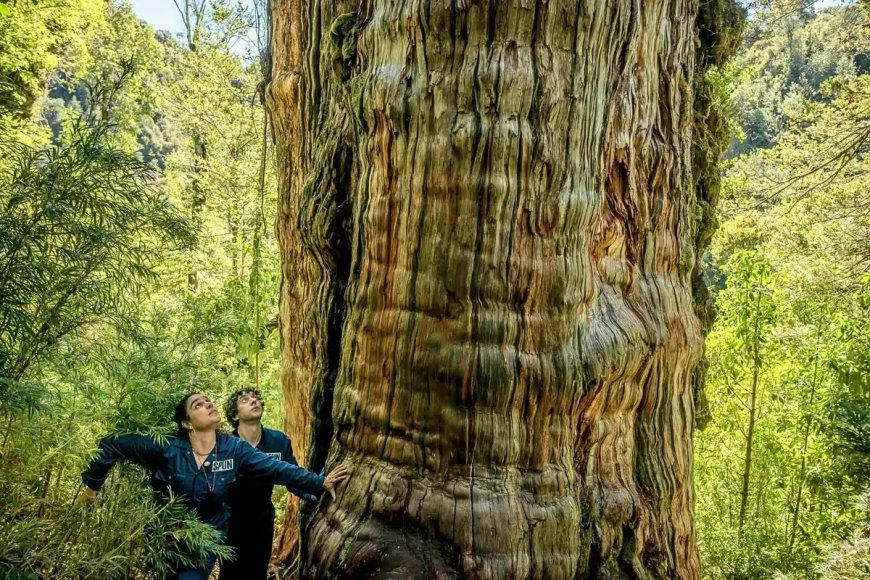
Scientists digging beneath one of the world’s oldest tree species have uncovered a surprisingly rich underground ecosystem. Soil around Chile’s ancient alerce trees hosts hundreds of fungal species that quietly help sustain the forest.
In the temperate rainforests of southern Chile grows the alerce (Fitzroya cupressoides), a conifer famous for both its size and its lifespan. Some of them have survived for more than 3,600 years, making the species the second-longest-lived towering plant on Earth after the bristlecone pine.
A Complex Partnership Beneath The Forest Floor
The new study focuses on the relationship between the forest giant and mycorrhizal fungi, tiny organisms that connect directly to their roots. These fungi help pull water and nutrients from the soil and deliver them to the trees.
In return, they feed the fungi with sugars produced during photosynthesis. According to the study in Biodiversity and Conservation, this exchange allows underground fungal networks to expand through the soil, storing carbon and helping plants cope with stresses such as drought or pathogens.

It’s the kind of partnership that rarely gets attention, mostly because it happens out of sight. What surprised researchers in Chile was the scale of fungal diversity connected to the oldest trees.
A Single Ancient Conifer Hosting Hundreds Of Species
To explore what was happening underground, researchers collected soil samples beneath 31 alerce trees and measured the size of each tree. A clear pattern emerged: the older and larger the tree, the greater the diversity of fungi living around its roots.
The most remarkable results came from a famous arboreal plant known as Alerce Abuelo, estimated to be about 2,400 years old. According to the researchers, the soil beneath this one contained more than 300 fungal species that were not found around the others.

Even more striking, the fungal diversity under Alerce Abuelo was more than twice as high as in any other sample. Adriana Correlaes of the Society for the Protection of Underground Networks (SPUN) said that such diversity can make ecosystems more resilient when conditions become stressful.
Ancient Woodland Giants as Ecosystem Hubs
The research shows that some species play a far greater ecological role than others. Older specimens appear to anchor rich underground biodiversity, supporting fungal communities that formed over centuries. As Camille Truong of the University of Melbourne explained:
“Not all trees are the same and if you remove a millennial tree, the impact on all the other species is going to be bigger than if you remove a smaller one.”

Enjoyed this article? Subscribe to our free newsletter for engaging stories, exclusive content, and the latest news.
What's Your Reaction?
 Like
0
Like
0
 Dislike
0
Dislike
0
 Love
0
Love
0
 Funny
0
Funny
0
 Angry
0
Angry
0
 Sad
0
Sad
0
 Wow
0
Wow
0