



























Scientists looking back 500 million years found early life may have breathed a rare form of oxygen before it filled the planet

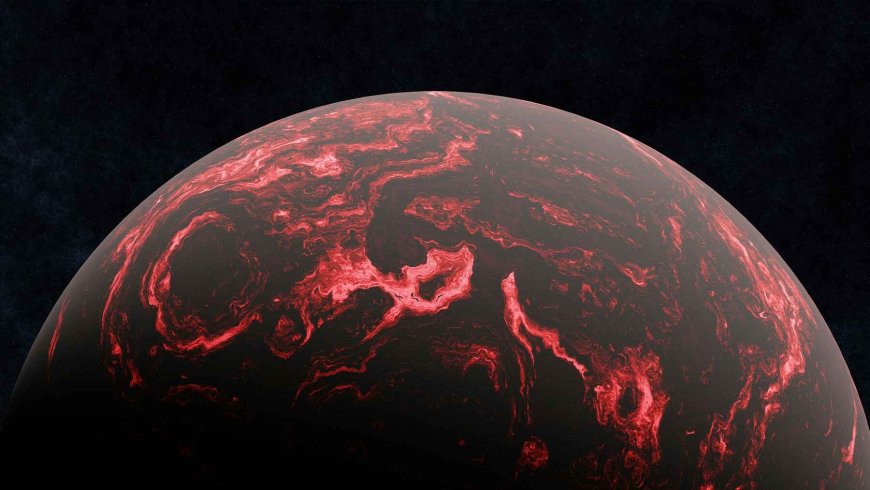
Early life on our planet has been consuming oxygen far earlier than we thought.
As scientific studies have shown, the early days of Earth were violent and not suitable for life as we know it today. But a recent study has found that the earliest forms of life on our planet were breathing oxygen long before we initially thought possible.
What led researchers to make this astonishing discovery?
How life on our one and only home has evolved over millions of years
As we know, life on our planet has evolved over millions of years of evolution to reach where and what we are today.
Distinct layers of rock act like a timeline of life on our planet. By studying these ancient time capsules of rock, we have learnt remarkable facts about the world and the plethora of life that exists on it.
Every single form of life is connected; that much we can say for sure.
We know that everything in the world shares a genetic code of sorts, proving that everything from bananas to us as humans evolved from a single ancestor. This has been proven by the fact that many species share similarities such as bone structure and traces of DNA.
Studying the planet has revealed some ancient mysteries for science
As every living being on the Earth has undergone some sort of evolutionary changes over time, we have made several remarkable discoveries in recent years.
Studying the book of ancient life allows us to better understand the process of how life in all its forms came to be what it is today. Such as the discovery of the largest sea turtle trackway ever recorded on a cliff in Italy.
As our collective scientific progression continues, we have opened a new door to discovery that will lead us into the new world order.
Most species have changed dramatically from their ancient cousins that once upon a time populated the Earth. But a few living fossils remain relatively the same as they were millions of years ago, and have been making a comeback after decades of hiding from the world.
The earliest days of life on our planet are still mostly a mystery, as we have limited capacity to study life at such a critical point in our planet’s history.
Research from MIT EAPS, or the MIT Department of Earth, Atmospheric and Planetary Sciences, has found that early life forms were breathing oxygen long before science originally believed or could prove.
Oxygen was key to early life forms, long before it filled our atmosphere
The Great Oxidation Event was a massive environmental shift that took place roughly 2.4 to 2.1 billion years ago.
It took place when oxygen began to permanently accumulate in the Earth’s atmosphere. This enabled a fundamental shift in the planet’s chemistry and began us on the long road to evolutionary freedom.
We know that single-celled organisms are capable of complexities beyond our limited understanding, even without brains or a single neuron.
But the research from MIT EAPS has found that early life forms billions of years ago developed the ability to “breathe” hundreds of millions of years before the planet’s atmosphere filled with oxygen.
Researchers found that these enzymes originated in what they call “oxygen oases” long before the Great Oxidation Event, billions of years ago.
They also found that this could have slowed down the global atmospheric oxygenation.
While some research has focused on what was taking place in the ancient rocks of early Earth, this research proves that oxygen played a vital role for early life forms long before it filled the world’s atmosphere to start the evolutionary process.
What's Your Reaction?
 Like
0
Like
0
 Dislike
0
Dislike
0
 Love
0
Love
0
 Funny
0
Funny
0
 Angry
0
Angry
0
 Sad
0
Sad
0
 Wow
0
Wow
0