






















Scientists Find 185-Million-Year-Old Prehistoric Predator Fossil in the UK, and It Seems to Be the Crocodile’s Cousin

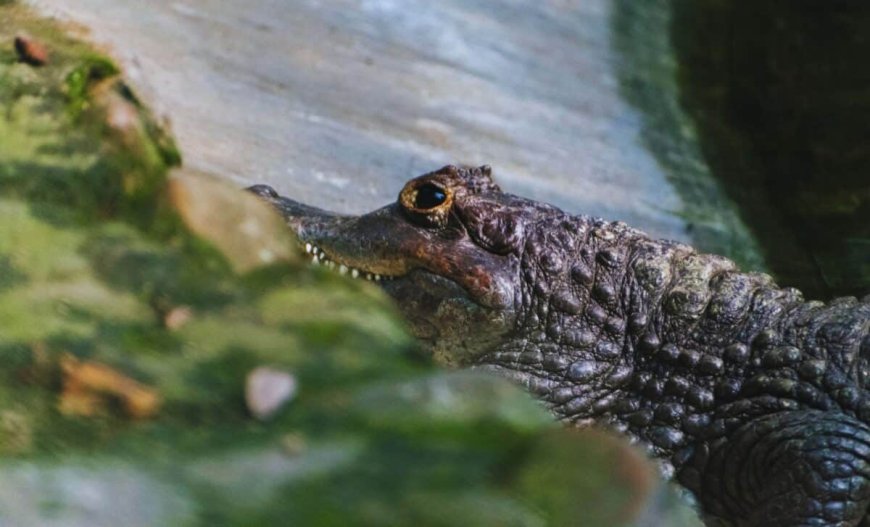
A remarkable fossil find in Dorset, UK, has uncovered a new species of ancient marine predator related to modern crocodiles. Dating back approximately 185 million years to the Early Jurassic, this discovery helps close a gap in the fossil record and suggests that these ancient predators may have originated much earlier than previously thought.
Turnersuchus hingleyae, a member of a group known as thalattosuchians, was uncovered from a fossil-rich site on the Jurassic Coast, a region famous for its paleontological discoveries. The fossil consists of a partial head, backbone, and limbs, marking it as the first named thalattosuchian of its age.
Filling Gaps in Prehistoric Evolution
According to Dr. Eric Wilberg, Assistant Professor at Stony Brook University and co-author of the study, published in Journal of Vertebrate Paleontology, the discovery of Turnersuchus fills a critical gap in the fossil record. Because, before this find, the fossil evidence suggested a “ghost lineage” between the Triassic and Jurassic periods. With Turnersuchus now in the picture, experts believe that thalattosuchians may have emerged during the Triassic, surviving the end-Triassic mass extinction.
“In fact, during the publication of our paper, another paper was published describing a thalattosuchian skull discovered in the roof of a cave in Morocco from the Hettangian/Sinemurian (the time periods preceding the Pliensbachian where Turnersuchus was found), which corroborates this idea. I expect we will continue to find more older thalattosuchians and their relatives,” he stated.
However, no thalattosuchians have been discovered in Triassic rocks to date, which keeps the idea of a “ghost lineage” alive, albeit with a reduced timeframe. As Journal of Vertebrate Paleontology reported, the continued discovery of older thalattosuchians, like a skull found in Morocco, suggests that further excavations could eventually confirm their earlier presence in the Triassic.

A Unique Marine Crocodile Relative
Thalattosuchians, often referred to as “marine crocodiles,” are not direct ancestors of modern crocodiles but share a distant common ancestor. These creatures were highly specialized for marine life, with adaptations such as flipper-like limbs and possibly the ability to give live birth. Turnersuchus, which likely preyed on marine animals like fast-moving fish and cephalopods. And as Dr. Pedro Godoy, co-author of the study, pointed out:
“Unlike crocodiles, this approximately 2-meter-long predator lived purely in coastal marine habitats. And though their skulls look superficially similar to modern gharials, they were constructed quite differently.”
He also explained that despite their superficial similarity, Turnersuchus and gharials were constructed very differently, with distinct skull features that set them apart. The large supratemporal fenestrae, regions of the skull housing jaw muscles, suggest that Turnersuchus had powerful jaw muscles, enabling it to deliver fast bites, ideal for catching agile marine prey.

What the Discovery Left in Its Wake?
Thanks to Paul Turner and Lizzie Hingley, who donated the Turnersuchus fossil to the Lyme Regis Museum, this groundbreaking discovery is now accessible to the public. The crocodile specimen was uncovered at the Charmouth Mudstone Formation along the Jurassic Coast, a site already famous for producing ichthyosaurs, plesiosaurs, and Scelidosaurus, Britain’s best-preserved dinosaur.
Now on display at the Lyme Regis Museum, the fossil enriches the region’s paleontological collection and offers visitors a rare glimpse into the Early Jurassic seas. It stands as a testament to the importance of amateur collectors and their contributions to scientific knowledge.
Enjoyed this article? Subscribe to our free newsletter for engaging stories, exclusive content, and the latest news.
What's Your Reaction?
 Like
0
Like
0
 Dislike
0
Dislike
0
 Love
0
Love
0
 Funny
0
Funny
0
 Angry
0
Angry
0
 Sad
0
Sad
0
 Wow
0
Wow
0