




























Scientists are growing ‘bodyoids’ without brains or organs in labs and believe they could replace animal testing

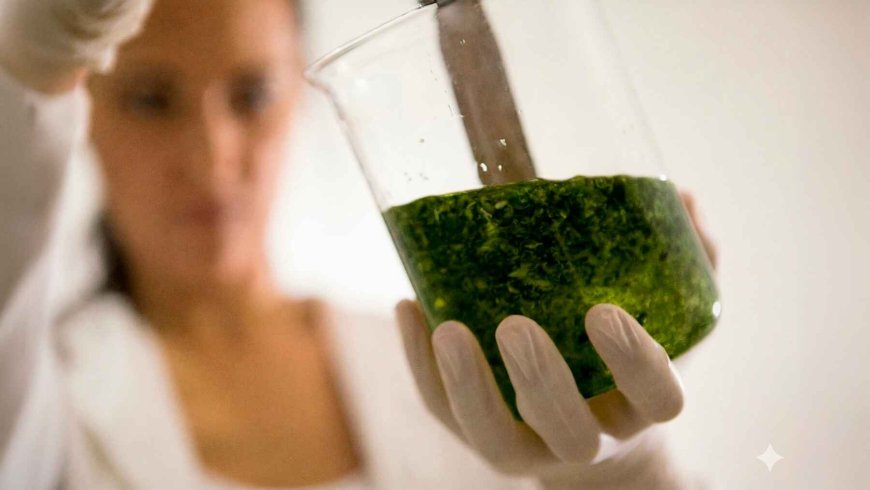
Animal testing may be a thing of the past soon.
Testing products and procedures on humans has always been a problem; hence, we have opted to test the most complex scientific processes on our four-legged friends. However, scientists may have found a replacement for animal testing with their new “bodyoids” that were grown in a lab.
How will the end of animal testing benefit mankind?
How we have made remarkable discoveries by studying animal life
The significance of studying animal life can not be understated.
Since the turn of the century, roughly 80% of all Nobel Prizes in Physiology or Medicine have relied on information and data collected by studying animal life. And over the last 30 years, every single Nobel Prize in this category has relied on data from animal studies.
Vaccine development has also benefited from animal testing and research.
The vaccines for polio, smallpox, diphtheria, and measles were all developed through animal testing. More recently, the mRNA Vaccine for Covid 19 was created and developed by testing it on mice, rats, and monkeys.
So, without the input and data from animal testing, many more humans would have met their maker.
Science and technology advance almost simultaneously in modern society
The never-ending long-term relationship between science and technology has dramatically reshaped the world around us.
Through extensive studies of the seabed floor, scientists have found a hidden world of life that only exists at the bottom of the ocean. Which would not have been possible without remarkable technology and deep-sea imaging.
Science has even entered the realm of the unknown through animal testing in recent years.
A group of researchers recently uploaded the neurons from fly brain tissue into a computer simulation. So, it would appear that the Matrix is not that far off, albeit for flies at the moment.
However, there is notable and justifiable outrage regarding animal testing.
One group of scientists may have stumbled on a great replacement for animal testing in the near future when they grew bodyoids in a lab without any organs or even brains.
Several countries have already banned animal testing entirely, with public outrage and backlash forcing science into a corner.
Thankfully, science is not the type of industry to rest on its laurels and never stands still. How have these “bodyiods” been grown in a lab, and what could this mean for future scientific studies over the coming years?
A revelation in the scientific study of animals is upon us
Conducting experiments in labs has resulted in some astonishing developments in science and technology in recent years.
Researchers have recently allowed an AI model to take control of growing tomatoes in a lab. The AI was able to successfully grow the tomatoes with no human interference or input.
R3 Bio is a biotechnology startup with a singular purpose and focus at the moment.
The company used stem cells and gene editing to grow several complex multi-organ systems that behave eerily similar to normal animals, and that’s without them even having a brain.
R3 Bio is aiming to end animal testing once and for all
The company is planning a major disruption in preclinical testing by providing science with “human-relevant” biological platforms.
These platforms more accurately represent the reaction and behavior to testing than normal animal testing. The company has literally based its name on the three R’s of animal research: Replacement, Reduction, and Refinement.
We have seen remarkable developments emerge out of labs around the world.
Such as a new plant that can store and generate light and energy, possibly replacing light bulbs in our homes. But the development made by R3 Bio takes us far away from animal testing into a more ethical world of scientific research.
What's Your Reaction?
 Like
0
Like
0
 Dislike
0
Dislike
0
 Love
0
Love
0
 Funny
0
Funny
0
 Angry
0
Angry
0
 Sad
0
Sad
0
 Wow
0
Wow
0