




























River turbines were designed to scare fish away — Instead, rainbow trout stayed and began playing with them in ways experts didn’t expect

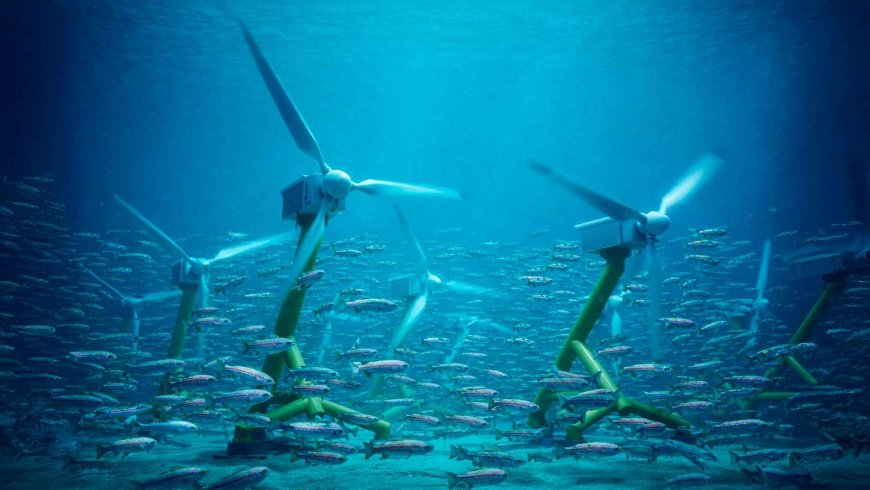
Energy generation has affected animal life in more ways than we expected.
As the world accelerates the energy transition away from fossil fuels towards the renewable energy subsector, a few unforeseen effects on wildlife have emerged. River turbines’ motion is supposed to scare fish away from them, but rainbow trout have been exhibiting odd behavior near the turbines that litter our rivers.
Why are these trout staying behind to play with river turbines?
What effect has the green energy transition had on our planet’s ecosystem
While the energy transition has been a major step forward in addressing carbon emissions from the global energy market, a few unforeseen issues have emerged.
As humans, we have developed an energy ecosystem that gives very little preference for wildlife and how we might be affecting the world around us. The proliferation of the EV market has seen mankind digging up vast amounts of Earth to get to the cobalt and lithium stored away beneath us.
This adversely affects the natural habitat of millions of species.
The growth of the solar power sector has not been spared either. Huge solar panel farms actually change the reflective properties of the ground they sit on, raising temperatures by several degrees.
Science and energy experts have developed several new energy-based technologies
The need to generate more power on a yearly basis has led mankind into a dark corner.
The expansion and adoption of solar, wind, and even thermoenergy innovations have been a step in the right direction in ending our generational reliance on the oil industry, which has become a major focal point as war in the Middle East devastates the international price of Brent Crude oil.
But like a superhero in a Marvel movie, science has stepped in to save the day, at least partially.
Several new innovations have emerged that are as light as a feather and thinner than a human hair that can produce vast amounts of energy, revealing that the energy industry is far from done in its century-long evolution.
Harvesting energy from motion is certainly not a new development in energy production, as hydrokinetic turbines have existed for well over three decades.
Researchers have been working on several new systems that can harvest energy from motion, and even atomic vibrations in some recent innovations can be used to convert energy into electricity.
However, a recent study, “Impact of hydrokinetic turbines on rainbow trout behaviour,” published in Nature, has enabled us to better understand the effect of hydrokinetic turbines on fish.
Rainbow trout are using river turbines in ways we never expected
The aforementioned study has found that rainbow trout are interacting with low-impact hydrokinetic turbines in ways we never thought possible.
The study has found that, as other species of fish are scared away by the turbines, the iconic species of trout is not intimidated by them at all. In fact, they actually use them as a natural “surfboard” if you will.
Global warming has been a major consequence for life on Earth, with the ocean in particular feeling the full brunt of our collective energy needs.
But this finding shows that animal life can behave in ways we never thought possible, adapting to their surroundings much like we do as humans. The study found that rainbow trout are actually using the river turbines’ wake for energy-efficient movement as opposed to avoiding them.
The trout used the wake generated by the turbines to dash to and fro like an aquatic surfer riding the waves under the ocean surface.
While some technology allows us to map the floor of the ocean more accurately, this study has found that some species are actually benefiting in odd ways from new energy generation technologies.
What's Your Reaction?
 Like
0
Like
0
 Dislike
0
Dislike
0
 Love
0
Love
0
 Funny
0
Funny
0
 Angry
0
Angry
0
 Sad
0
Sad
0
 Wow
0
Wow
0