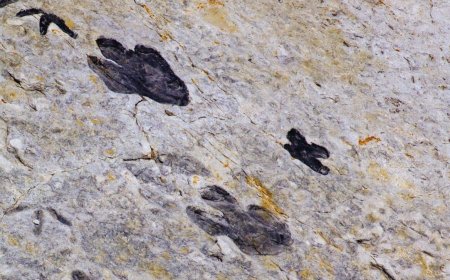





























Plague DNA found in a 4,000-year-old sheep is rewriting what scientists thought they knew about humanity’s oldest pandemic

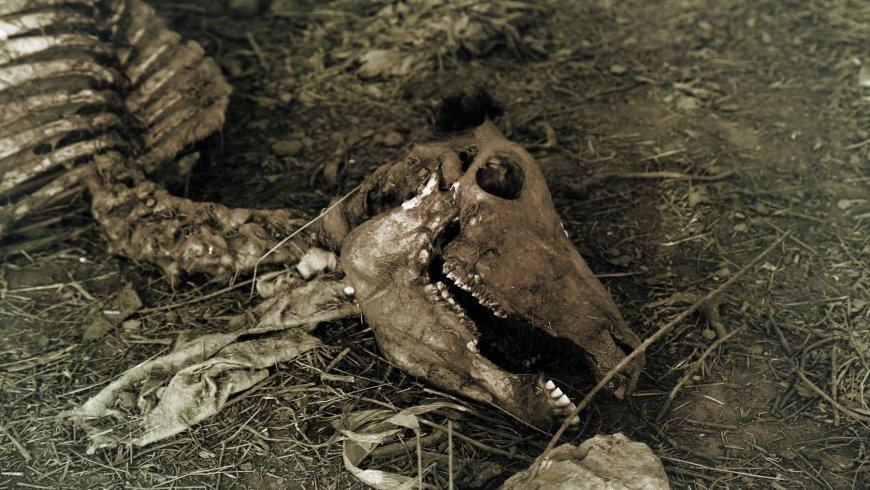
Thousands of years before the Black Death, an early form of plague was already moving across Eurasia — infecting people from the steppes to the far edges of the continent. But this ancient strain of Yersinia pestis couldn’t spread through fleas, the mechanism that made the medieval pandemic so catastrophic. For decades, researchers couldn’t explain how it traveled so far.
A single bone from a 4,000-year-old sheep, excavated at a Bronze Age settlement in the Ural Mountains, may finally offer an answer.
A bone from Arkaim that changed everything
Arkaim is no ordinary archaeological site. This fortified Bronze Age settlement in the Southern Ural Mountains, near the present-day border of Russia and Kazakhstan, was home to the Sintashta culture — a people known for early horse riding, sophisticated bronze weaponry, and significant genetic influence across Central Asia. Researchers excavating the site in the 1980s and 1990s recovered a wealth of animal remains. Decades later, one of those bones would upend what scientists thought they knew about ancient plague.
While analyzing livestock DNA from Arkaim, an international team that includes University of Arkansas archaeologist Taylor Hermes detected Yersinia pestis in the remains of a domesticated sheep that lived roughly 4,000 years ago. The finding, published in Cell, marks the first time the Bronze Age plague pathogen has ever been identified in a non-human host.
“It was alarm bells for my team,” Hermes said. “This was the first time we had recovered the genome from Yersinia pestis in a non-human sample. We were extra excited because Arkaim is linked to the Sintashta culture, which is known for early horse riding, impressive bronze weaponry and substantial geneflow into Central Asia.”
Why the Bronze Age plague was such a mystery
The medieval Black Death spread with devastating efficiency because Y. pestis had evolved a specific mechanism: fleas picked up the bacterium from infected rats and passed it to humans. That transmission pathway made the 14th-century pandemic one of history’s deadliest events, killing roughly one-third of Europe’s population.
The Bronze Age strain was genetically different — it lacked the machinery for flea transmission entirely. And yet researchers had found identical versions of this ancient pathogen in human remains separated by thousands of kilometers, from the western steppes deep into Eurasia, across nearly two millennia.
Without fleas as vectors, how it spread remained deeply puzzling. Human movement across the steppe could account for some transmission, but not the geographic scale or consistency of what the archaeological record showed.
Extracting secrets from ancient DNA
Working with ancient DNA is painstaking under the best circumstances. Genetic fragments recovered from old bones and teeth are extraordinarily small — often around 50 base pairs. The full human genome, for comparison, contains more than 3 billion.
“When we test livestock DNA in ancient samples, we get a complex genetic soup of contamination,” Hermes explained. Soil microorganisms leave their own genetic traces in buried bones, and researchers can inadvertently introduce DNA from skin cells or saliva. Separating a meaningful signal from that noise requires exceptional care and considerable computational power. Animal remains add another layer of difficulty: unlike human burials, which were often deliberate and protective, animal bones were typically discarded in waste piles after butchering, leaving them exposed to heat, weather, and repeated handling — all of which accelerate genetic breakdown.
Livestock, steppe riders, and a new model of plague transmission
The sheep discovery has opened the door to a revised hypothesis about how Bronze Age plague moved across Eurasia. Hermes and his colleagues now propose that transmission depended on a dynamic involving people, their livestock herds, and some still-unidentified natural reservoir — most likely steppe rodents, or possibly migratory birds.
A natural reservoir is a species that carries a pathogen without becoming sick itself. Rats played this role in the medieval plague, with fleas acting as the vector. Today, bats function as reservoirs for viruses like Ebola and Marburg, occasionally spilling over into human populations when conditions align.
The Sintashta culture’s way of life may have made such spillover more likely. As these communities expanded their herds and became increasingly mobile on horseback, they moved more frequently across the steppe — into closer, more sustained contact with whatever environmental reservoir was harboring Y. pestis. “It had to be more than people moving,” Hermes said. “Our plague sheep gave us a breakthrough.”
From the Bronze Age to the next pandemic
The research is far from finished. Hermes recently received a five-year grant from Germany’s Max Planck Society to continue excavations near Arkaim, with the goal of finding additional human and animal remains that might contain further traces of Y. pestis. Each new sample could help fill in the map of how this ancient pathogen circulated — and eventually disappeared.
The parallels to the present are hard to set aside. When human economic activity pushes into previously undisturbed ecosystems, new points of contact open up between people and the pathogens those ecosystems contain. That dynamic isn’t unique to the Bronze Age.
Hermes put it plainly: “We should appreciate the delicate inner workings of the ecosystems we might disturb and aim to preserve the balance. It’s important to have a greater respect for the forces of nature.”
A sheep bone, buried for four millennia in the Ural Mountains, is now asking us to do exactly that.
What's Your Reaction?
 Like
0
Like
0
 Dislike
0
Dislike
0
 Love
0
Love
0
 Funny
0
Funny
0
 Angry
0
Angry
0
 Sad
0
Sad
0
 Wow
0
Wow
0