





























No one “saw this coming”: U.S. state hides an underground energy giant that could power 500,000 cars

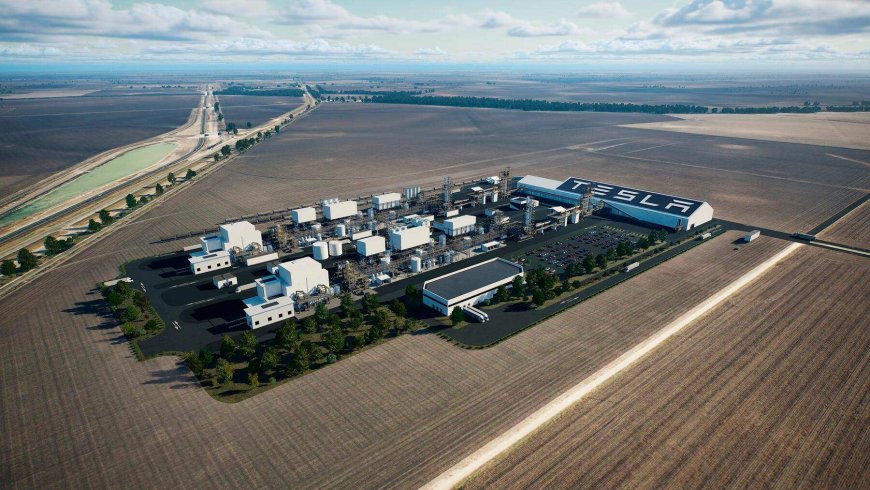
Tesla has quietly opened what amounts to a massive new industrial plant in Texas that provides a U.S.-based source of lithium used to support hundreds of thousands of EVs per year. In May 2023, Tesla quietly started building what would become a first for North America. located in the Corpus Christi metropolitan area, is where Tesla broke ground on this new project in May 2023. The project is part of its efforts to move from simply making electric vehicles to manufacturing batteries as well as other critical battery materials.
Tesla brings a first for North America
While Tesla’s vehicle announcements have garnered far more media attention than this quest, less than three years after breaking ground on the project in May 2023, Tesla had its Texas-based operation ready by early January 2026
Tesla built a lithium refinery, which marks the first time that there has been an industrial-scale battery-grade lithium hydroxide refinery in North America.
Tesla North America said in a statement:
“This refinery enables Tesla to regionalize supply chains for battery minerals and materials.”
Spodumene, a lithium-rich hard rock mineral
Spodumene is refined at the refinery and converted into lithium hydroxide. Lithium hydroxide is one of the two main inputs in current EV battery systems. Traditional refining methods require very high volumes of sulfuric acid. Tesla’s refining method uses no acid, so it produces less hazardous waste and produces by-products for use as construction materials. As a result, the Tesla Texas lithium refinery is capable of supporting many hundreds of thousands of EVs annually.
According to Tesla, the use of acid-free refining results in lower cost, reduced emissions generated by chemical processing, and reduced logistical complexity due to increased battery supply chain control by U.S.-based companies.
The significance of the refinery: Environmentally friendly with big production numbers
Although the significance of the refinery extends beyond environmentally friendly refining techniques, the sheer volume of production is of equal importance. Analysis of Tesla’s anticipated lithium output suggests that the refinery can produce sufficient battery-grade lithium to support approximately 500,000 electric vehicles per year, depending on the vehicle class and battery pack size.
When viewed through the lens of quantity, this “energy giant” located below the Texas soil can power 500,000 cars each year without utilizing foreign-based refining capacity.
As a local, there have also been significant economic impacts
The refinery located in Robstown, Texas, has already created hundreds of full-time employment opportunities and over 900 construction jobs during the build-out phase of the refinery. Furthermore, Tesla has collaborated with several regional educational institutions, including Del Mar College and Texas A&M University-Corpus Christi, to establish a pathway for apprenticeships and internships, thereby embedding the refinery into the larger Coastal Bend economy.
A huge step towards energy dependence for the United States
Strategically, the refinery is a significant step toward achieving U.S. energy independence related to battery materials. Currently, the majority of lithium is processed outside of North America, with China dominating global processing. By locating a refinery domestically, Tesla has regionalized supply chains-an increasingly pressing concern as EV adoption increases and grid-scale energy storage expands.
Most unexpectedly, this development occurred with very little fanfare
As much of the EV conversation has focused on new electric vehicle models and autonomous technologies, Tesla’s Texas refinery signifies a deeper paradigmatic shift.
No longer is Tesla simply manufacturing electric vehicles; it is creating the industrial infrastructure needed to create mass volumes of electric vehicles. There were a few who foresaw this coming, but the implications cannot be ignored. Using one refinery, Tesla has converted the land beneath Texas into an energy asset with the potential to power hundreds of thousands of electric vehicles and reshape how America obtains the raw materials for its future of clean energy.
Disclaimer: Our coverage of events affecting companies is purely informative and descriptive. Under no circumstances does it seek to promote an opinion or create a trend, nor can it be taken as investment advice or a recommendation of any kind.
What's Your Reaction?
 Like
0
Like
0
 Dislike
0
Dislike
0
 Love
0
Love
0
 Funny
0
Funny
0
 Angry
0
Angry
0
 Sad
0
Sad
0
 Wow
0
Wow
0