
























Neuroscientists studying the lottery have found the brain processes winning differently, which may explain why people keep buying tickets every week

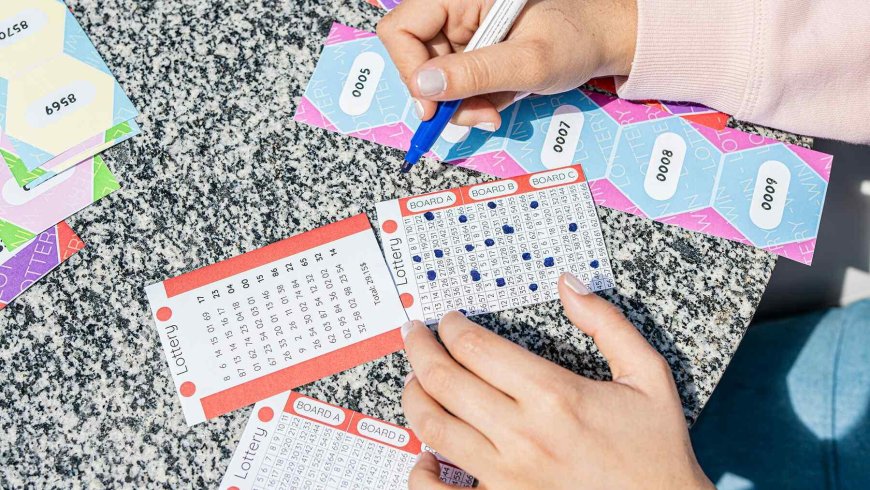
Winning the lottery is a dream that most of us share.
However, for the vast majority of people, the occasional lottery ticket is just that, occasional. For the few who feel the need to purchase a lottery ticket weekly, and sometimes even daily, neuroscientists may have come to better understand that deep-rooted and often misleading optimism.
How does our brain process the risks associated with gambling?
How gambling has become more easily accessible for millions around the world
For any one of us who spends even a moment watching TV, you will inevitably have come across advertisements for new gambling sites.
E-gambling has become so popular that it has reshaped the world. Back in the good old days, gambling was seen as a negative byproduct of sports. Nowadays, that has shifted as states approve gambling websites sponsoring competitions and advertising right in the moment of any particular sport.
Parly’s and others’ gambling mechanisms have made betting on the mundane a normal occurrence in modern-day society.
But why has gambling taken over the world with such unyielding dominance and ambition? And how do our brains process the risks associated with gambling, even if there is not much to lose?
The human brain: The most complex creation in the known universe
We have spent an inordinate amount of time studying the human brain, and we have made remarkable discoveries about human behavior in the process.
We have learnt that many of our traits as humans in modern-day society may be counterproductive, according to science. Such as the fact that closing your eyes to better concentrate on a specific sound actually makes it more challenging to focus on said sound.
But our scientific progression over the last few decades has made studying the human brain slightly easier.
We know that our brains are capable of extraordinary feats under the right circumstances. And as science progresses, the impossible is being made possible. Such as the landmark achievement that saw telepathy being achieved for the first time in history.
But humans have the capacity for odd and unexplained behavior, such as repetitive and consistent gambling despite not winning.
A recent study, “Scientists explain how the brain encodes lottery values,” published by the Sainsbury Wellcome Centre via ScienceDaily, has explained how the human brain calculates the odds of winning the lottery, most times incorrectly.
The lottery is a numbers game, but something isn’t adding up
Science has taught us that the human brain is divided into sections that are responsible for specific tasks.
The hippocampus, for instance, is the region of the brain responsible for memory and navigation. Studies have found that taxi drivers develop a larger-than-average hippocampus due to their need to remember specific road names and routes.
Studies have shown what takes place when negative thinking overwhelms our brains.
And the lottery can force upon us a world of negative thoughts, despite understanding the risks associated with gambling. The aforementioned study has gotten to the bottom of how our brains calculate the odds of winning the lottery.
Our brains often overlook risks in search of new fortunes
The study found that the brain’s frontal orienting field causally encodes the potential economic value of risky choices.
It prioritizes possible financial gains over lower odds of winning. This counterproductive neural mechanism explains the persistent gambling behavior found in some people. They simply think that this time will be their time, despite evidence to the contrary.
We have learnt that the human brain can rewire itself at any age.
A benefit that many people around the world should develop to leave gambling behind. We now understand that our brains are responsible for the persistent feeling that winning the lottery is only a matter of time.
What's Your Reaction?
 Like
0
Like
0
 Dislike
0
Dislike
0
 Love
0
Love
0
 Funny
0
Funny
0
 Angry
0
Angry
0
 Sad
0
Sad
0
 Wow
0
Wow
0