



























NASA’s Perseverance Rover Has Discovered Hidden Gemstones Never Before Seen on Mars

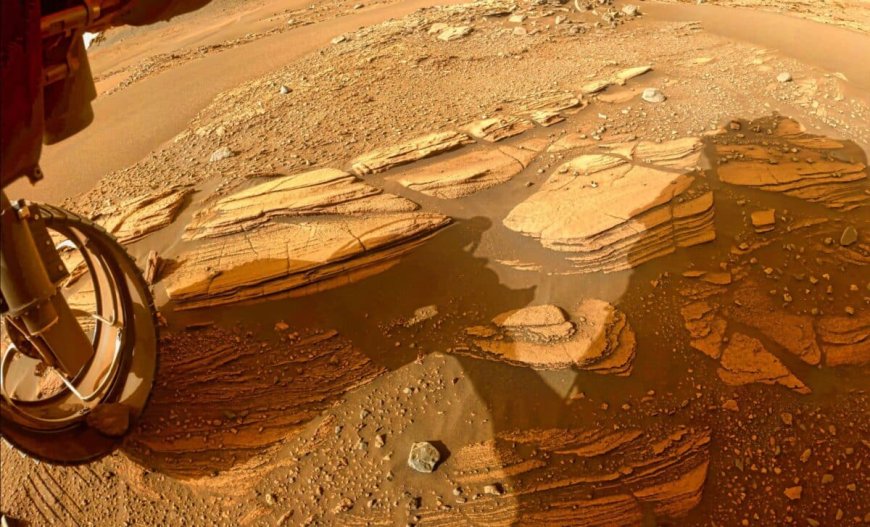
NASA’s Perseverance rover has identified microscopic grains of corundum, the mineral that forms rubies and sapphires, inside rocks on Mars. The discovery was made using laser-based analysis and marks the first confirmed detection of this material on Mars.
The finding comes from observations conducted along the rim of Jezero crater, where the rover continues to study the geological history of the region. As revealed by results presented at the Lunar and Planetary Science Conference, the detected mineral signatures closely match those of corundum analyzed in laboratories on Earth.
This discovery stands out because corundum usually forms under very specific conditions linked to tectonic activity. Mars does not have active plate tectonics, which makes the presence of these grains unexpected.
SuperCam Detects Corundum Using Laser Technology
The first detection occurred on a rock target named Hampden River. The rover’s SuperCam instrument used two laser techniques, one to vaporize the surface and another to induce luminescence. The resulting light signals closely matched those produced by rubies in laboratory conditions.
According to Ann Ollila of Los Alamos National Laboratory, both analytical methods produced nearly identical results, confirming the presence of corundum. The system combines spectroscopy and imaging, allowing scientists to determine composition without direct sampling.

Same Signal Found in Several Rocks on Mars
After leaving Hampden River, Perseverance analyzed two additional rocks named Coffee Cove and Smiths Harbour. Both showed similar chemical signatures indicating the presence of corundum.
Findings shared during the March 16 conference session in Texas indicated that these repeated detections suggest that the mineral is present in multiple spots along the crater rim. The grains are extremely small, measuring less than 0.2 millimeters, and appear as ordinary pale pebbles in images captured by Mars rovers.

Meteorite Hits May Be Behind the Phenomenon
On Earth, corundum forms in aluminum-rich and silica-poor environments, often associated with tectonic processes. Mars lacks such geological activity, which makes this formation pathway unlikely.
Based on Ollila’s presentation, the most plausible explanation involves meteorite impacts. These events generate intense heat and pressure, conditions that can produce corundum in localized zones.
“The impacts provide high temperatures and high pressures, which can produce corundum. Hydrothermal fluids are also generated,” explained Valerie Payré, a planetary geologist based at the University of Iowa. Yet the researchers must find additional samples, at their origin, to describe their formation mechanism.
Allan Treiman of the Lunar and Planetary Institute expressed surprise at the discovery during the conference. He noted that:
“In retrospect, one might not have been, because there are aluminium-rich outcrops elsewhere on the planet and there are impacts, but I thought it was very shocking to see this.”
The grains are too small to determine whether they resemble rubies or sapphires in color. When exposed to the SuperCam laser, they fluoresce brightly, providing the clearest evidence of their presence.
“We cannot quantify the amount of chromium, and other elements like iron and titanium might be present too. It is thus difficult to conclude whether they are rubies or other types of corundum [like sapphires],” Payré remarked.
Enjoyed this article? Subscribe to our free newsletter for engaging stories, exclusive content, and the latest news.
What's Your Reaction?
 Like
0
Like
0
 Dislike
0
Dislike
0
 Love
0
Love
0
 Funny
0
Funny
0
 Angry
0
Angry
0
 Sad
0
Sad
0
 Wow
0
Wow
0