



























NASA’s Parker Solar Probe Breaks Records Again with 27th Swing Around the Sun

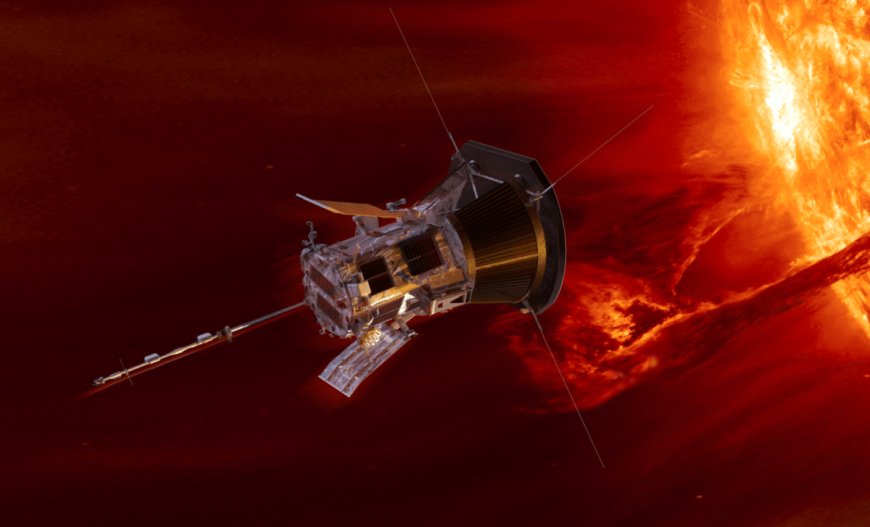
NASA’s Parker Solar Probe has successfully completed its 27th close approach to the Sun, reaching an unprecedented distance of 3.8 million miles from the solar surface. This milestone, achieved onMarch 11, 2026, is a critical step forward in understanding the Sun’s complex behavior and the phenomena driving space weather that can impact everything from satellites to power grids. With this latest encounter, the spacecraft once again surpasses previous records, continuing its pioneering mission to unlock the Sun’s secrets.
What the Parker Solar Probe Discovered
Launched in August 2018, NASA’s Parker Solar Probe has been continuously charting a path toward the Sun, aiming to collect data that was once thought impossible to gather. Its latest swing past the Sun marks not just a new record in distance, but also in the scope of scientific knowledge. By passing through the solar atmosphere, or corona, the spacecraft is gathering vital data on solar wind, solar activity, and coronal mass ejections (CMEs), which directly affect space weather on Earth.
The importance of Parker’s mission is highlighted by its role in improving space weather predictions. The data gathered helps researchers understand the origin of high-energy particles that cause solar flares and storms, allowing scientists to forecast when these eruptions might reach Earth. Understanding these events is crucial because they pose significant risks to astronauts, satellites, air travel, and even Earth’s power grids.
In addition to solar wind and space weather, the Parker Solar Probe’s latest data collection focuses on the Sun’s changing phases. From quiet periods to the solar maximum, the spacecraft is taking samples that cover the full spectrum of solar activity, allowing researchers to track these transitions over time. The study of these shifts will ultimately lead to more accurate solar models, crucial for predicting future space weather events.
NASA’s Continued Commitment to Space Exploration and Solar Science
Parker Solar Probe was developed as part of NASA’s Living With a Star (LWS) program, managed by the Goddard Space Flight Center in Greenbelt, Maryland. According to NASA Science, this program aims to understand the Sun’s relationship with Earth and its impact on space weather. The mission is being managed by the Johns Hopkins Applied Physics Laboratory (APL), where the spacecraft was designed and built. NASA’s deep commitment to solar research is evident in the significant strides Parker Solar Probe continues to make in gathering real-time, high-quality data from the Sun.
The latest flyby is a part of a series of encounters designed to push the limits of space technology and improve our understanding of solar dynamics. The spacecraft’s speed, reaching a blistering 430,000 miles per hour (687,000 kilometers per hour), further solidifies its status as one of the fastest man-made objects ever launched. This speed and its close proximity to the Sun allow the Parker Solar Probe to gather unprecedented data on the solar wind, magnetic fields, and energetic particles that drive space weather events.
Impact on Future Space Missions: The Importance of Solar Research
The findings from the Parker Solar Probe are set to play an essential role in the future of space exploration. With the goal of sending humans to the Moon, Mars, and beyond, NASA’s understanding of space weather becomes more critical than ever. Solar events can pose serious hazards to astronauts, spacecraft, and deep-space missions, making the data gathered by Parker vital to planning safe expeditions.
Parker Solar Probe’s work could also be transformative for communication technologies and power grids on Earth. Solar flares and CMEs can disrupt satellite communications, GPS systems, and even terrestrial power infrastructure. By predicting and understanding these space weather events, scientists can develop more effective solutions to protect critical systems from solar disturbances.
As humanity continues to venture further into space, the data provided by Parker Solar Probe will be crucial for safeguarding space missions and advancing our understanding of the universe.
Enjoyed this article? Subscribe to our free newsletter for engaging stories, exclusive content, and the latest news.
What's Your Reaction?
 Like
0
Like
0
 Dislike
0
Dislike
0
 Love
0
Love
0
 Funny
0
Funny
0
 Angry
0
Angry
0
 Sad
0
Sad
0
 Wow
0
Wow
0