




























NASA’s 98-Meter Mega Rocket Ready to Launch Crew Beyond the Moon’s Far Side

NASA is preparing to send humans around the Moon for the first time in more than 50 years. The agency has set March 6 as the earliest launch date for Artemis II, a 10-day mission that will carry four astronauts around the lunar far side and back to Earth.
The mission marks humanity’s furthest journey into space since Apollo 17 in 1972. According to NASA officials speaking at a news conference, the targeted launch date follows a successful full rehearsal of the rocket’s fueling and countdown procedures at Kennedy Space Center in Florida.
Artemis II is designed as a test flight with crew aboard, paving the way for a future landing under Artemis III. The mission unfolds at a time when the United States faces growing competition from China, which is aiming for its own crewed lunar landing by 2030.
A Successful Rehearsal Clears the Way
The early March launch window was set after a completed “wet dress rehearsal,” a key pre-launch test in which the Space Launch System (SLS) rocket was fully fueled and taken through the countdown sequence. According to NASA’s Lori Glaze, engineers were able to tank the rocket within the planned timeline and successfully demonstrate the launch countdown.

This was the second attempt at the rehearsal. The first, held at the beginning of February, ended early due to a hydrogen fuel leak at the launch pad. Glaze said issues with seals and filters had since been remedied.
“Every night I look up at the Moon and I see it and I get real excited because I can feel she’s calling us and we’re ready,” she said during the briefing, reflecting the growing anticipation within the Artemis team.
Four Astronauts Set For A 10-day Deep Space Journey
The Artemis II crew includes Americans Reid Wiseman, Victor Glover, and Christina Koch, alongside Canadian astronaut Jeremy Hansen. As noted in a NASA statement, the astronauts were scheduled to begin quarantine after completing the rehearsal.
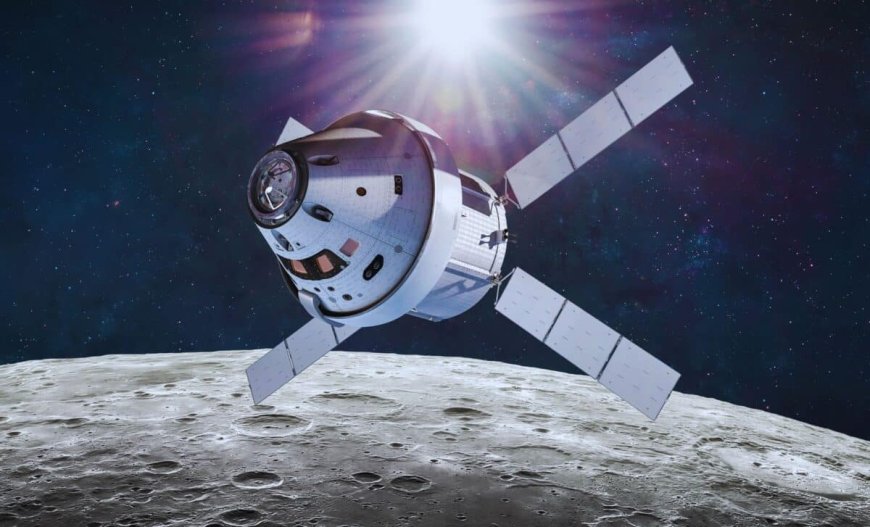
They will launch atop the 98-meter-tall SLS rocket, which flew once before in November 2022 during the uncrewed Artemis I mission. At the top of the rocket sits the Orion capsule, a spacecraft about the size of a minibus where the crew will live and work throughout the mission.
The first day will be spent in orbit around Earth. If all systems perform as expected, Orion will head toward the Moon on a four-day voyage. The astronauts will circle the Moon’s far side at altitudes between 6,500 and 9,500 kilometres, spending several hours studying and photographing the surface before starting their four-day journey home and splashing down in the Pacific Ocean.
Artemis III and the New Moon Race
If Artemis II succeeds, it will open the path to Artemis III, which aims to land astronauts on the Moon. Nasa has said the landing is targeted for 2028, though the timeline is described as ambitious.
The lunar lander for Artemis III is being developed by SpaceX, owned by Elon Musk, and will be launched aboard a Starship rocket. Delays to Starship have led NASA to request a streamlined plan from SpaceX to accelerate progress.
The renewed push comes as China advances toward its own crewed lunar mission by 2030. Both the United States and China are planning landings near the Moon’s south pole and are competing for locations suitable for future lunar bases.
Enjoyed this article? Subscribe to our free newsletter for engaging stories, exclusive content, and the latest news.
What's Your Reaction?
 Like
0
Like
0
 Dislike
0
Dislike
0
 Love
0
Love
0
 Funny
0
Funny
0
 Angry
0
Angry
0
 Sad
0
Sad
0
 Wow
0
Wow
0