


























NASA Just Captured Florida’s Waters Turning Pastel Blue in Ways Scientists Never Expected

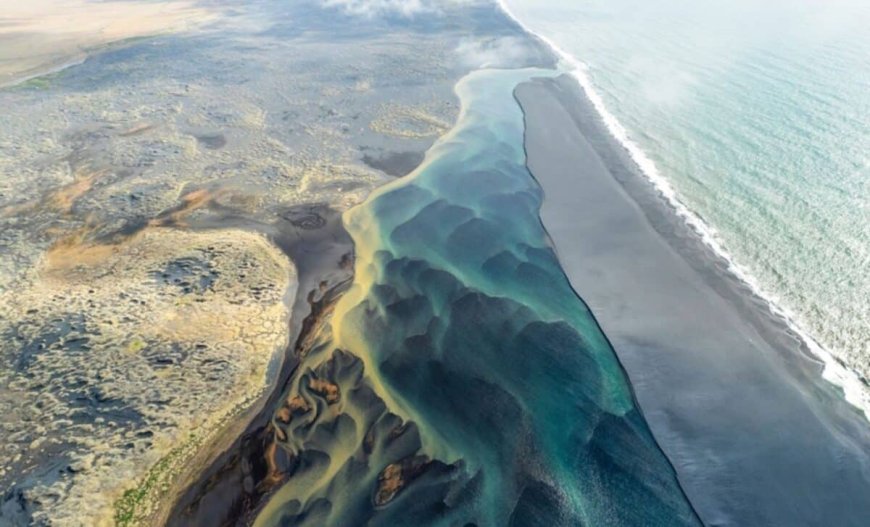
In a rare and stunning phenomenon, the Gulf of Mexico’s waters off the coast of Florida turned from deep blue to pale turquoise during a series of intense winter storms. NASA captured the striking transformation via satellite images, revealing how frigid air and intense winds stirred up calcium carbonate mud, creating swirling eddies off Florida’s western shelf.
Winter storms can have surprising effects on the environment, even in places where warm temperatures usually dominate. Recent satellite images taken by NASA’s Terra satellite highlighted a dramatic shift in the ocean’s appearance near Florida.
Normally, the Gulf of Mexico’s waters boast deep azure hues, but in late January and early February, they were transformed into a brilliant mix of blue and green. This change came in the wake of two powerful storms, Fern and Gianna, which swept across the state and brought unusually cold temperatures.
How Winter Storms Stir the Waters
The dramatic shift in water color was a result of stronger winds and cold temperatures pushing denser, colder water offshore. According to NASA, the cooling water near Florida’s coast became more compact, mixing with sediment; mainly calcium carbonate particles that had been stirred up from the ocean floor.

In early February, the Moderate Resolution Imaging Spectroradiometer (MODIS) aboard NASA’s Terra satellite captured before-and-after images of the Gulf of Mexico. The images displayed how the water transitioned into a pale blue, the result of the particles that had been lifted and dispersed. Though these conditions usually occur during hurricanes, the intensity of this cold front was enough to provoke a similar response, showcasing the unpredictable nature of ocean dynamics.
“Another interesting aspect of these events is that the cold air cools off the shallow water on the banks and makes it denser than the surrounding warmer open ocean water,” explained James Acker, a data support scientist at the NASA Goddard Earth Sciences Data and Information Services Center.
The Mysterious “Hammerhead” Eddies Spotted in Florida’s Gulf
One of the more intriguing aspects of this phenomenon was the appearance of “hammerhead” eddies, which are swirling currents of water that often occur near the continental slope. NASA scientists noted that these eddies are created when dense, colder water flows toward the Gulf of Mexico, pulling along suspended sediments into slower-moving waters.
“These can form when narrow streams of denser chilled seawater carry sediment offshore, encounter slower-moving Gulf waters, and curl into pairs of counterrotating eddies,” said Acker.

These dynamics were captured in images from NASA’s Landsat 9 satellite, providing climatologists with valuable data on how oceanic systems respond to extreme weather patterns.
Enjoyed this article? Subscribe to our free newsletter for engaging stories, exclusive content, and the latest news.
What's Your Reaction?
 Like
0
Like
0
 Dislike
0
Dislike
0
 Love
0
Love
0
 Funny
0
Funny
0
 Angry
0
Angry
0
 Sad
0
Sad
0
 Wow
0
Wow
0