




























NASA Artemis II Moon Mission Has Officially Launched: What’s Next for Space Exploration

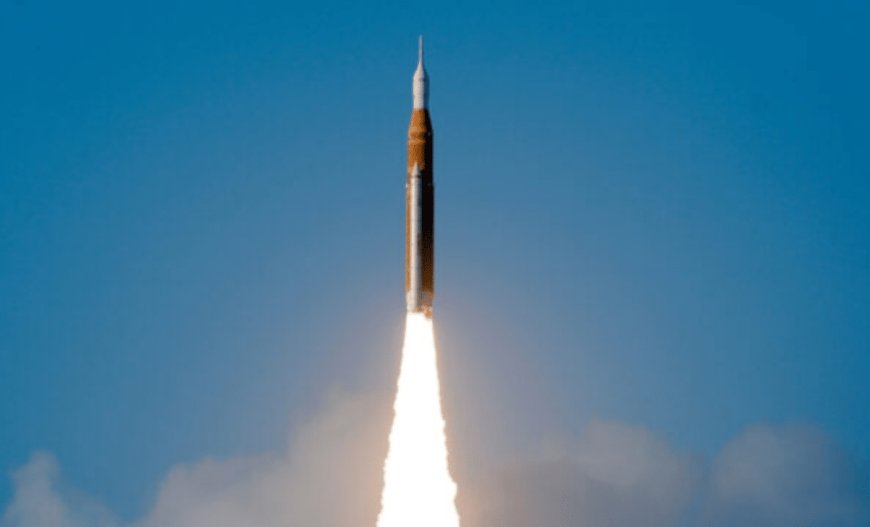
NASA’s Artemis II mission has officially launched, marking humanity’s return to deep space for the first time in over 50 years. Launched on April 1, 2026, from Kennedy Space Center, this milestone mission sends astronauts aboard the Orion spacecraft on a 10-day journey to orbit the Moon, paving the way for future lunar landings. Artemis II is not just a mission, it’s a symbolic leap toward further exploration, demonstrating humanity’s ability to push the boundaries of what is possible.
A New Chapter in Lunar Exploration
The Artemis II mission represents a historic return to the Moon, a goal that seemed impossible just a few decades ago. In a press conference before the launch, NASA associate administrator Amit Kshatriya encapsulated the significance of the mission: “Fifty-three years ago, humanity left the Moon and did not return. Now we go back.” This mission is a crucial stepping stone for NASA’s goal of returning astronauts to the lunar surface in the near future, specifically targeting the Moon’s south pole for scientific exploration in Artemis IV, slated for 2028.
On April 1, 2026, at 22:35 UTC, the powerful Space Launch System (SLS) rocket, carrying the Orion spacecraft, lifted off from Launch Pad 39-B at the Kennedy Space Center in Florida. This launch marks the first crewed flight of NASA’s SLS rocket and the Orion capsule. The journey is set to send four astronauts on a loop around the Moon before safely returning to Earth. It is the first time humans will travel beyond low Earth orbit since Apollo 13 in 1970, breaking a record set more than half a century ago.
A Momentous Achievement for All of Humanity
In a powerful statement after launch, the Artemis II crew shared their excitement: “We have a beautiful moonrise. We’re headed right at it.” This moment is not only a significant technological achievement but also an emotional one, as it represents humanity’s ongoing curiosity and resilience. The crew members, Mission Commander Reid Wiseman, Pilot Victor Glover, and Mission Specialists Christina Koch and Jeremy Hansen, are embarking on an extraordinary journey. As they travel farther from Earth than any humans in history, the significance of their mission cannot be understated.
NASA’s Artemis program has faced many challenges, but with Artemis II, the vision of returning to the Moon is becoming a reality. The mission is designed to test the Orion spacecraft’s capabilities in real deep-space conditions, including systems crucial for life support, navigation, and communication. This is not just a test for the spacecraft; it’s a test for humanity’s ability to explore the vastness of space beyond the confines of Earth’s orbit.
The Role of Artemis II in the Broader Mission
Artemis II is far more than a journey to the Moon, it is a critical test for future lunar exploration. Chief Flight Director Emily Nelson described the mission as an opportunity to send a crew farther than any humans have ever gone: “This is the opportunity… to send our crew farther than anyone has gone before.” This mission will provide essential data on how astronauts operate in deep space, where the challenges of communication delays, navigation, and physical well-being become even more critical.
Artemis II is also a testament to the power of international collaboration and technological innovation. As NASA continues to push the frontier of space exploration, it is working closely with commercial and international partners to make these ambitious missions possible.
“This challenge of expanding the frontier will be won … by the craftsmen, the engineers, and the industries of free nations, building together what no nation can build alone,” Kshatriya remarked in a statement that highlights the global effort behind the Artemis program.
The mission serves as a stepping stone to Artemis III in 2027, which will focus on rendezvous and docking operations in lunar orbit, preparing for future human landings on the Moon. Each phase builds on the last, creating a robust foundation for sustained human exploration beyond Earth.

NASA/YouTube
What’s Next for the Artemis Program?
Artemis II is just the beginning. The Artemis program aims to establish a sustainable human presence on the Moon and eventually send astronauts to Mars. With Artemis II, NASA has not only demonstrated that it is capable of sending humans to the Moon again but has also showcased its readiness to take on the larger challenge of interplanetary exploration.
The mission has inspired the next generation of scientists, engineers, and dreamers. As Nelson put it, “It’s an incredible moment for the Artemis generation and we’re excited and we are ready to press.” For the astronauts aboard Orion, this mission is a historic step for humanity—one that will be remembered for generations to come.
Enjoyed this article? Subscribe to our free newsletter for engaging stories, exclusive content, and the latest news.
What's Your Reaction?
 Like
0
Like
0
 Dislike
0
Dislike
0
 Love
0
Love
0
 Funny
0
Funny
0
 Angry
0
Angry
0
 Sad
0
Sad
0
 Wow
0
Wow
0