


























Kīlauea’s tallest lava fountains in over a year of eruptions just forced evacuations and grounded flights across Hawai’i

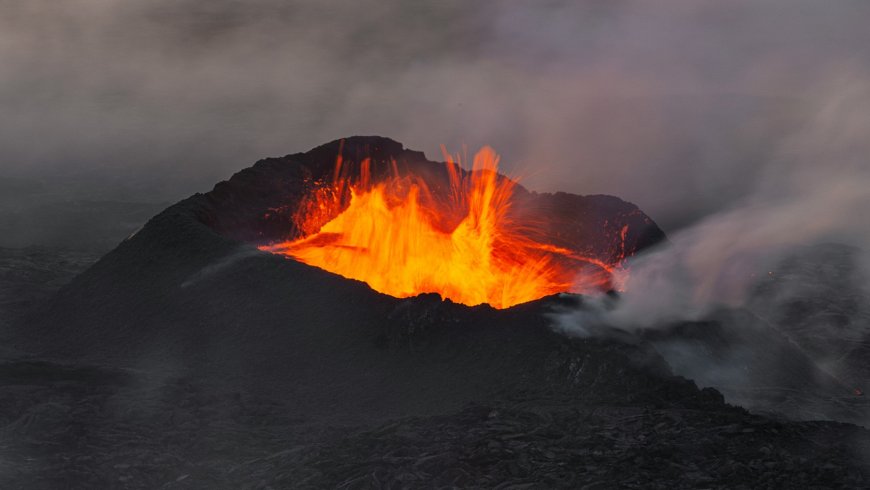
On the morning of March 10, 2026, two vents on the southwest side of Halema’uma’u Crater roared back to life — and this time, something was different. For roughly nine hours, lava fountains climbed higher than anything seen during Kīlauea’s current eruption cycle, while ash and volcanic debris rained down on communities up to 50 miles away.
It was episode 43 of an eruption that’s been running, on and off, since December 2024. Dozens of similar bursts had come before. But this one set a new benchmark for the ongoing sequence — and its reach extended well beyond the crater rim.
Record-breaking fountains from a restless summit
Episode 43 began at approximately 9 a.m. local time on March 10, 2026, with lava erupting from two active vents on the southwest side of Halema’uma’u Crater. Activity continued for roughly nine hours before subsiding around 6 p.m. Fountains reached an estimated 1,770 feet — about 540 meters — the highest recorded during the current eruption cycle that began in December 2024.
The scale of material ejected was equally striking. The Hawaiian Volcano Observatory estimated that roughly 16 million cubic yards (12 million cubic meters) of lava erupted in that single episode alone. Cumulative output across all 43 episodes now approaches 325 million cubic yards (250 million cubic meters), and lava pooled inside the summit caldera has deepened by approximately 300 feet (90 meters) since the cycle began.
Ash, debris, and a volcanic plume reaching 30,000 feet
The lava itself stayed within the summit area, but what traveled through the air told a different story. Volcanic gas and ash climbed to more than 30,000 feet (9,100 meters) above sea level — high enough to prompt HVO to elevate the aviation color code to red.
Closer to the crater, hazards were more immediate. Volcanic fragments up to several inches in diameter fell along the north rim of the caldera and into adjacent communities. Finer material — ash and Pele’s hair, the thread-like strands of volcanic glass — drifted tens of miles northeast, reaching Hilo, Keaʻau, and other coastal communities. HVO cautioned that volcanic debris is an irritant to the eyes, skin, and respiratory system, and warned that ash accumulation could affect water quality for households relying on rainwater catchment systems — a practical concern for many rural residents across the island.
Flights canceled, highways closed, and a national park evacuated
The eruption’s reach went beyond inconvenience. Several flights at Hilo’s airport were canceled as the ash plume spread northeast. Highway 11 was temporarily closed, and visitors were evacuated from portions of Hawaiʻi Volcanoes National Park.
These disruptions point to a recurring dynamic: even when lava remains confined to the summit caldera, Kīlauea’s episodic eruptions ripple outward in ways that affect infrastructure and daily life across a wide area. Episode 43 made that pattern unusually hard to ignore.
Satellite eyes on a sizzling caldera
About four hours after fountaining stopped, the Landsat 9 satellite passed over the Island of Hawai’i. Its Operational Land Imager captured shortwave infrared and near-infrared data at 10:20 p.m. local time, revealing heat still radiating from freshly cooled lava on the caldera floor. That thermal data was layered over daytime Landsat composites and a digital elevation model, producing imagery that maps the extent of new basaltic rock deposited during the episode.
Earlier in the day, daytime satellite passes had also captured the volcanic plume drifting northeast from the active vents. When conditions on the ground are hazardous or simply inaccessible, orbital data fills gaps that ground teams can’t.
Fifteen months of eruptions — and no sign of stopping
Kīlauea returned to activity in December 2024 and has now sustained 43 separate episodes of lava fountaining, each lasting anywhere from a few hours to several days. The pattern is episodic rather than continuous — stretches of relative quiet interrupted by bursts of intense activity.
The cumulative effect is a measurably transformed summit landscape. Three hundred feet of new lava now fill what was once a deeper caldera, and the volume of erupted material keeps growing. What remains uncertain is how long the current cycle will persist — and whether activity could eventually migrate beyond the summit. So far, lava has stayed within Halema’uma’u Crater, but Kīlauea has a long history of shifting behavior. HVO continues to monitor ground deformation, gas emissions, and seismicity for any signs of change.
Episode 43 set a new height record within this eruption cycle. Whether future episodes will surpass it, or whether the pattern will eventually wind down, is something both scientists and residents across the island are watching closely.
What's Your Reaction?
 Like
0
Like
0
 Dislike
0
Dislike
0
 Love
0
Love
0
 Funny
0
Funny
0
 Angry
0
Angry
0
 Sad
0
Sad
0
 Wow
0
Wow
0