



























Japan Has Created the World’s First Engine That Generates Electricity on 30% Hydrogen

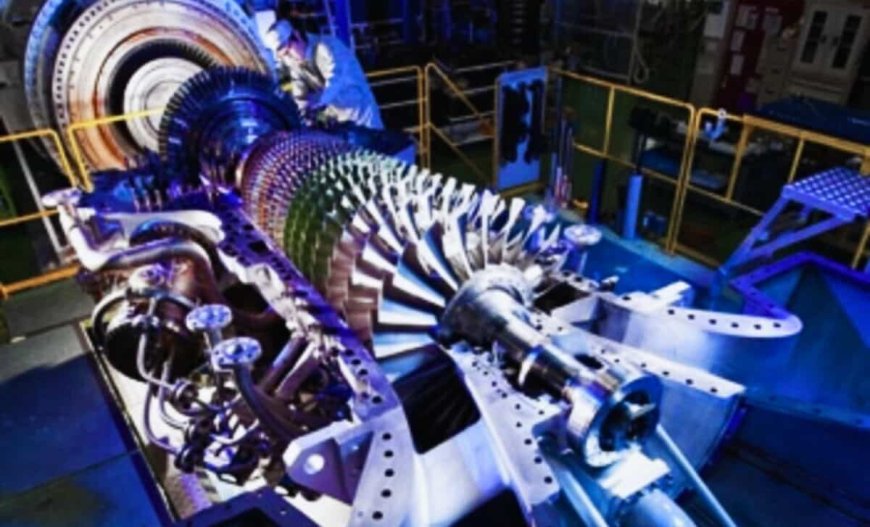
The world’s first commercial gas engine capable of running on a 30 percent hydrogen blend is now available for order. It arrives with a warranty, a service schedule, and a price tag. Kawasaki Heavy Industries began accepting orders for the KG series hydrogen co-firing engine in late September 2025, following an 11 month verification test at its Kobe works.
The engine burns a mixture of up to 30 percent hydrogen by volume with natural gas, a threshold that requires minimal modification to existing pipeline infrastructure. But the fuel itself remains scarce. Japan imports nearly all its energy, and commercial scale hydrogen supply chains are still years from completion.
A Transition Technology With Retrofit Roots
The KG series engine is not designed to run on pure hydrogen, at least not yet. The 30 percent blend represents what the company calls a drop in compatibility level, meaning facilities equipped with natural gas systems can adopt the engine without replacing distribution lines or storage tanks.
The company’s gas engines division has spent more than a decade refining the underlying platform. Earlier generation KG series gas engines, which have received over 240 orders since 2011, can be converted to hydrogen co firing specifications. That means a power plant built a decade ago on natural gas can begin burning a fuel that did not exist in commercial quantities when the plant was designed. The retrofit pathway extends asset life while gradually decarbonizing fuel inputs, avoiding the capital cost of complete fleet replacement.

Kawasaki’s verification testing ran from October 2024 through September 2025 and focused on operational factors that laboratory demonstrations cannot replicate. Engineers tested hydrogen supply chain integration, maintainability, and safety protocols, particularly leak detection and purge systems designed for hydrogen’s unusual behavior.
Hydrogen molecules are the smallest in existence. They escape through seals that hold methane, they embrittle certain metals over time, and they ignite across a wider range of fuel to air ratios than natural gas. The KG series incorporates hydrogen leak detectors positioned throughout the fuel delivery system and nitrogen purge mechanisms that inert the fuel lines during startup, shutdown, or fault conditions.
Marine Propulsion Follows a Similar Path
The stationary power announcement arrived alongside parallel progress in a different sector. On October 28, 2025, Kawasaki, Yanmar, and Japan Engine Corporation announced the completion of what they described as the world’s first land based operation of marine hydrogen engines.
The demonstration tested multiple engine classes using a newly developed liquefied hydrogen fuel supply system. Kawasaki and Yanmar demonstrated stable hydrogen combustion in medium speed four stroke engines at rated output. Japan Engine is developing a low speed two stroke hydrogen engine, the type used for main propulsion on large container ships, with first operation scheduled for spring 2026.

All three engines share a dual fuel architecture. They can switch between hydrogen and conventional diesel as needed. That redundancy addresses a practical constraint of hydrogen shipping. Fuel availability will vary by route and by port until bunkering infrastructure matures, which could take decades. A vessel capable of burning hydrogen when available and diesel when necessary can operate through the transition period rather than waiting for it to end.
The marine project operates under Japan’s Green Innovation Fund, administered by NEDO, the New Energy and Industrial Technology Development Organization. The Japanese government has committed approximately 2 trillion yen, roughly 13 billion US dollars, to the fund as part of the strategy to achieve carbon neutrality by 2050.
The Infrastructure That Does Not Yet Exist
Both the stationary power and marine initiatives depend on infrastructure that remains under construction. Kawasaki is addressing this through simultaneous investment in hydrogen supply chains, a strategy detailed on the corporate website.
In November 2025, Kawasaki Heavy Industries and Japan Suiso Energy broke ground on the Kawasaki LH2 Terminal in Ogishima, described by the partners as Japan’s first large scale liquid hydrogen import facility. The terminal will feature a 50,000 cubic meter liquid hydrogen storage tank, which the partners describe as the world’s largest, along with maritime cargo handling and truck dispatch capabilities. The facility is planned to begin operations by 2030.
The terminal is designed to serve as an import and bunkering hub for hydrogen produced overseas. Japan’s geographical constraints limit domestic renewable energy potential, making imported hydrogen a central pillar of the national energy strategy. The partners are simultaneously planning a 40,000 cubic meter liquid hydrogen carrier, a significant scale up from the 1,250 cubic meter Suiso Frontier that demonstrated the first hydrogen shipment from Australia to Japan in 2022.
Kei Nomura, Executive Central Manager of Kawasaki’s Hydrogen Strategy Division, stated in connection with the marine demonstration that “liquid hydrogen is a vital key to realising a sustainable energy society, and we have long been committed to building the technological foundation to support it.”
That technological foundation now includes the engines. The fuel terminals and the ships to supply them are scheduled for the end of the decade. Between now and then, early adopters of the KG series will face a choice. They can secure hydrogen from limited local sources, likely at high cost. They can run the engines on natural gas only, effectively ignoring the hydrogen capability they paid for. Or they can wait.
Enjoyed this article? Subscribe to our free newsletter for engaging stories, exclusive content, and the latest news.
What's Your Reaction?
 Like
0
Like
0
 Dislike
0
Dislike
0
 Love
0
Love
0
 Funny
0
Funny
0
 Angry
0
Angry
0
 Sad
0
Sad
0
 Wow
0
Wow
0