

























“It was the Rolls-Royce of energy” — Expert reveals the ‘dirty secret’ of solar panels

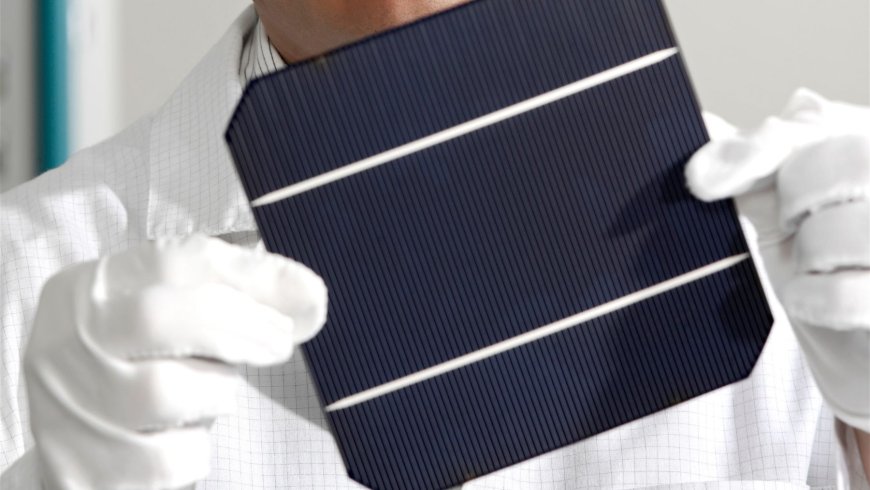
You’ve probably heard that the clean energy transition is a clear win: But what if part of that story hasn’t been fully told?
In one country, cracks are beginning to show — literally.
Early-generation systems installed during the first wave of the renewable push are now revealing problems.
It doesn’t erase the benefits. But it does raise a bigger question about what happens after the news fades — and who ends up paying when “clean” technology doesn’t age well.
The first generations of solar panels have indeed failed
If you’ve installed solar panels in the last decade, you probably expected them to just… work. Quietly, efficiently, for 20 or 25 years. And to be fair, most do. Across Australia, the majority of systems are still operating as promised. They generate power, they cut bills, and they last. But here’s the part that doesn’t get much attention.
Some early-generation panels haven’t made it to their expected lifespan. They’ve failed sooner than anyone planned for. Not everywhere and not all brands. But enough cases to raise eyebrows.
The issue isn’t front-page news. It’s happening in the background of the solar boom—while installations keep climbing, and rooftops keep filling up, causing new problems. That’s why voices from inside the industry are starting to speak up.
One of them is a former general manager from LG Solar, who shared his perspective publicly on TikTok under the handle @yeanswers. He made it clear he wasn’t speculating—he was drawing on firsthand experience from his time leading operations.
He even led with his former title, almost as if to say: I’ve seen this up close. So the question becomes obvious.
If most systems are fine—but some aren’t—how big is the gap between what you were promised, and what’s actually happening?
Are solar cells as green as we think?
For a while, certain solar panels carried a reputation that felt almost untouchable.
Take the LG 385-watt model. In online energy circles, it was once described as “the Rolls-Royce of solar.” Premium price and premium quality with a 25-year warranty meant to signal long-term confidence. You bought it expecting decades of steady output. That was the promise.
But here’s where the narrative gets uncomfortable.
According to one industry commentator, some of those panels haven’t aged the way customers expected. Instead of lasting decades, he claims he’s seen units fail after just five to seven years in the field.
He’s clear that this isn’t a formal scientific study. It’s based on his personal observations from installations he’s encountered.
Still, the claim lingers.
If premium panels can fail early, what does that mean for consumer trust or the resale value of homes? For the broader perception that solar is “set it and forget it” technology? Because once stories like this circulate, they do more than question one model.
They make you wonder how much of the solar boom has been built on expectations that may not always match reality.
“Dirty secrets” and the Australian green revolution
@yeanswers then expanded upon his initial statement and referred to the “dirty secrets” of the Australian green revolution. He defined this phrase as the issues he believes are receiving much less attention than the success stories associated with the renewable energy movement.
Specifically, he cited the early equipment failure of some of the first-generation solar panels as one of the “dirty secrets.”
Most systems still deliver exactly what they promised. Yet early failures show that long-term performance matters just as much as installation numbers and glossy warranties.
For you, that means asking smarter questions about durability, maintenance, and accountability. The energy transition is real. But so is the need to make sure today’s solutions truly hold up tomorrow.
Disclaimer: Our coverage of investments, retirement funding, and digital assets is not financial advice. We are not responsible for any investment decisions or financial losses resulting from the use of our content. All information is provided solely for educational and informational purposes.
What's Your Reaction?
 Like
0
Like
0
 Dislike
0
Dislike
0
 Love
0
Love
0
 Funny
0
Funny
0
 Angry
0
Angry
0
 Sad
0
Sad
0
 Wow
0
Wow
0