


























How Did His Body Surface After 66 Years? The Lost Antarctic Explorer Found in a Glacier

The glacier did not give up its dead quietly. For 66 years, the ice held Dennis Bell in a slow, silent transport, moving his body inch by inch down the slopes of King George Island while above him, science advanced, nations built permanent stations, and his family aged without a grave to visit. Then, in January 2025, the retreating edge of Ecology Glacier deposited its contents onto newly exposed rock.
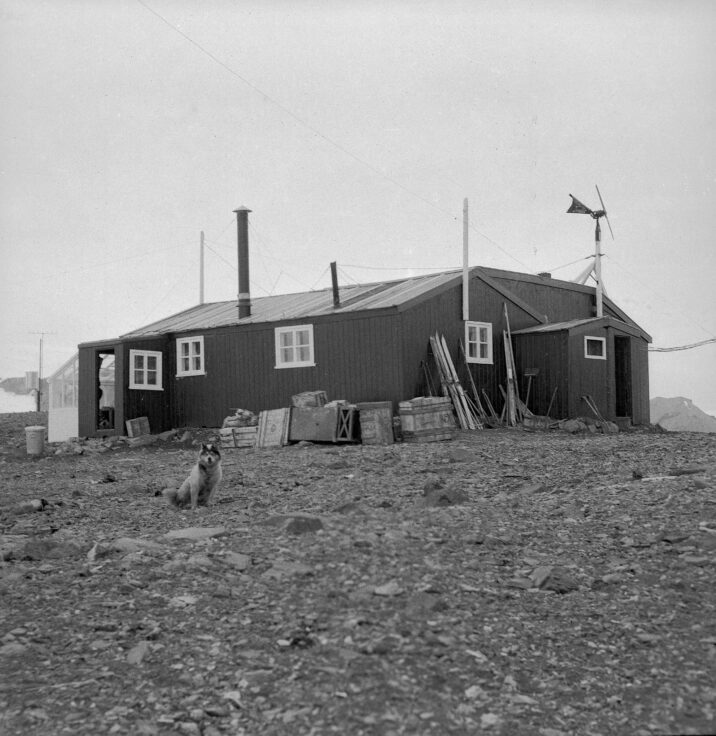
What emerged was not just a body, but a time capsule from an era when Antarctic exploration meant dog sledges, canvas tents, and the real possibility that a misstep meant vanishing forever. The recovery of Bell’s remains, confirmed by DNA analysis in August 2025, closed a case that had become legend among polar researchers. But it also raised an unsettling question that glaciologists are now forced to consider: if this glacier gave back one man, what else might the melting ice reveal?

The answer depends on ice dynamics that scientists are only beginning to understand. Glaciers do not simply freeze objects in place. They flow, fracture, and sometimes deposit their contents miles from where they were swallowed. As documented by the British Antarctic Survey in their official announcement, the recovery operation required navigating terrain that remains actively hazardous.
The Mechanics of Resurrection
When Dennis Bell fell into a crevasse on July 26, 1959, he entered a system that operates on geologic time. The Ecology Glacier moves under gravity, and over 66 years that movement transported his body and equipment downslope toward the glacier’s terminus.
The Polish research team that made the discovery described the process with clinical precision. “The place where Dennis was found is not the same as the place where he went missing,” they explained. “Glaciers, under the influence of gravity, move their mass of ice, and with it, Dennis made his journey.”

That journey ended because the glacier is shrinking. Data from the Henryk Arctowski Polish Antarctic Station shows the Ecology Glacier has retreated significantly since the 1980s, with acceleration after 2010. A detailed account from Popular Mechanics describes how the recovery team documented the scattering pattern of artifacts across the newly exposed debris field.
The recovery required four trips across hazardous terrain with slopes up to 45 degrees. The team recovered more than 200 items, including an Erguel wristwatch, a Swedish Mora knife, bamboo ski poles, a flashlight, radio fragments, and an ebonite pipe stem.
Identification and Aftermath
DNA testing by Denise Syndercombe Court at King’s College London used samples from Bell’s surviving siblings, David Bell and Valerie Kelly. The analysis established a match probability exceeding one billion to one.
David Bell, now 86 and living in Australia, was 19 when he answered the door to a telegram boy in July 1959. “The telegram boy said, ‘I’m sorry to tell you, but this is bad news,'” he recalled. He went upstairs to tell his parents. “It was a horrendous moment.” His full account was reported by BBC News at the time of the identification.
The family had accepted Dennis would never come home. David joined a 2015 expedition that sailed to King George Island, though sea ice prevented him from reaching his brother’s base. “It was very, very moving,” he said. “It lifted the pressure, a weight off my head. And I thought that would be it.”
When notified of the discovery, David said in a BAS statement: “When my sister Valerie and I were notified that our brother Dennis had been found after 66 years we were shocked and amazed. The British Antarctic Survey and British Antarctic Monument Trust have been a tremendous support, and together with the sensitivity of the Polish team in bringing him home have helped us come to terms with the tragic loss of our brilliant brother.”
The Man Inside the Ice
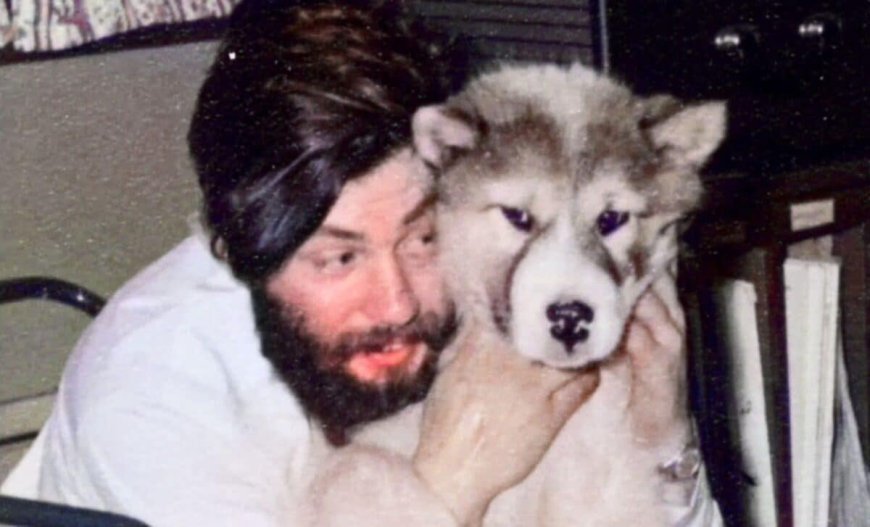
Dennis Bell was 25, the oldest of three siblings from Harrow, northwest London. He served in the Royal Air Force as a radio operator before joining the Falkland Islands Dependencies Survey in 1958.
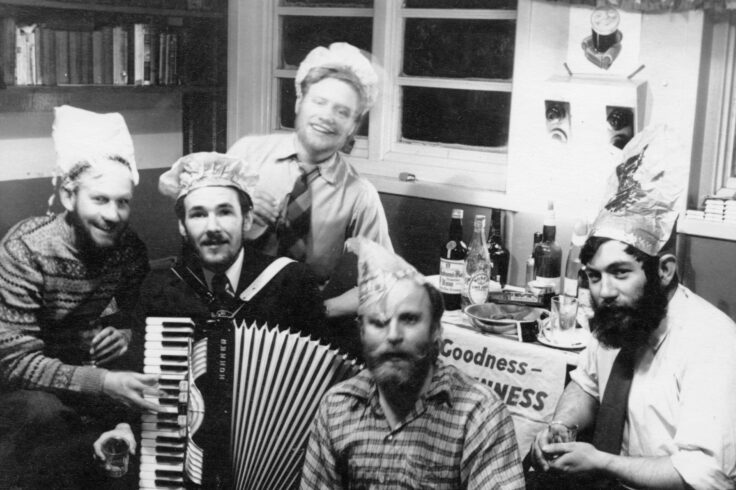
Base records describe him as “cheerful and industrious, with a mischievous sense of humour and fondness for practical jokes.” He was the best cook in the hut, managed the food store, and raised two litters of husky puppies.
The accident occurred weeks after his 25th birthday. Bell and surveyor Jeff Stokes were ascending the glacier ahead of two colleagues. The dogs were exhausted in deep snow, and Bell went ahead on foot to encourage them, without skis. He broke through a snow bridge concealing a crevasse.

Sir Vivian Fuchs described the attempted rescue in Of Ice and Men. Stokes lowered a rope nearly 100 feet. Bell tied it to his belt. As Stokes and the dogs hauled him up, his body jammed against the lip. The belt broke. He fell again. This time, there was no reply.
Base reports note that earlier in the season, Bell had built the coffin for another team member who died. “We heard from Jeff that yesterday Tink fell down a crevasse and was killed,” one entry reads. “Jeff has badly bitten frostbitten hands. We are not taking any more risks to recover.”
The Glacier’s Archive
Since 1944, 29 Britons have died while serving in the British Antarctic Territory on scientific missions, according to the British Antarctic Monument Trust. Not all bodies were recovered.
Ice dynamics make predictions difficult. Objects in accumulation zones may emerge centuries later at the coast. Others, like Bell, were caught in smaller outlet glaciers with faster response times to warming.
Polish scientists noted similar discoveries may become more common as the Antarctic Peninsula continues to warm. “It’s an opportunity to reassess the contribution these men made,” said Rod Rhys Jones, chair of the British Antarctic Monument Trust, “and an opportunity to promote science and what we’ve done in the Antarctic over many decades.”
The remains were transported from King George Island aboard the Sir David Attenborough to the Falkland Islands, then to London with RAF support. The family will decide how to mark Dennis Bell’s memory.
Bell Point on King George Island has borne his name since shortly after the accident. His body, finally, has come home to join it.
Enjoyed this article? Subscribe to our free newsletter for engaging stories, exclusive content, and the latest news.
What's Your Reaction?
 Like
0
Like
0
 Dislike
0
Dislike
0
 Love
0
Love
0
 Funny
0
Funny
0
 Angry
0
Angry
0
 Sad
0
Sad
0
 Wow
0
Wow
0