


























Gravity Doesn’t Behave Normally in Antarctica, and It Intensified as the Continent Froze

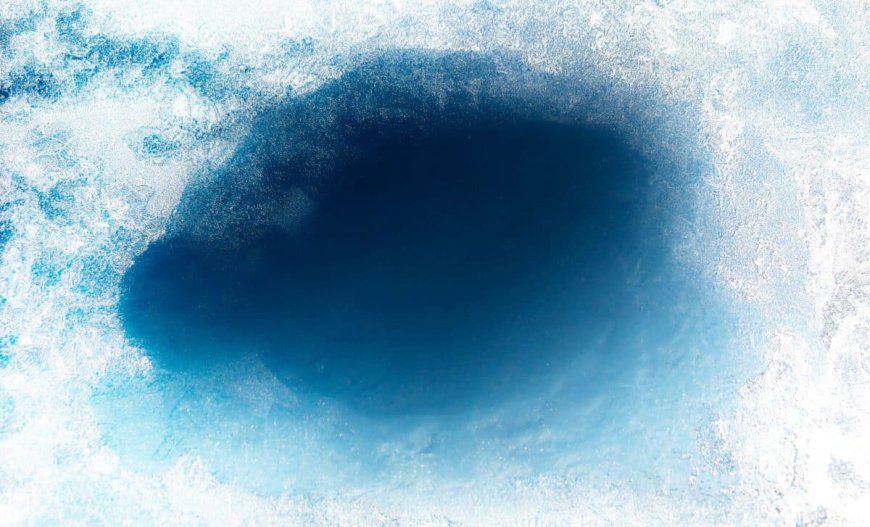
A vast “gravity hole” beneath Antarctica became stronger as the continent shifted into an ice-dominated world tens of millions of years ago, according to new research published in Scientific Reports. The finding links one of Earth’s strangest geophysical quirks to the deep interior of the planet, and to a pivotal chapter in Antarctic climate history.
The Weakest Gravity on Earth
After correcting for Earth’s rotation, the weakest gravitational pull on the planet sits beneath Antarctica. Scientists call it a gravity hole, not because gravity disappears, but because it is measurably lower than models would otherwise predict.
The change is barely visible to anyone crossing the ice, but satellites have already detected it from space. That subtle dip in gravity even affects the ocean. Where gravity is weaker, water shifts toward stronger pull.
Around Antarctica, this causes sea-surface height to sit slightly lower relative to Earth’s center. The anomaly has puzzled researchers for years. The new study suggests the answer lies far below the ice.

A Signal from Deep inside Earth
The research was led by Alessandro Forte of the University of Florida and Petar Glišović of the Paris Institute of Earth Physics. Their findings suggest that density variations deep within Earth’s mantle are driving Antarctica’s gravity low.
To reveal these hidden structures, the team analyzed global earthquake data. Seismic waves change speed as they pass through materials of different density, allowing scientists to reconstruct a three-dimensional model of Earth’s interior. From that model, the researchers calculated the gravity field it should produce, which closely matched satellite observations, strengthening their interpretation.
“Imagine doing a CT scan of the whole Earth, but we don’t have X-rays like we do in a medical office. We have earthquakes,” stated Forte in a University of Florida statement. “Earthquake waves provide the ‘light’ that illuminates the interior of the planet.”
Reconstructing Gravity Through Deep Time
The most striking result emerged when the team rewound the clock. Using simulations of mantle flow, they reconstructed how the gravity field evolved over the past 70 million years. The Antarctic gravity hole did not always look as it does today.
It strengthened between about 50 and 30 million years ago, precisely when Antarctica began transitioning into a fully glaciated continent. That overlap does not prove cause and effect, but it does raise a compelling possibility: that slow, deep-Earth processes were reshaping the planet’s surface environment at the same time Antarctica was freezing over.

Could Gravity Influence Ice Sheets?
The processes at play are subtle. Gravity helps dictate how ocean water spreads across the planet, and even slight shifts in Earth’s gravity field can reshape sea-surface heights and influence long-term ocean circulation. At the same time, slow mantle flow can cause continents to rise or sink over time.
“If we can better understand how Earth’s interior shapes gravity and sea levels, we gain insight into factors that may matter for the growth and stability of large ice sheets,” he explained.
These elevation changes affect regional climate, ice stability, and the ability of glaciers to advance. Researchers now want to determine whether such deep interior dynamics quietly altered Antarctica’s surface conditions, ultimately tipping the balance toward ice growth.
Enjoyed this article? Subscribe to our free newsletter for engaging stories, exclusive content, and the latest news.
What's Your Reaction?
 Like
0
Like
0
 Dislike
0
Dislike
0
 Love
0
Love
0
 Funny
0
Funny
0
 Angry
0
Angry
0
 Sad
0
Sad
0
 Wow
0
Wow
0