




























German Engineers Turned Hollow Tractor Wheels Into Hydrogen Tanks to Keep the Machines Running Dawn to Dusk

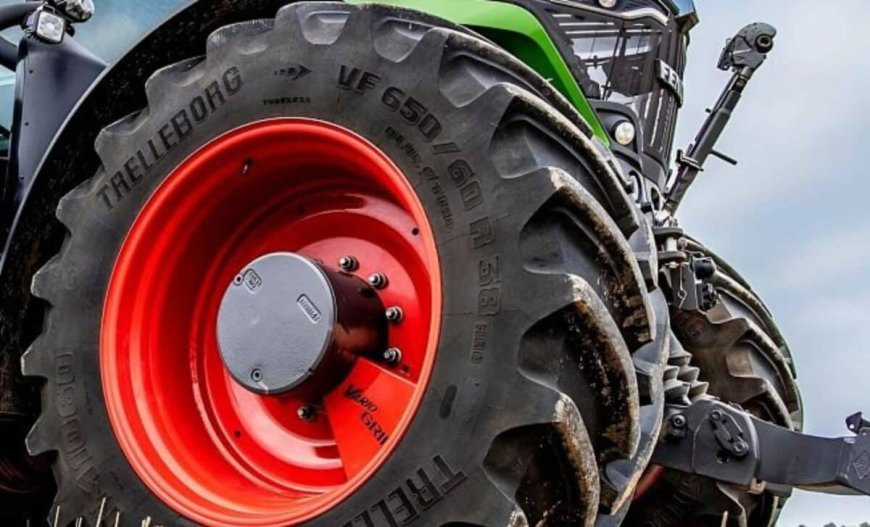
A new approach to storing hydrogen on agricultural machinery is gaining attention in Germany: rather than mounting pressurized tanks on the roof or under the cab, engineers are exploring whether the storage itself can be built directly into the tractor’s wheels. The concept, reported this week by Fuel Cells Works, is aimed at extending operating times and freeing up the machine’s body for other uses in both agricultural and construction applications.
The idea addresses one of the central engineering challenges in hydrogen-powered farm equipment. Tractors carry a fixed amount of usable space, and every kilogram of hydrogen stored in roof-mounted or cab-adjacent tanks competes directly with the machine’s structure, balance, and function. Moving that storage into the wheel assembly would redistribute weight closer to the axles and open up room elsewhere on the vehicle.
What the Fendt Helios Already Shows
The challenge of fitting enough hydrogen on a working tractor is well documented. Fendt’s Helios prototype, developed as part of Germany’s publicly funded H2Agrar project in Lower Saxony, currently carries five compressed hydrogen tanks mounted on the roof. Each tank holds 4.2 kilograms of hydrogen compressed to up to 700 bar. Together, they provide enough fuel for roughly 5 to 8 hours of field operation per fill, depending on the task.
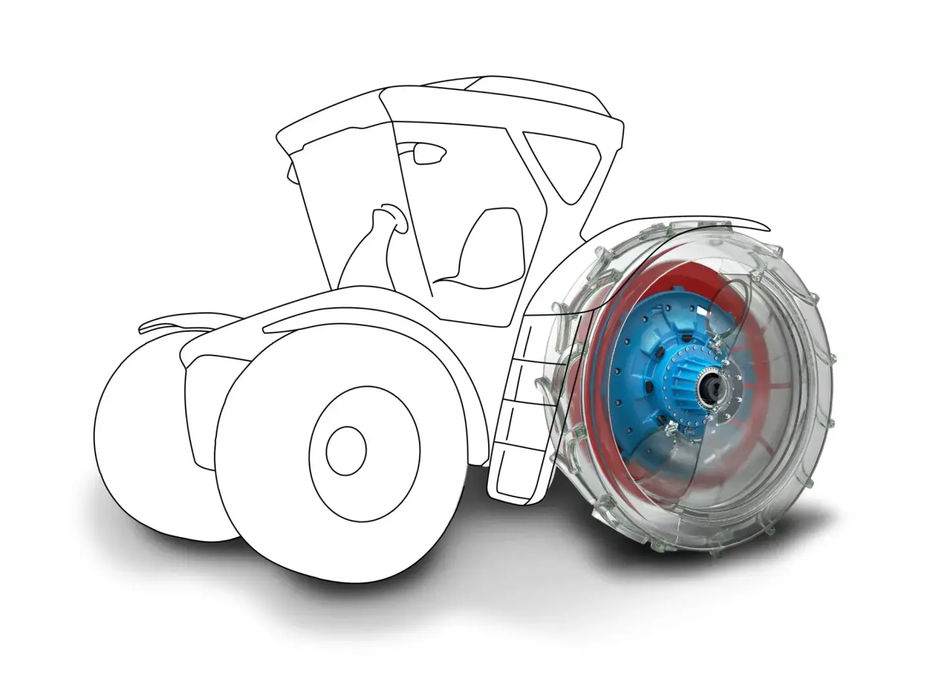
The Helios uses a 100 kW fuel cell to convert that hydrogen into electricity, supported by a 25 kWh buffer battery. The combined system powers a 100 kW electric traction motor and the tractor’s auxiliary systems. According to Dr. Benno Pichlmaier, Director of Global Research and Advanced Engineering at AGCO, the tractor performs comparably to a diesel machine of similar power. “The Fendt Helios carries out all the work on farms that a tractor with similar power and a diesel engine would have to do,” he said.
But five roof-mounted tanks totaling 21 kilograms of hydrogen represent a ceiling on range, not a solution. The wheel-storage concept is one response to that constraint.
The Storage Problem in Agricultural Hydrogen
Hydrogen’s energy density by volume is significantly lower than diesel, even at 700 bar. That makes physical space on the machine a limiting factor in ways it simply isn’t for conventional fuel. Professor Ludger Frerichs of TU Braunschweig’s Institute for Mobile Machinery and Commercial Vehicles, a partner in the H2Agrar project, described the issue directly: “One challenge is to adapt the tractor and its use to the expected lower energy storage capacity of hydrogen compared to diesel.” His team has been evaluating different tank options, tractor concepts, and dimensions as part of the project.
Röchling Engineering Plastics, also an H2Agrar partner based in Haren, has identified carbon-fiber-reinforced high-pressure hydrogen vessels as a strategic growth area. The company has been working on both on-vehicle storage and transport containers for hydrogen logistics within the Emsland model region.
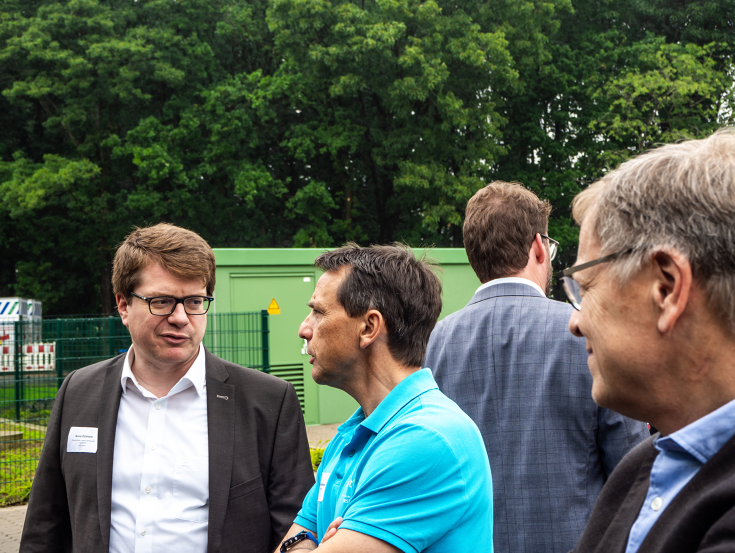
Integrating tanks into the wheel assembly would use space that currently serves only mechanical and structural purposes. Large agricultural tractor wheels are substantial structures, and their inner volume, if engineered appropriately, could potentially accommodate pressure vessels without disrupting the wheel’s load-bearing function. The tradeoff involves significant engineering complexity: any storage system in a rotating wheel must manage hydrogen transfer, pressure integrity under continuous mechanical stress, and safe refueling access.
A Project Built From the Ground Up
The H2Agrar project, launched in February 2021 with around €7.6 million in funding from the state of Lower Saxony, was designed as Germany’s first end-to-end demonstration of hydrogen in agricultural use. It links production, infrastructure, and working farm machinery in a single regional system.
The hydrogen comes from a community wind farm of 16 turbines near Haren. Two electrolysers, each rated at 1 MW, produce up to 900 kilograms of hydrogen per day on site. That hydrogen feeds into the local gas grid and a purpose-built filling station, where the Fendt Helios tractors refuel at up to 700 bar. The filling station, supplied by Schwelm Anlagentechnik, can hold up to 480 kilograms of hydrogen in total and simultaneously dispense at both 350 and 700 bar.

The project drew around 160 participants from industry, politics, and science when it was presented at German Hydrogen Week in June 2024, including Lower Saxony’s Minister for Economic Affairs, Olaf Lies. The two Fendt Helios tractors continued operating on farms after the project’s official three-year conclusion.
Where the Research Stands
The Fendt Helios ran in harvest operations for the first time in 2024, providing the team with real-world consumption data under high-load field conditions. Those results are informing the next stage of development, which includes the evaluation of alternative storage configurations.
The wheel-integrated concept reported this week represents one direction researchers and engineers are pursuing to extend the practical range of hydrogen tractors beyond what roof-mounted tanks alone can deliver. Whether the approach reaches prototype stage or remains a design study has not been confirmed in available sources.
Agricultural machinery accounts for around 8.5 percent of total emissions in German agriculture, according to federal figures cited in H2Agrar project documentation. The Fendt Helios tractors continue to operate on farms in the Emsland region as part of ongoing data collection under Fendt’s Clean Energy Strategy.
Enjoyed this article? Subscribe to our free newsletter for engaging stories, exclusive content, and the latest news.
What's Your Reaction?
 Like
0
Like
0
 Dislike
0
Dislike
0
 Love
0
Love
0
 Funny
0
Funny
0
 Angry
0
Angry
0
 Sad
0
Sad
0
 Wow
0
Wow
0