


























Geologists Uncover One of the Largest Rare Earth Deposits in Former Soviet Republic Long Tied to Oil Wealth

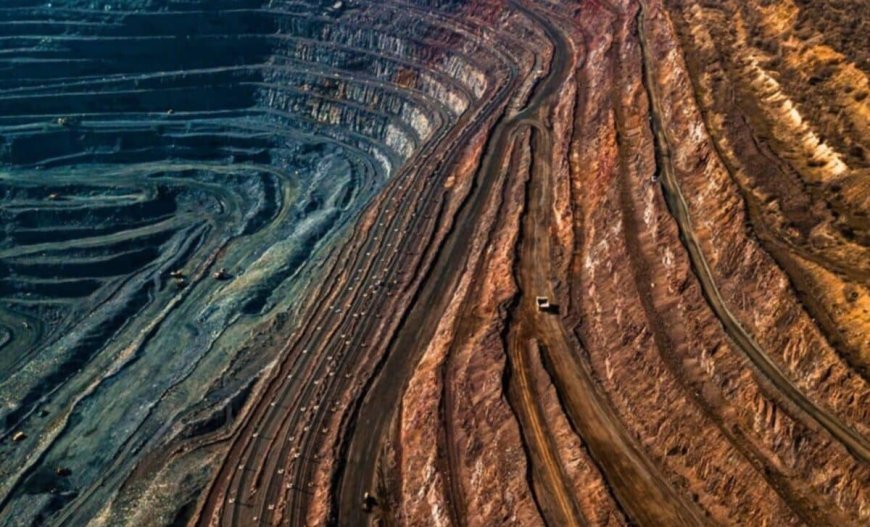
For decades, the grasslands of central Kazakhstan have yielded coal, oil, and copper. What they have not produced, at least not in quantities that registered on global balance sheets, are the seventeen metallic elements that make modern technology possible. That may be changing.
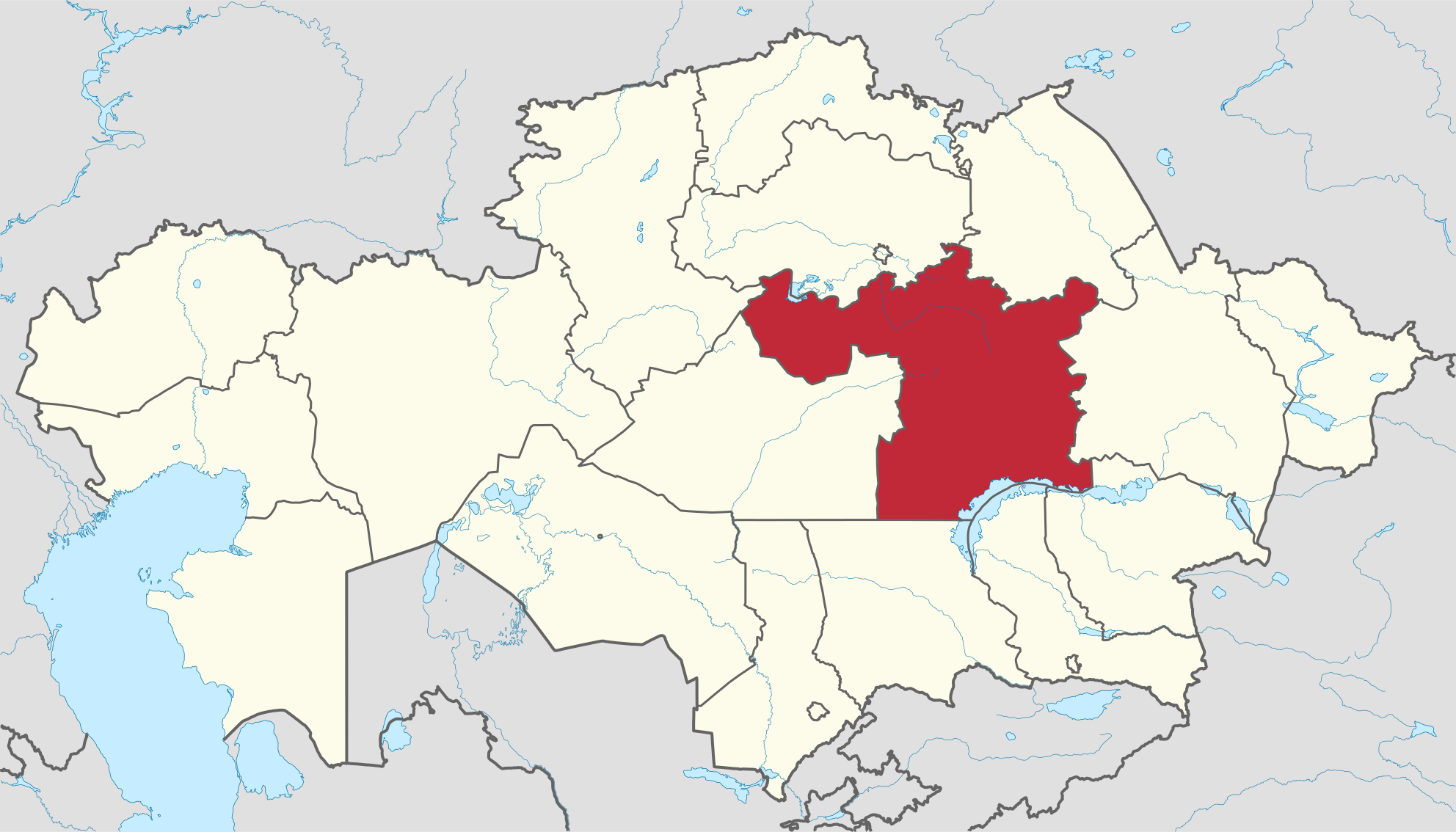
In April 2025, on the eve of a summit bringing European and Central Asian leaders together in Samarkand, officials in Astana disclosed the results of exploration work in the Karagandy region. The numbers attached to that disclosure, if verified through the multiyear process of drilling and feasibility analysis, would place Kazakhstan alongside a very small group of nations with significant rare earth endowments.
The deposit has been given a name freighted with political symbolism: “New Kazakhstan.”
What Lies Beneath the Name
Exploration of the Karagandy site began in 2022, with findings submitted to government agencies in October 2024. Kazakhstan’s Ministry of Industry and Construction announced in April 2025 that four prospective zones within the area contain estimated reserves of 935,400 metric tons of rare earth oxides, including cerium, lanthanum, neodymium, and yttrium. As Euronews reported at the time, preliminary geological modeling suggests the ore body may extend to 20 million tons at depths up to 300 meters, with average concentrations of 700 grams per ton.
If the larger figure holds through subsequent investigation, Kazakhstan would rank behind only China and Brazil in total rare earth reserves, based on current global estimates. The U.S. Geological Survey‘s most recent Mineral Commodity Summaries, published in early 2023, placed China’s reserves at 44 million tons and Brazil’s at 21 million tons, with no other country exceeding 7 million tons.

The term “reserves” carries specific technical weight that the initial announcement did not claim. Georgiy Freiman, executive committee chair of the Professional Association of Independent Mining Experts, addressed this distinction at the 2025 MINEX Kazakhstan forum.
“In order to call it a deposit, you, first, need to fully study all the elements in the area with mineralisation,” Freiman said. “You need to study hydrogeology, geomechanics, as well as assess the feasibility of extraction and in what form they can be extracted. You need to conduct an economic assessment, taking into account the market situation, the needs of relevant industries. Only when all these factors are analysed, and an economic model is developed can it truly be called a deposit. Without that, it remains mere speculation.”
The Long Road from Discovery to Mine
Kazakhstan’s mining sector has undergone significant legislative restructuring designed to attract foreign capital. Since 2018, authorities have issued 2,906 exploration licenses and 111 production licenses under a system that grants rights based on application timing rather than discretionary approval. In January 2024, reporting under the KAZRC Code became mandatory, aligning national practices with CRIRSCO international standards for resource classification. According to official government announcements, these reforms have been central to attracting international investment.
These changes have drawn investment from major international firms. Government records show that between 2020 and 2025, geological exploration attracted over $1 billion in private capital from companies including Fortescue, Rio Tinto, Barrick Gold, BHP, and First Quantum. The Korea Institute of Geoscience and Mineral Resources has initiated joint exploration with state mining company Tau-Ken Samruk in the Aral region.
The Karagandy discovery will require substantially more capital than exploration alone. Arthur Poliakov, executive chairman of the MINEX Forum, estimated at the 2025 forum that development could take 10 to 12 years, with initial investment needs starting at $10 million. That figure excludes downstream infrastructure such as separation facilities and processing plants, which Kazakhstan does not currently possess.
Transport logistics present an additional constraint. The country is landlocked, and rare earth exports would depend on long distance corridors. Poliakov noted that the development of the Middle Corridor, a trade route linking Central Asia with European markets through the Caspian Sea and Caucasus, will be essential. “The EU and Kazakhstan are far apart, which is why they need to develop the Middle Corridor,” he said.
Seventeen Elements, One Dominant Supplier
Rare earth elements function as essential components in more than 200 modern products. As the American Geosciences Institute explains, defense applications include guidance systems, lasers, radar, and sonar. Consumer technologies such as smartphones, electric vehicles, flat screen displays, and computer hard drives depend on them. The amounts used in individual devices are often small, but without them the devices cannot function.
Current production remains heavily concentrated. Data from the U.S. Geological Survey indicates China accounts for approximately 70 percent of global rare earth mining and over 85 percent of refining capacity. This concentration has prompted multiple governments to seek diversification of supply sources.
The European Union’s 2025–2026 cooperation roadmap with Central Asia explicitly identifies Kazakhstan as a priority partner in raw materials diversification. EU Ambassador to Kazakhstan Aleška Simkić addressed the timing of the Karagandy announcement in April 2025. “The announcement was well timed because it increased the importance of Kazakhstan in the whole discussion about the critical raw materials,” Simkić said. “I think it succeeded in putting Kazakhstan on the map for EU.”
What Happens Next in Karagandy
No formal deposit classification has been issued for the Karagandy site. Studies to determine ore composition, extraction feasibility, and commercial viability are expected to continue through late 2026. Tau-Ken Samruk has not disclosed licensing plans or offtake agreements.
The path from discovery to production typically spans more than a decade for complex mineral projects in landlocked jurisdictions. Poliakov’s 10 to 12 year estimate aligns with industry benchmarks for rare earth developments requiring new infrastructure and processing technology.
Kazakhstan’s mining code reforms and growing portfolio of international partnerships provide a foundation for potential development, though the gap between geological potential and operational mine remains wide.
Enjoyed this article? Subscribe to our free newsletter for engaging stories, exclusive content, and the latest news.
What's Your Reaction?
 Like
0
Like
0
 Dislike
0
Dislike
0
 Love
0
Love
0
 Funny
0
Funny
0
 Angry
0
Angry
0
 Sad
0
Sad
0
 Wow
0
Wow
0