




























Did NASA’s Viking Missions Find Life on Mars? New Evidence Suggests They Did!

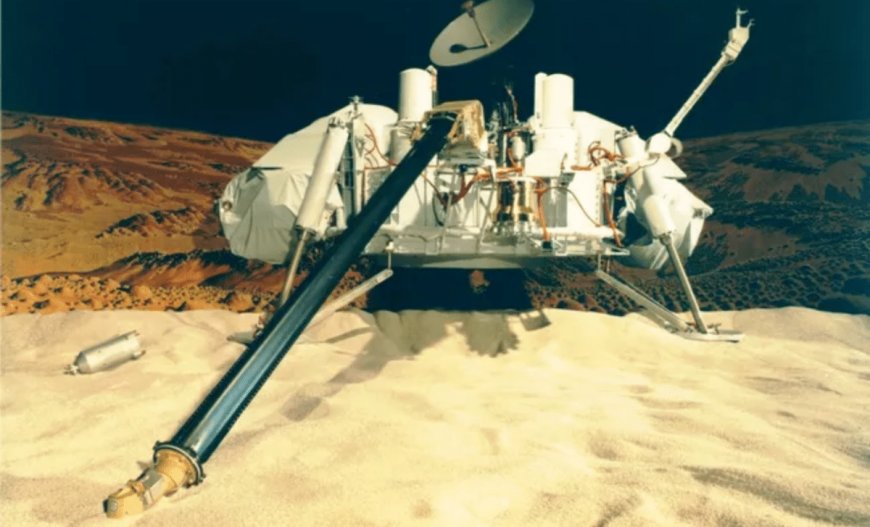
Fifty years ago, NASA’s Viking missions to Mars made groundbreaking attempts to detect life on the Red Planet. While the missions initially returned negative results, a new study published in the journal Astrobiology suggests that the Viking spacecraft may have actually found evidence of life, if only the data had been interpreted differently. Scientists, including Dr. Benner and his colleagues, have uncovered a crucial detail that could rewrite our understanding of the Viking missions and Mars’ potential to harbor life.
The Viking Missions: A Legacy of Discovery
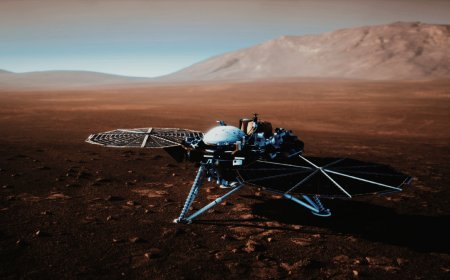
In 1976, NASA’s Viking 1 and Viking 2 spacecraft were sent to Mars to explore its surface and search for signs of life. These missions were among the first to land on the Martian surface, equipped with a range of scientific instruments designed to test for biological activity. One of the key experiments on board was the Gas Chromatograph-Mass Spectrometer (GC-MS), a device designed to detect organic molecules—building blocks of life.

Credit: NASA
At the time, the results from the Viking mission’s life-detection experiments seemed clear: Mars was barren. Despite positive findings in some tests, such as the Label Release experiment, which showed what appeared to be signs of microbial metabolism, the absence of organic molecules led the team to conclude that Mars could not support life. Viking Project Scientist Gerald Soffen famously declared, “No bodies, no life.” However, the real story of Viking’s findings may not have been fully understood until recent developments in Mars research.
The Unexpected Discovery of Organic Molecules
The turning point in this longstanding debate comes from a surprising reanalysis of the GC-MS data. As Dr. Benner explained, “The GC-MS showed an absence of organic molecules, or at least that was the [Viking team’s] interpretation,” but recent studies have uncovered a critical flaw in that interpretation. Today, scientists like Benner argue that the GC-MS actually did detect organic molecules, though these molecules were not immediately recognizable due to their degradation.

Credit: NASA
This revelation hinges on the discovery of perchlorates on Mars in 2008, which was a game-changer for astrobiological research. Perchlorates are powerful oxidants that can break down organic materials, and it turns out that the presence of these chemicals may explain why Viking’s instruments didn’t detect organic molecules in their original form. As Benner points out,
“In 2010, Rafael Navarro-González [a NASA astrobiologist] showed that organics plus perchlorate produces methyl chloride and carbon dioxide.” This reaction, which was previously unrecognized, helps explain the mysterious chemical signature observed in Viking’s data.
The Key to the Mystery: Perchlorates and Organic Molecules
In the context of the Viking missions, the presence of perchlorates on Mars helps explain the curious lack of detectable organics in the Martian soil. When the Viking landers heated Martian samples to high temperatures to release any organic compounds, they found an unexpected result: a burst of carbon dioxide and small amounts of methyl chloride. Initially, this was attributed to contamination from Earth-based solvents or the possibility of a chemical process unknown to science. However, the presence of perchlorates on Mars has provided a more plausible explanation.
“So now we know that the GC-MS didn’t fail to discover organics — it did discover them, through their degradation products,” said Benner.
This understanding is a game-changer for astrobiology, suggesting that Viking’s experiments may have detected signs of life on Mars after all. The degradation of organic molecules by perchlorates could have been responsible for the unusual chemical signals detected by the spacecraft, and in hindsight, these results might be seen as evidence of past or even present microbial life on Mars.

Credit: NASA/ JPL-Caltech
Revisiting Viking’s Legacy: A Shift in Perspective
The implications of this new interpretation are profound. For decades, the scientific consensus has been that the Viking missions found no evidence of life on Mars. This conclusion was reinforced by textbooks and scientific discussions, effectively shutting down any further debate on the matter. However, with the new insights provided by Benner and his colleagues, the scientific community is now reconsidering the significance of Viking’s findings.
The study, published in Astrobiology, presents a compelling argument that Viking’s instruments may have inadvertently detected life in a form we did not yet understand. The idea that microbial life might exist—or have existed, on Mars is no longer merely a speculative concept; it is now a distinct possibility that demands further exploration. This realization has opened the door to rethinking the evidence collected by the Viking missions and could inspire new missions to Mars designed to investigate these findings further.
The BARSOOM Model: A Hypothesis for Martian Microbes
To explain the potential existence of microbial life on Mars, Benner and his colleagues have developed a model for what Martian microbes could look like. They call it the BARSOOM model: Bacterial Autotrophs that Respire with Stored Oxygen On Mars. This model suggests that Martian microbes could survive by using photosynthesis during the day to produce oxygen and food, then store the oxygen for use during the cold, dark Martian nights. This could account for the oxygen emissions detected by Viking’s Gas Exchange experiment.
The BARSOOM model provides a plausible explanation for the enigmatic results observed by Viking and opens up new avenues for future research. If microbial life on Mars is based on such a model, it could mean that life on Mars is not only possible but also resilient enough to survive in the harsh conditions of the Martian environment.
Enjoyed this article? Subscribe to our free newsletter for engaging stories, exclusive content, and the latest news.
What's Your Reaction?
 Like
0
Like
0
 Dislike
0
Dislike
0
 Love
0
Love
0
 Funny
0
Funny
0
 Angry
0
Angry
0
 Sad
0
Sad
0
 Wow
0
Wow
0