





























Can You Safely Eat Sprouted Potatoes? Here’s What Food Safety Experts Actually Say

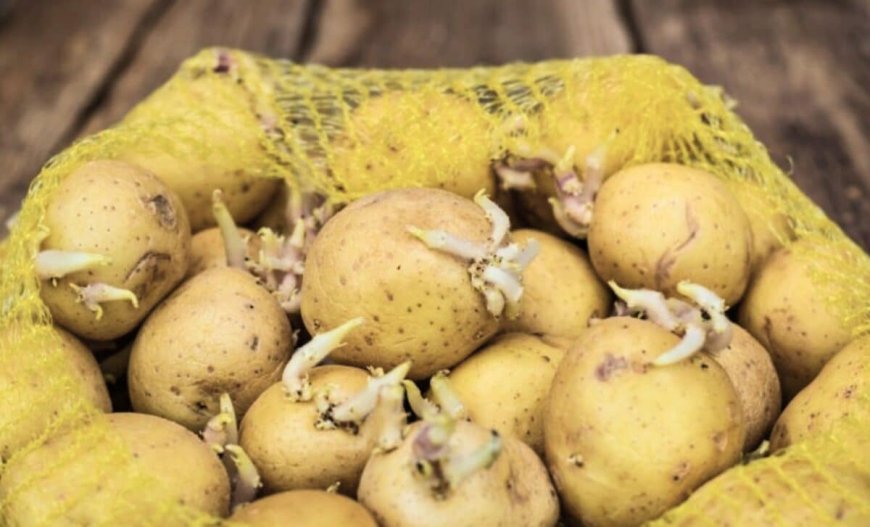
In kitchens across the Northern Hemisphere, winter storage staples like potatoes are now at their longest shelf life since harvest. Some will show sprouting. Others may turn green beneath fluorescent lighting or natural exposure. For many consumers, the choice seems simple: trim the sprouts, peel away the green, and cook as planned.
Yet across food safety agencies, toxicology centers, and university extensions, the answer has shifted from “possibly safe” to a more cautious stance. Updated guidance published through 2025 reveals clearer links between common spoilage indicators and elevated concentrations of compounds harmful to human health.
The issue isn’t spoilage in the traditional sense. Potatoes don’t need to rot to become unsafe. They can look firm and intact while hiding levels of natural toxins that exceed international thresholds. And most home kitchens don’t have a reliable way to detect them.
Behind that risk is a group of chemical compounds most consumers have never heard of, but they’ve been part of the potato’s biology for millennia.
When Potatoes Defend Themselves: The Rise of Solanine and Chaconine
Solanine and chaconine are glycoalkaloids, naturally occurring toxins found throughout the Solanaceae plant family. In healthy potatoes, these compounds exist in trace amounts that pose no risk to humans. Under certain conditions, light exposure, bruising, heat, or age, concentrations rise sharply, particularly near the sprouts, green patches, and eyes.
The World Health Organization’s official food toxin factsheet details how these substances act as chemical defenses in plants. When potatoes are stressed, such as through poor storage or light exposure, glycoalkaloid levels increase significantly, sometimes reaching concentrations that trigger illness.

Case documentation from the National Capital Poison Center shows how this can unfold. In one example, a man was hospitalized for three days with vomiting, dizziness, and stomach pain after eating sprouted potatoes. Another case involved a woman who experienced nausea and diarrhea just hours after consuming visibly green ones. In both instances, symptoms matched known solanine toxicity.
Standard cooking methods, including boiling, frying, and baking, do not reduce glycoalkaloid content. The compounds remain chemically stable under heat. Peeling may help lower exposure, but only when the potato is otherwise firm and free from internal greening.
Spotting Chemical Changes Before It’s Too Late
Sprouts and green skin are more than surface blemishes. They indicate that a potato’s internal chemistry is shifting in response to age or environmental stress. These changes are visible warnings that glycoalkaloids are accumulating.
The April 2024 guidance from Iowa State University Extension provides practical thresholds: discard any potato that is shriveled, soft, deeply green beneath the surface, or sprouting beyond 2.5 centimeters. If greening is shallow and the potato remains firm, peeling may render it safe, but the window for use narrows quickly once sprouting begins.

Sprouts, even if small, contain the highest concentrations of solanine and chaconine. As the potato prepares to reproduce, it activates its chemical defenses, particularly around the eyes and skin. Southern Living’s safety overview, featuring food scientists from Kraft Heinz, confirms that once sprouting starts, the potato is chemically altered, even if it still feels firm to the touch.
Storing potatoes in the refrigerator may seem like a solution, but it’s not. Cold converts starches to sugars and often leads to discoloration during cooking. More critically, refrigeration does not halt sprouting once potatoes return to room temperature. Storage is safest in a cool (45–50°F), dark, well-ventilated area, using breathable containers like paper or mesh bags.
Misinformation, Storage Myths, and the Absence of Regulation
On social media, videos and posts often encourage reusing sprouted or green potatoes to reduce food waste. But no home preparation method neutralizes solanine, and visual trimming alone is not always enough.
As highlighted by the Poison Control Center, there is no home test for solanine concentration. Visual inspection, supported by scientific guidelines, remains the only safeguard. Peeling and cutting are only appropriate when degradation is minimal.

Global food safety standards for glycoalkaloids remain inconsistent. Although the Codex Alimentarius Commission has discussed solanine levels in working groups, it has not established uniform limits for retail potatoes. National food authorities vary in enforcement, and most fresh produce is sold without labeling for glycoalkaloid content.
Universities and public health departments have stepped in to fill the gap. Updated recommendations from Michigan State Extension and North Carolina State University emphasize consumer awareness, visual screening, and proper storage to minimize risk.
What Researchers Know, and What Consumers Need to Remember
In agricultural science, researchers are actively breeding potato cultivars with naturally lower glycoalkaloid levels. These varieties could help reduce toxicity risks at the supply chain level, though most remain in pilot or test phases.
Some producers are also testing packaging that blocks light and improves air circulation. These efforts aim to slow sprouting and greening during storage and retail display, particularly in climates where winter storage spans several months.
For sprouted potatoes that are no longer safe to eat, garden planting remains a viable option. As confirmed in Southern Living’s report, sections of a sprouting potato can be cut and planted to yield new tubers. This agricultural reuse is chemically safe, but does not apply to consumption.
Health agencies now recommend a single, evidence-based rule for households: discard any potato that is green beneath the skin, heavily sprouted, wrinkled, or soft. There is no reliable way to determine toxin levels without laboratory analysis.
Enjoyed this article? Subscribe to our free newsletter for engaging stories, exclusive content, and the latest news.
What's Your Reaction?
 Like
0
Like
0
 Dislike
0
Dislike
0
 Love
0
Love
0
 Funny
0
Funny
0
 Angry
0
Angry
0
 Sad
0
Sad
0
 Wow
0
Wow
0