


























At 2.7 Billion Years Old, This Mountain Holds 40% of All Gold Ever Mined and Still Holds Half a Trillion Dollars

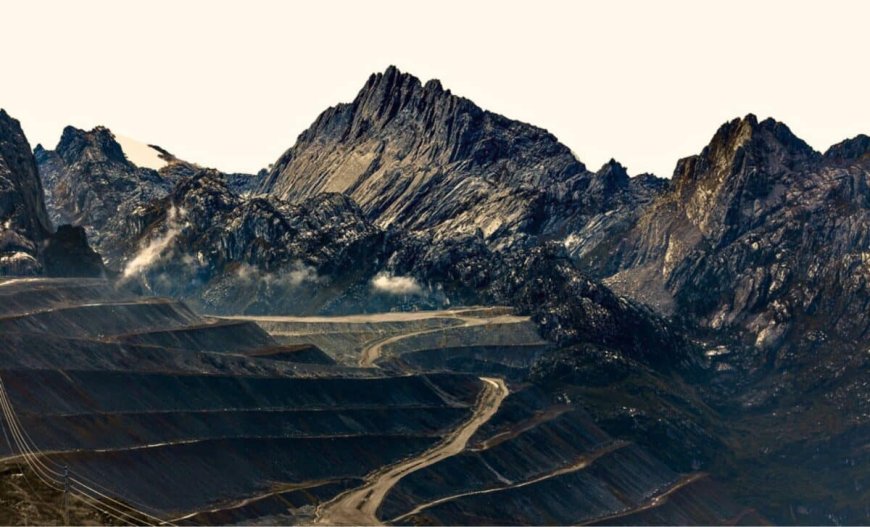
Some geological formations reshape continents. Others reshape economies. In South Africa, the Witwatersrand Basin belongs to both. Its rocks formed roughly 2.7 billion years ago, during the Archean Eon, when Earth’s crust was still stabilizing and the atmosphere held little oxygen. Today, the ridges outside Johannesburg appear dry and unremarkable, broken by highways, neighborhoods, and the skeletal frames of old mining towers. Nothing at the surface hints at the scale of what lies beneath.
Under those hills sits the richest gold producing geological formation ever identified. Geological studies and mining records show that roughly 40 percent of all the gold ever extracted by humans came from this single basin. No other region on Earth has sustained that level of production for more than a century of continuous mining.
Rivers That Ran Three Billion Years Ago
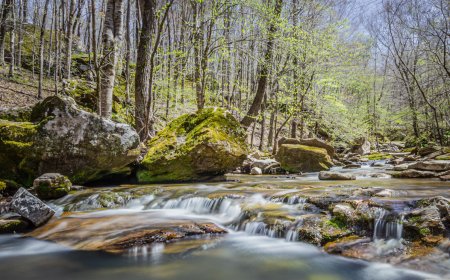
The Witwatersrand Basin is not a mountain of metal. It is an immense sedimentary basin made up of layered rock that once formed ancient river systems, floodplains, and shallow inland basins. Nearly three billion years ago, water flowed across volcanic terrain known as greenstone belts, eroding mineral rich rocks and carrying fragments downstream.
Because gold is dense, it settles quickly in moving water. Over time, it accumulated in gravel bars and river channels. As sediments piled up, those river deposits were buried and compressed. Heat and pressure turned them into hard rock called conglomerates, preserving the original river gravels in stone. In geological terms, this type of deposit is known as a paleoplacer, meaning an ancient placer deposit that has been lithified.

The rounded shapes of many gold grains inside the conglomerates still resemble particles transported by flowing water. That physical evidence became central to scientific debates about how the deposits formed. Rather than crystallizing deep underground in later hydrothermal veins, much of the metal appears to have been concentrated at Earth’s surface during the Archean, then locked away as continents shifted and thickened.
The 1886 Discovery That Built Johannesburg
In 1886, prospectors identified gold bearing outcrops along the Witwatersrand ridge. What followed was not a brief rush but the beginning of one of the most sustained mining operations in history. Within a few years, a tent settlement transformed into Johannesburg, a city built almost entirely around the extraction of gold.
As shallow workings gave way to industrial operations, the Witwatersrand Basin became the foundation of South Africa’s mining economy. By the early twentieth century, the country had become the world’s dominant gold producer. Rail lines, processing plants, and financial institutions expanded around the mines, tying the basin to global markets.
The gold itself rarely appeared in dramatic nuggets. Instead, it existed as microscopic particles dispersed through conglomerates. Extracting it required crushing vast volumes of rock and treating the material with chemical processes refined over decades. The scale of infrastructure needed to support that work set new standards for industrial mining. Alongside gold, miners also recovered significant amounts of uranium, adding another strategic mineral to the basin’s output.
What Geologists Confirmed About Its Origins
For much of the twentieth century, scientists debated whether the gold in the Witwatersrand Basin formed entirely through ancient river processes or whether later hydrothermal fluids played a dominant role. Modern geochemical research brought new clarity.
Researchers from the University of Arizona analyzed isotopic signatures in minerals from the basin and found evidence consistent with erosion from surrounding greenstone belts during the Archean. Their findings, reported in ScienceDaily’s coverage of the University of Arizona study, supported the paleoplacer interpretation. The data reinforced the idea that rivers first concentrated the metal before burial and tectonic preservation reshaped the basin.
The surrounding rocks have been dated between roughly 2.7 and 3 billion years old. That age places the formation of the deposits at a time when microbial life dominated Earth and complex plants and animals had not yet emerged. The basin therefore preserves not only vast quantities of gold, but also a geological record of early continental development.
Mining at Extreme Depths
As near surface ore bodies were depleted, mining operations pushed deeper into the crust. The Witwatersrand Basin became known for some of the most advanced examples of deep-level mining anywhere in the world. Several shafts extend more than four kilometers below ground, where rock temperatures can exceed 50 degrees Celsius and pressure conditions increase the risk of seismic rock bursts.
To maintain operations, companies installed refrigeration systems to cool working areas and engineered reinforced support structures to stabilize tunnels. These technical challenges did not halt production. For more than a century, the basin continued to yield extraordinary quantities of gold, even as annual output gradually declined from peak levels.
Formed during the Archean and first mined in 1886, the Witwatersrand Basin has produced about 40 percent of all the gold ever extracted in modern mining history, according to long term production records compiled by the mining industry and geological surveys.
Enjoyed this article? Subscribe to our free newsletter for engaging stories, exclusive content, and the latest news.
What's Your Reaction?
 Like
0
Like
0
 Dislike
0
Dislike
0
 Love
0
Love
0
 Funny
0
Funny
0
 Angry
0
Angry
0
 Sad
0
Sad
0
 Wow
0
Wow
0