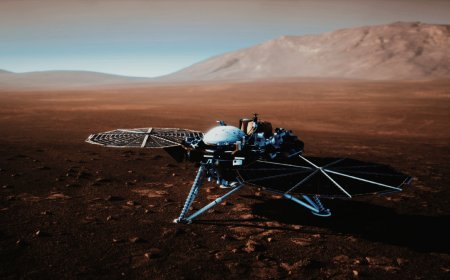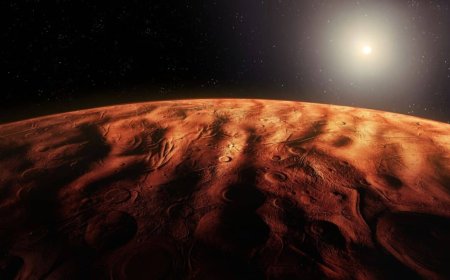





























Astronomers studying a nearby corner of the Solar System have found a red dwarf star with four planets, and one of them could be habitable

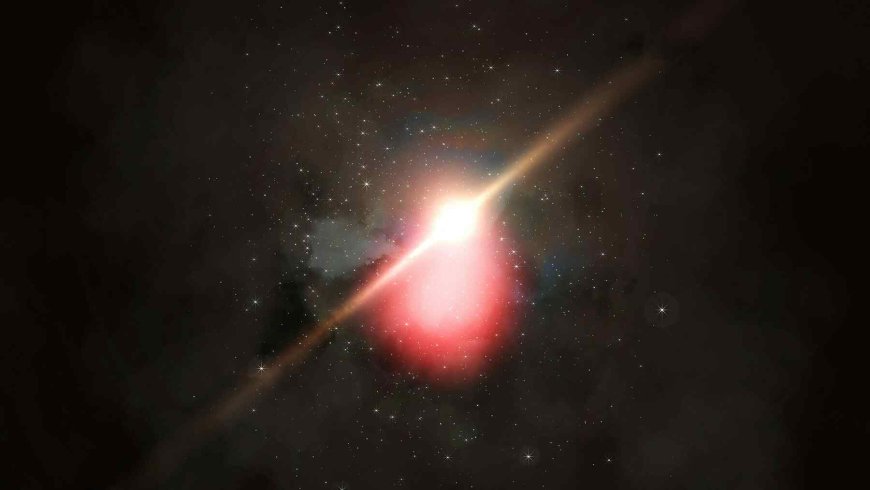
We may have just stumbled on our next potential home in the cosmos.
Space has amazed and confounded the best minds in history as we search for life, or the possibility of life, on other planets in the universe. A recent discovery of a red dwarf star with four planets may provide the foundation for human migration into space in the not-too-distant future.
How has this faint red dwarf star eluded science for decades?
How the mysteries of space are being revealed to the world
We have come to understand that the very matter that makes up the universe is still a mystery to the scientific world.
We now know that approximately 95% of the universe is made up of dark matter and dark energy, which we know almost nothing about. Thankfully, instruments like the Chandra X-ray Observatory and the Euclid mission are mapping how this invisible cosmic concrete shapes the universe.
Thanks to our advancement in space-based telescopes, we have now reached new levels of understanding about the early days of the universe.
The James Webb Space Telescope has enabled us to gaze past our own timeline and capture light from the very first stars in the cosmos, roughly 13.5 billion years ago, right after the Big Bang took place.
The dream of human-led space exploration is becoming a reality
Many, many films and TV shows have attempted to bring space exploration to the forefront of our society’s attention.
Interstellar won awards for its scientifically accurate representation of how the universe behaves. Older shows like Star Trek hoped to provide us with some sort of idea of what space exploration may look like for future generations.
Astronomers have recently learnt that galaxies billions of years ago grew by devouring smaller ones to become as large as they are.
Today, data has suggested that every star in the universe likely has at least one exoplanet. But can these planets support and sustain life? That is the real question that needs answering.
A mere thirty years ago, we had no idea whether or not other stars had planets.
The dream of finding a habitable planet near our own home has been a major focus of astronomy and science for decades. NASA’s Artemis II mission successfully launched in March to the amazement and wonder of the world. And has raised the question, where could we head next inside our own solar system?
The study, “RedDots: Multiplanet system around M dwarf GJ 887 in the solar neighborhood,” published in Astronomy & Astrophysics, may have found our next destination for space study.
A new multiplanet system in our solar system has been identified
As our capabilities to study distant space reveal astonishing worlds in the cosmos, we have come to learn of a new multiplanet system near the M dwarf GJ 887.
As our planet’s health worsens almost daily due to our industrial advancement as a species, many astronomers have been searching the universe and our own solar system for the next potential “home away from home” for the human race.
The requirements for human life to survive on another planet are relatively simple.
For life to thrive, we obviously need oxygen. But we also need water and a planet that is not as violent as the others we have identified in space. That’s where the red dwarf star known as M dwarf GJ 887 comes in.
Research has shown that a potential low-mass planet candidate that is roughly half the mass of Earth has been orbiting the red dwarf star.
Researchers utilized what is known as the Gaussian Process analysis to filter stellar activity in the region and found that the planet could be a candidate for human migration in the far-off future.
So while humans are currently travelling farther than ever before in space, this planet may be a viable candidate for life in the future.
What's Your Reaction?
 Like
0
Like
0
 Dislike
0
Dislike
0
 Love
0
Love
0
 Funny
0
Funny
0
 Angry
0
Angry
0
 Sad
0
Sad
0
 Wow
0
Wow
0