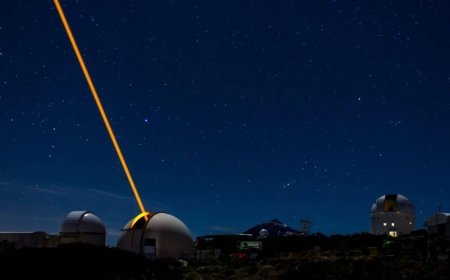





























Astronomers noticed an asteroid flickering like it was “winking” until they realized its interior is fractured in ways never seen before

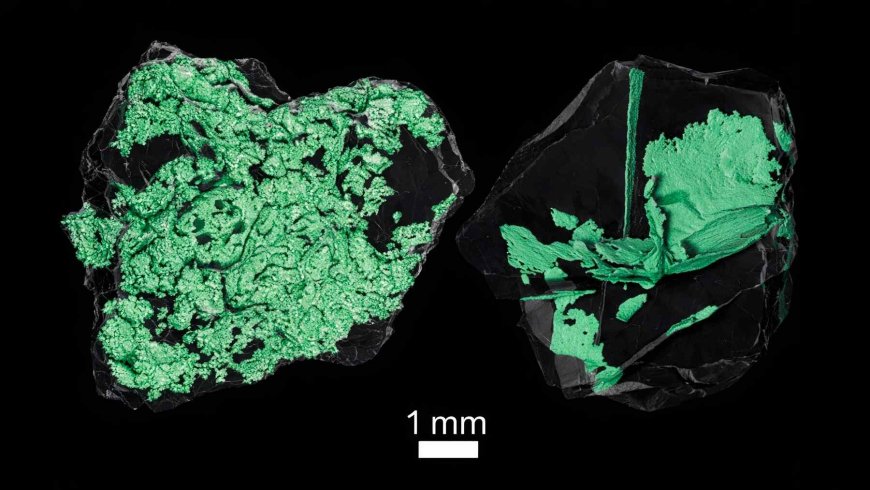
Astronomers have found evidence that reshaped our belief systems about space.
For as long as mankind has gazed upon the night sky, we have been searching for answers to our most complex mysteries. One such mystery has been why an asteroid has been flickering in deep space, effectively winking at astronomers, hinting that it may be far different from what we thought.
Why is this asteroid “winking” at us from millions of light-years away?
How studying space has become the focus for mankind’s development
The overwhelming dread that some feel over the future of the planet is no laughing matter.
Many of us worry that eventually, the planet will simply not be safe enough to support human life. The answer? To reach into the stars for our next home away from home. By studying space, we have learnt that the universe is vast, so vast in fact that we struggle to put it into perspective.
In the never-ending story of life in the cosmos, life on Earth is a relatively new development.
Astronomers and other scientists have proven that life began on Earth roughly 3 billion years ago, but some have noted that this may be pushed back to around 4.28 billion years ago.
Many have pointed out that we are on the precipice of a new era of space study
Over the last 20 years or so, astronomy has made leaps and bounds forward in developing new theories that explain the universe and all that’s in it.
We have even developed the ability to study the universe’s first stars. And buried in a faint dwarf galaxy, astronomers have found evidence of a star with almost no iron in it, potentially reshaping our understanding of the cosmos right after the Big Bang.
But the furthest regions of space are challenging to study under even the best and most ideal conditions with the latest state-of-the-art tech.
That has led to some studying of asteroids that pass relatively close by to our planet. When a team of researchers studied one of these cosmic rocks, they found that the asteroid had all the essential building blocks for life stored away inside it.
So what happened when another group of astronomers was studying an asteroid that seemed to flicker with no explanation?
Thankfully, the iconic NASA has provided a few details as to why this is taking place.
Some asteroids are still revolutionizing the astronomy field despite decades of study
The study of space has recently been catapulted back into the public eye, thanks in no small part to the Artemis II mission.
But when a team of researchers noticed an asteroid that was effectively “winking” at them, the search was on for its origin. Astronomers use thermal data to study the asteroids that litter space, but this finding proves that even astronomers can sometimes be misled.
Asteroid Bennu has been traversing through space for eons, but it has been flickering in odd ways in recent years. The question is, what is causing this?
Thermal data reveal that some asteroids simulate the behavior of fine particles

The researchers found that asteroid Bennu actually had surprisingly low thermal inertia. They found that its surface was radiating heat rapidly in the same way that fine sand does.
This is despite the asteroid being covered in large boulders.
Analysis revealed that these boulders were highly porous and riddled with what is known as micro-cracks. This causes asteroid Bennu to rapidly radiate heat, creating a flickering effect like a light switch being turned on and off.
So while some people are lucky enough to get a closer look at asteroids as they land on our planet, this finding has shown that some asteroids can dissipate heat in ways we never knew possible.
What's Your Reaction?
 Like
0
Like
0
 Dislike
0
Dislike
0
 Love
0
Love
0
 Funny
0
Funny
0
 Angry
0
Angry
0
 Sad
0
Sad
0
 Wow
0
Wow
0