




























Astronauts Witness Rare Solar Eclipse from Beyond the Moon in Historic Artemis 2 Mission

NASA’s Artemis 2 mission has just delivered one of the rarest and most breathtaking moments in space exploration. On April 6, 2026, the crew aboard the Orion spacecraft witnessed a total solar eclipse from a vantage point never before seen by humans: beyond the moon. As the spacecraft flew around the far side of the moon, astronauts were in the right place at the right time to experience the sun completely obscured by the moon for an astounding 53 minutes, far longer than any eclipse visible from Earth. This celestial event not only pushed the boundaries of human spaceflight but also offered a rare glimpse of the cosmic ballet that unfolds when the moon, sun, and Earth align perfectly.
A Cosmic View: The Eclipse as Seen from the Far Side of the Moon
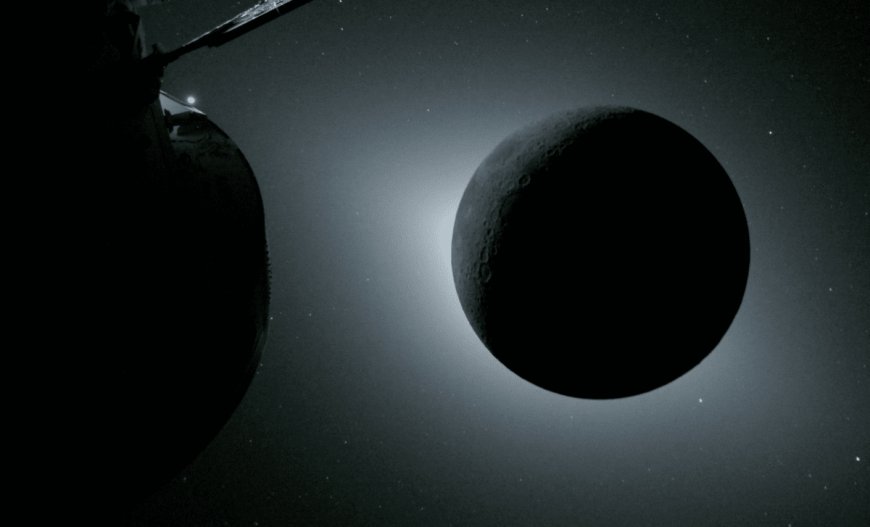
The Artemis 2 astronauts were treated to a stunning view of the total solar eclipse, one that very few on Earth will ever experience. As the Orion spacecraft curved behind the moon, it placed the crew in an ideal position to witness the sun being blocked out by the lunar surface. NASA astronaut Victor Glover described the moment as “unreal” as the sun vanished behind the moon’s disk. What followed was an awe-inspiring spectacle: the solar corona remained visible, creating a glowing halo around the moon. This halo effect, though common during a solar eclipse, appeared even more pronounced from space.
Glover, in a moment of wonder, expressed the surreal beauty of the event:
“This continues to be unreal. The sun has gone behind the moon and the corona is still visible. It’s bright and creates a halo almost around the entire moon.”

Image credit: NASA
Earthshine and the Return of Light: A Rare Phenomenon
As the eclipse continued, the crew was able to observe another rare phenomenon, earthshine. When the sun’s light disappeared behind the moon, the astronauts saw the subtle glow of sunlight reflected off Earth’s surface. This effect, known as earthshine, illuminated the moon’s surface in a faint but beautiful way. Glover explained the experience:
“When you get to the Earth side, the earthshine has already shown… almost seconds after the sun sets behind the moon, you can see earthshine.”
The sight of the moon’s darkened side glowing softly from the reflection of Earth’s light was a reminder of the interconnectedness of our planet and the vast cosmos.
For the astronauts aboard Artemis 2, these moments highlighted the uniqueness of their mission. It was a reminder of the beauty that space exploration can uncover, giving humans a rare opportunity to witness the wonders of the universe in a way that has never been possible before.
Artemis 2: A Historic Mission and Record-Breaking Milestone
The total solar eclipse observed by Artemis 2 is just one chapter in this historic mission. Artemis 2 is the first crewed journey to the moon since Apollo 17, marking a milestone in NASA’s return to deep space exploration. This mission is also the first to fly beyond low Earth orbit in over 50 years, breaking records for human spaceflight distance. The crew’s ability to observe the eclipse from such an extraordinary vantage point underscores the significance of this mission, which aims to set the stage for future lunar exploration and, ultimately, human missions to Mars.
As Artemis 2 makes its way back to Earth, the astronauts are expected to splash down off the coast of San Diego on April 10, 2026. This return marks the conclusion of a mission that has already advanced the cause of human spaceflight and deepened our understanding of the universe.
A Historical Perspective: Solar Eclipses from Space
While the Artemis 2 crew’s eclipse viewing was a rare event, it is not entirely without precedent. Apollo astronauts who orbited the moon during their missions also had the opportunity to witness solar eclipses from lunar orbits. However, Artemis 2 offers an entirely new perspective, with its crew flying around the far side of the moon rather than orbiting it. This difference in trajectory allowed the astronauts to experience the eclipse in a way that no Apollo astronaut could.
According to NASA’s Kelsey Young, Artemis science flight operations lead, “The eclipse is a beautiful reminder of the uncharted territory Artemis 2 is exploring.” The experience has provided valuable data about the effects of space weather and how these cosmic events interact with spacecraft.
Enjoyed this article? Subscribe to our free newsletter for engaging stories, exclusive content, and the latest news.
What's Your Reaction?
 Like
0
Like
0
 Dislike
0
Dislike
0
 Love
0
Love
0
 Funny
0
Funny
0
 Angry
0
Angry
0
 Sad
0
Sad
0
 Wow
0
Wow
0