



























Astronauts Are Taking 10-Year-Old Cameras to the Moon, Here’s Why New Tech Didn’t Make the Cut

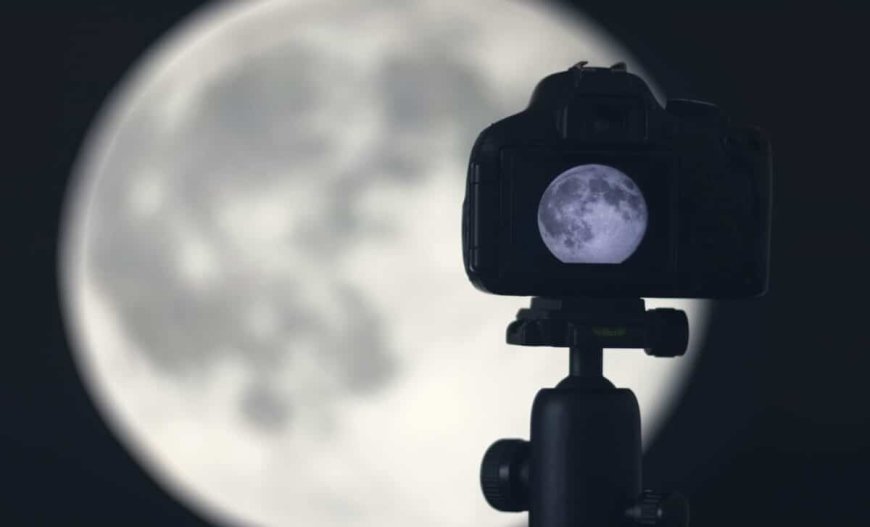
In an unexpected choice, NASA’s Artemis II astronauts will use Nikon D5 DSLRs, first released in 2016, to document their historic mission around the Moon. These cameras, while not the latest on the market, were selected for their reliability and performance in the extreme conditions of space. As the Artemis II mission gets ready for launch, astronauts Reid Wiseman, Victor Glover, Christina Koch, and Jeremy Hansen will be the first humans to travel further from Earth than anyone before them.
The Unusual Choice of Vintage Gear
The decision to fly with decade-old technology might raise eyebrows in an era of rapid advancement, but according to PetaPixel, the choice of the Nikon D5 was far from accidental. The space agency tells PetaPixel that these particular cameras have been “flight-qualified” for the unique demands of deep space exploration, a designation that involves extensive testing that newer models simply haven’t undergone.
The astronaut team recently participated in a “photo-TV” session featured on the NASA Artemis Facebook page, where Wiseman demonstrated the crew’s “old-school” D5 setup. The full-frame, 20.8-megapixel camera will be equipped with both wide-angle and telephoto lenses to document the mission from multiple perspectives.
The International Space Station, by contrast, already has access to newer Nikon Z9 mirrorless cameras. The same source explained that future Artemis missions will incorporate next-generation camera systems currently undergoing spaceflight qualifications, suggesting that Artemis II sits in a transitional period for space photography technology.

Why the D5 Excels Where Newer Cameras Might Fail
Charles Boyer of Florida Media Now notes that the D5’s selection wasn’t merely about what was available; the camera possesses specific technical qualities that make it uniquely suited for the brutal environment of deep space. Its low-noise performance and high dynamic range allow it to handle the stark contrast between sunlit spacecraft surfaces and the profound shadows cast in the vacuum beyond Earth’s atmosphere.
Perhaps most critically for a mission leaving the protective bubble of low Earth orbit, the D5 has demonstrated strong resistance to radiation effects. According to Boyer:
“Just as critical for a deep-space mission, the D5 has shown strong resistance to radiation effects, helping ensure reliable operation beyond low Earth orbit where exposure levels are significantly higher. Still, it is an old camera by today’s standards,” quoted PetaPixel.
The camera caused a stir upon its release for an almost absurdly high ISO range extending to 3,280,000. For comparison, the Nikon Z9 tops out at 102,400, and even after processing, the old DSLR reportedly still delivers cleaner images at extreme sensitivities than its modern counterpart. As the crew travels through the darkness of space, they’ll likely need every bit of that light-gathering capability.
Enjoyed this article? Subscribe to our free newsletter for engaging stories, exclusive content, and the latest news.
What's Your Reaction?
 Like
0
Like
0
 Dislike
0
Dislike
0
 Love
0
Love
0
 Funny
0
Funny
0
 Angry
0
Angry
0
 Sad
0
Sad
0
 Wow
0
Wow
0