

























Archaeologists Uncover 1,000-Year-Old Gold-Filled Tomb on the Central American Isthmus

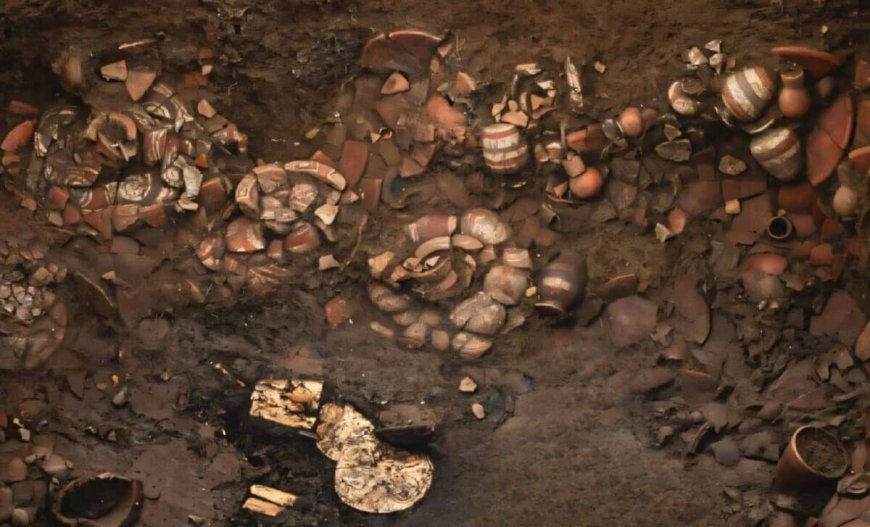
Archaeologists have discovered a tomb constructed more than 1,000 years ago containing human remains accompanied by gold jewellery and ceramic offerings, the latest find from two decades of excavations at Panama’s El Caño site.
Lead researcher Julia Mayo told AFP on Feb. 20 that the tomb was built between 800 and 1000 AD. The skeletal remains were found surrounded by gold objects and pottery decorated with traditional motifs, indicating the individuals buried there held high rank in their society.
“The individual with the gold was the one with the highest social status in the group,” Mayo said.

That body was wearing two bracelets, two pectorals and two earrings. The pectoral jewellery features depictions of bats and crocodiles, animals that held symbolic significance for the region’s pre-Hispanic cultures.
The tomb is located at El Caño in the Natá district, approximately 200 kilometers southwest of Panama City. The site has been under excavation for 20 years and contains burial grounds used for approximately 200 years by the societies that inhabited central Panama between the eighth and 11th centuries.
Nine other tombs similar to the one announced Friday have been excavated at the site previously, according to Mayo.
Burial Practices Indicate Status Retention After Death
Panama’s Ministry of Culture said the discovery is “of great importance for Panamanian archaeology and the study of pre-Hispanic societies of the Central American isthmus.” The ministry stated the finds will provide information about social organization, political power, exchange networks and ritual practices of these societies.

According to experts involved in the excavation, the burial customs suggest these societies viewed death not as an end but as a transition to another phase where social status remained important. The placement of valuable goods alongside high-ranking individuals indicates expectations about continued status or needs after death.
El Caño is associated with cultures that developed in the region before European contact in 1492. The site has produced multiple elite burials over the two decades of excavation, allowing researchers to compare burial practices across individuals and over time.
Goldwork Shows Technical and Symbolic Sophistication
The gold objects recovered include pectorals, bracelets and earrings. The pectorals depicting bats and crocodiles are consistent with iconography found elsewhere in the region from the same period, showing shared symbolic systems across pre-Hispanic societies in what is now Panama.

Goldworking in pre-Hispanic Central America required specialized knowledge of metallurgy and access to trade networks for raw materials. The concentration of gold objects in specific burials supports the interpretation that access to these materials and the artisans who worked them was restricted to high-status individuals.
Ceramic vessels found in the tomb are decorated with traditional motifs that may help researchers establish more precise dates for the burial and potentially identify cultural connections with other sites in the region.
Excavation Continues with Additional Tombs Documented
Mayo confirmed that multiple burials have been identified at El Caño, with nine other tombs showing similar characteristics already excavated. The ongoing work at the site continues to produce material for analysis.
The research team has not released a timeline for complete excavation of the most recently announced tomb or for publication of detailed findings in peer-reviewed journals. Laboratory analysis of materials recovered from the site will be required to confirm dates and determine the composition of metal objects.
The El Caño project represents one of the longest-running archaeological investigations in Panama. The accumulation of data over 20 years allows researchers to place individual finds within a documented sequence of burials and material culture from the region.
The Ministry of Culture’s statement emphasized the value of the discovery for understanding pre-Hispanic societies but did not announce additional funding or expanded excavation plans.
Enjoyed this article? Subscribe to our free newsletter for engaging stories, exclusive content, and the latest news.
What's Your Reaction?
 Like
0
Like
0
 Dislike
0
Dislike
0
 Love
0
Love
0
 Funny
0
Funny
0
 Angry
0
Angry
0
 Sad
0
Sad
0
 Wow
0
Wow
0