



























A Rare Aurora Borealis Phenomenon Captured in Stunning Detail

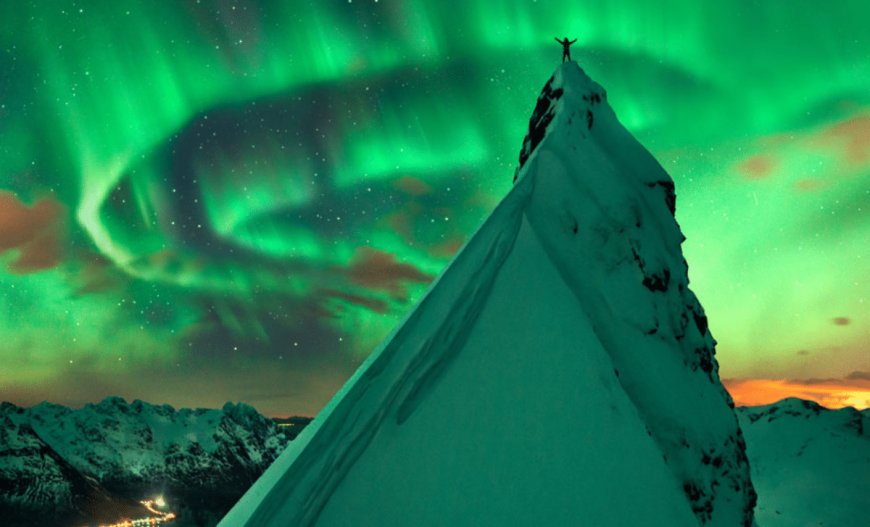
Auroras are some of the most mesmerizing natural phenomena on Earth, captivating observers with their otherworldly beauty and vibrant colors. The Astronomy Picture of the Day (APOD) for February 10, 2026, features one such breathtaking spectacle. Captured by Max Rive, this image showcases a brilliant aurora illuminating the night sky over the Lofoten islands in northern Norway.
The Mystery Behind Auroras
Auroras, often referred to as the Northern Lights in the northern hemisphere, are caused by the interaction between the Earth’s magnetosphere and solar wind. When charged particles from the Sun collide with atoms in the Earth’s atmosphere, they release energy in the form of light. This process is known as “ionization,” and it creates the vivid colors of the aurora that we see in the sky. The colors produced by auroras depend on which gases are present in the atmosphere. Oxygen, for example, produces green and red auroras, while nitrogen can create purple and blue hues.
The science behind auroras is directly tied to solar activity. As the Sun undergoes its 11-year solar cycle, it reaches periods of increased solar activity known as solar maximum. During these times, the Sun emits higher levels of solar wind, which can result in stronger and more frequent auroras. The spectacular display featured in the APOD image was captured during such a period of heightened solar activity, emphasizing the connection between the Sun’s behavior and these stunning light shows in the sky.

The Role of Solar Maximum in Aurora Formation
In the 11-year solar cycle, the Sun’s magnetic activity fluctuates between minimum and maximum. At solar maximum, the Sun’s magnetic poles reverse, and the Sun’s surface is marked by intense sunspots, solar flares, and increased solar wind. This heightened solar wind interacts with the Earth’s magnetosphere, creating geomagnetic storms that give rise to auroras. During solar maximum, auroras become more intense and can even be seen at lower latitudes than usual. The 2014 aurora in the APOD photo occurred just as the Sun was nearing its solar maximum, making it a prime time for witnessing such a dazzling display.
This solar activity affects not only auroras on Earth but also can influence satellite communications, power grids, and even GPS systems. As the Sun moves through its cycle, scientists monitor its activity to predict the intensity and frequency of auroras and to prepare for potential disruptions in technology.
Capturing the Aurora: Patience, Timing, and Technique
Capturing an aurora like the one featured in Max Rive’s photograph requires a blend of patience, experience, and the right timing. For several nights, Rive waited for the perfect conditions to photograph the aurora. Despite clouds obscuring the sky, he remained hopeful and determined, knowing that the payoff would be worth it. On the third night, the sky cleared, revealing a spectacular auroral display in all its glory.
The image was taken on the peaks of Austnesfjorden, a fjord near the town of Svolvear on the Lofoten islands in northern Norway. This region is well known for its stunning landscapes and serves as a prime location for aurora hunting. The photograph was captured as a composite image from three separate exposures, allowing Rive to blend the best elements of each shot into one breathtaking final image.
For photographers and nature enthusiasts alike, the process of capturing an aurora is not as simple as pointing a camera at the sky and clicking the shutter. The aurora’s movement is unpredictable, and the weather must cooperate. It can take days or even weeks to get the perfect shot, requiring both determination and skill.
Enjoyed this article? Subscribe to our free newsletter for engaging stories, exclusive content, and the latest news.
What's Your Reaction?
 Like
0
Like
0
 Dislike
0
Dislike
0
 Love
0
Love
0
 Funny
0
Funny
0
 Angry
0
Angry
0
 Sad
0
Sad
0
 Wow
0
Wow
0