





















A Massive 27-Ton Sealed Black Sarcophagus Was Finally Opened in Egypt. Here’s What Archaeologists Found Inside

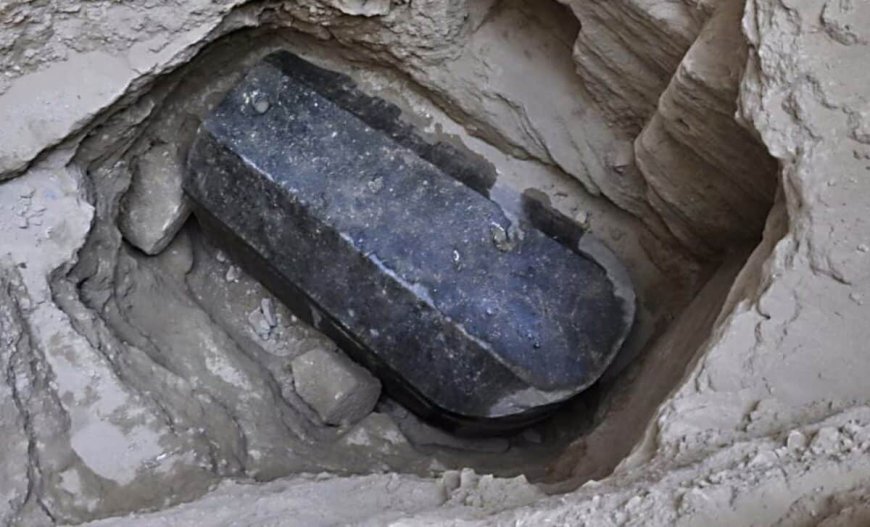
Archaeologists in Egypt have opened a massive black granite sarcophagus discovered in Alexandria, ending weeks of speculation about what might lie inside. Instead of a legendary ruler or a mysterious curse, the tomb revealed three skeletons submerged in foul-smelling liquid. The unusual discovery was examined to determine who the individuals were and how they died.
The sarcophagus was uncovered during construction work in the Egyptian city of Alexandria and quickly drew global attention. Its size, condition, and the fact that it had remained sealed for roughly two millennia fueled intense curiosity among historians and the public alike.
Rumors spread rapidly after the discovery. Some speculated the tomb could contain the remains of Alexander the Great, while others raised concerns about a mythical “pharaoh’s curse.” Archaeologists eventually moved forward with a carefully monitored opening to determine the truth behind the sealed monument.
The Opening of a 27-Ton Granite Tomb
The enormous black sarcophagus measures nearly three meters in length and abouttwo meters in height, making it one of the largest intact examples ever discovered. According to reporting from BBC News, the structure weighs roughly 27 tonnes and is believed to date from the early Ptolemaic period, which began in 323 BC after the death of Alexander the Great.
Archaeologists approached the opening cautiously. When the lid was first lifted by only five centimeters, a powerful odor immediately forced the team to step back from the site. The tomb was eventually opened fully with assistance from Egyptian military engineers, allowing researchers to examine its contents more closely.

Three Skeletons Found In Contaminated Water
Inside the sarcophagus, archaeologists discovered three skeletons immersed in red-brown sewage water that produced what witnesses described as an unbearable smell. According to Mostafa Waziri, secretary-general of Egypt’s Supreme Council of Antiquities:
“We found the bones of three people, in what looks like a family burial… Unfortunately the mummies inside were not in the best condition and only the bones remain,” Waziri explained, adding that only skeletal remains were preserved.
Based on the information relayed by the same source, one of the skulls shows cracks that may indicate an arrow injury, suggesting that at least one individual might have died violently.
Researchers believe the individuals could have been soldiers from the ancient Egyptian army, though further examination will be required to confirm their identities.

Mummy Curse Ruled Out
The discovery also revived long-standing public fascination with the idea of a mummy’s curse, a belief that disturbing ancient tombs might unleash misfortune or disease. The terrible smell released when the tomb was first opened only added to the speculation.
Officials were quick to downplay such fears. As explained by BBC News, Waziri addressed the rumors directly, noting humorously that the world had not plunged into darkness after the sarcophagus was opened.
“I was the first to put my whole head inside the sarcophagus… and here I stand before you … I am fine.”
A report cited by National Geographic noted that there is no confirmed case of archaeologists or visitors suffering serious illness due to bacteria or mold inside ancient burial chambers.
Archaeologists hope the bones and accompanying artifacts, including an alabaster bust found near the tomb, may provide clues about the identities and lives of the three individuals buried inside this massive stone coffin.
Enjoyed this article? Subscribe to our free newsletter for engaging stories, exclusive content, and the latest news.
What's Your Reaction?
 Like
0
Like
0
 Dislike
0
Dislike
0
 Love
0
Love
0
 Funny
0
Funny
0
 Angry
0
Angry
0
 Sad
0
Sad
0
 Wow
0
Wow
0