




























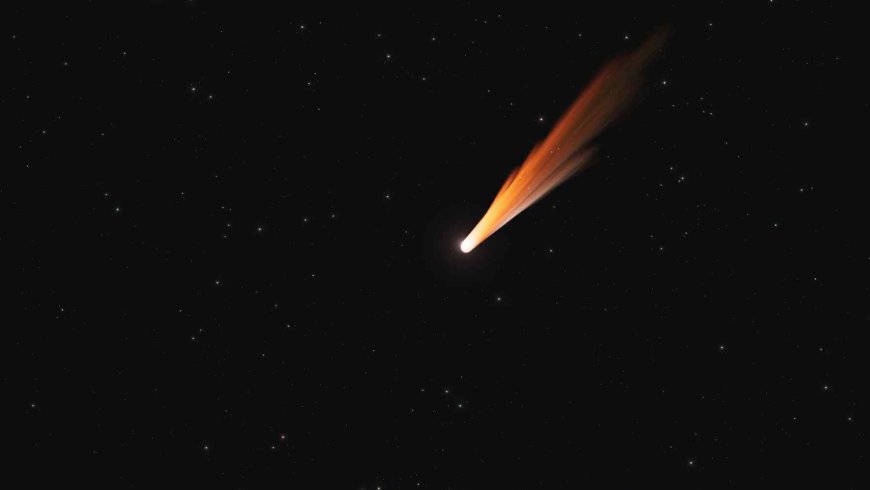
A fireball streaked across Texas, and now another is passing over Europe, waking five countries and drawing astronomers’ attention

Space has been thrust back into the public’s eye in recent months.
The world has been enamored by the recent Artemis II mission that saw humans heading to the moon for the first time in 50 years. But a recent missed “fireball” in Europe has raised questions over our ability to track asteroids before they hit our planet.
How could the ESA and NASA miss this latest cosmic visitor from space?
How occasional asteroids make it past our space defenses
While mankind’s planetary defense systems have improved dramatically over the last few decades, we can make the odd mistake.
NASA and the ESA have spent billions on systems that allow us to track asteroids as they navigate the cosmos, giving us time to prepare should one head our way. But even our best technology still has a few issues to sort out.
The most significant challenge in tracking asteroids comes from what are known as solar glare blind spots.
That is the fact that ground-based telescopes require darkness to gaze upon the sky. This means that any asteroid approaching the Earth from the Sun’s direction is hidden by our star’s intense glare.
This allows some asteroids to sneak through our best defences and, on occasion, land on Earth.
Space exploration has been catapulted back into the public’s attention
The Cold War was the main driver behind the U.S. dominating the global space race.
The Apollo missions were a landmark achievement for mankind as humans set foot on the Moon for the first time in our long history. Many of us can still remember the footage of Neil Armstrong and his colleagues landing on the “cheese-like” celestial body of rock.
The Artemis II mission successfully launched recently and will continue on its path to slingshot around the moon over the coming days.
NASA has noted that the astronauts on board will undergo tests to better understand what prolonged space flight does to our minds and bodies. Down here on Earth, recent meteorites have passed through our atmosphere to land on some people’s homes.
The James Webb and Hubble space telescopes have enabled us to study the universe in great detail.
Such as the recent discovery of how the universe’s first stars died billions of years ago in the deepest regions of space and time. But while some researchers focus on what happened billions of years ago in deep space, others have found that some asteroids are crashing right here on our planet.
The ESA recently detected yet another asteroid that managed to crash land on Earth.
More and more asteroids are making their way to us here on Earth
Thousands around the Texas area saw the last asteroid that managed to pass through our atmosphere unexpectedly.
It landed in the bedroom of one family in Houston, as reported by several local news outlets. But another made its way to Europe in March, and almost nobody saw it coming. This particular asteroid was detected by the ESA on March 8 and was observed in as many as five European nations.
The latest fireball from space was so bright that it could be seen across many nations in Europe.
The ESA is utilizing its planetary Defence team to analyze the fireball’s trajectory and determine whether it was a small asteroid or merely a piece of space debris. We know that asteroids contain the building blocks for life, but this one made it past our best efforts to land somewhere in Europe.
No injuries were reported, and the asteroid has not yet been found.
But the development proves that at any moment, we may get another cosmic fireball that could secretly make it past our planetary defenses and crash land in any nation across the world.
What's Your Reaction?
 Like
0
Like
0
 Dislike
0
Dislike
0
 Love
0
Love
0
 Funny
0
Funny
0
 Angry
0
Angry
0
 Sad
0
Sad
0
 Wow
0
Wow
0