


























8,000-Year-Old Indus Valley Civilisation May Be Older Than Egypt’s Earliest Pharaohs

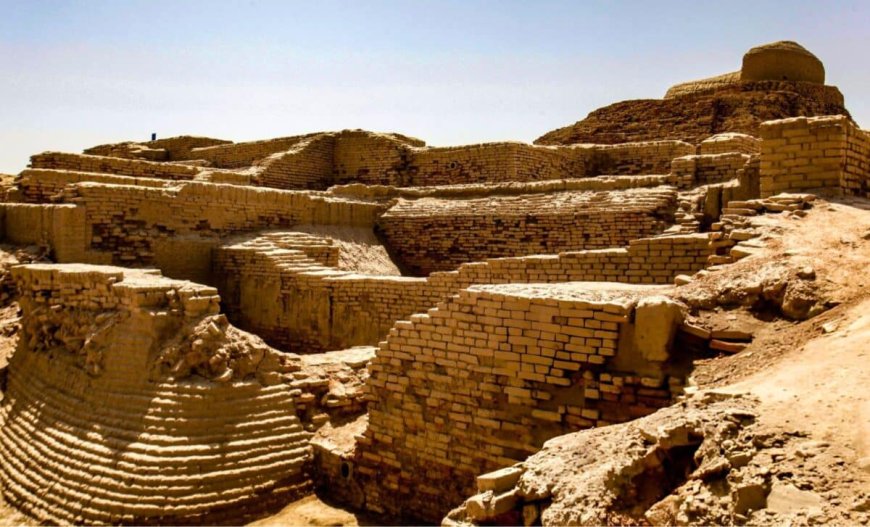
For decades, the dominant explanation for the collapse of the Bronze Age Harappan civilisation centred on climate change: a weakening of the monsoon rains that sustained its great cities. New evidence from an archaeological site in northwest India now suggests that narrative is wrong.
Researchers who analysed oxygen isotopes in animal teeth and bones recovered from a single excavation trench at Bhirrana, in the state of Haryana, have constructed a continuous 5,000-year record of monsoon variability at the settlement itself. Their findings, published in Scientific Reports, show that while the monsoon did weaken after about 7,000 years ago, the civilisation did not collapse as a direct result. Instead, its inhabitants adapted, shifting their agricultural practices in ways that gradually transformed their society.

The study resolves a long-standing problem in archaeology: previous climate reconstructions relied on evidence from locations far from Harappan settlements, such as lake sediments in the Thar desert or foraminifera in Arabian Sea cores. Those records could not establish whether climate change and cultural decline were synchronous at the sites where people actually lived. The Bhirrana trench, preserving all cultural levels of the civilisation, provides the first direct comparison.
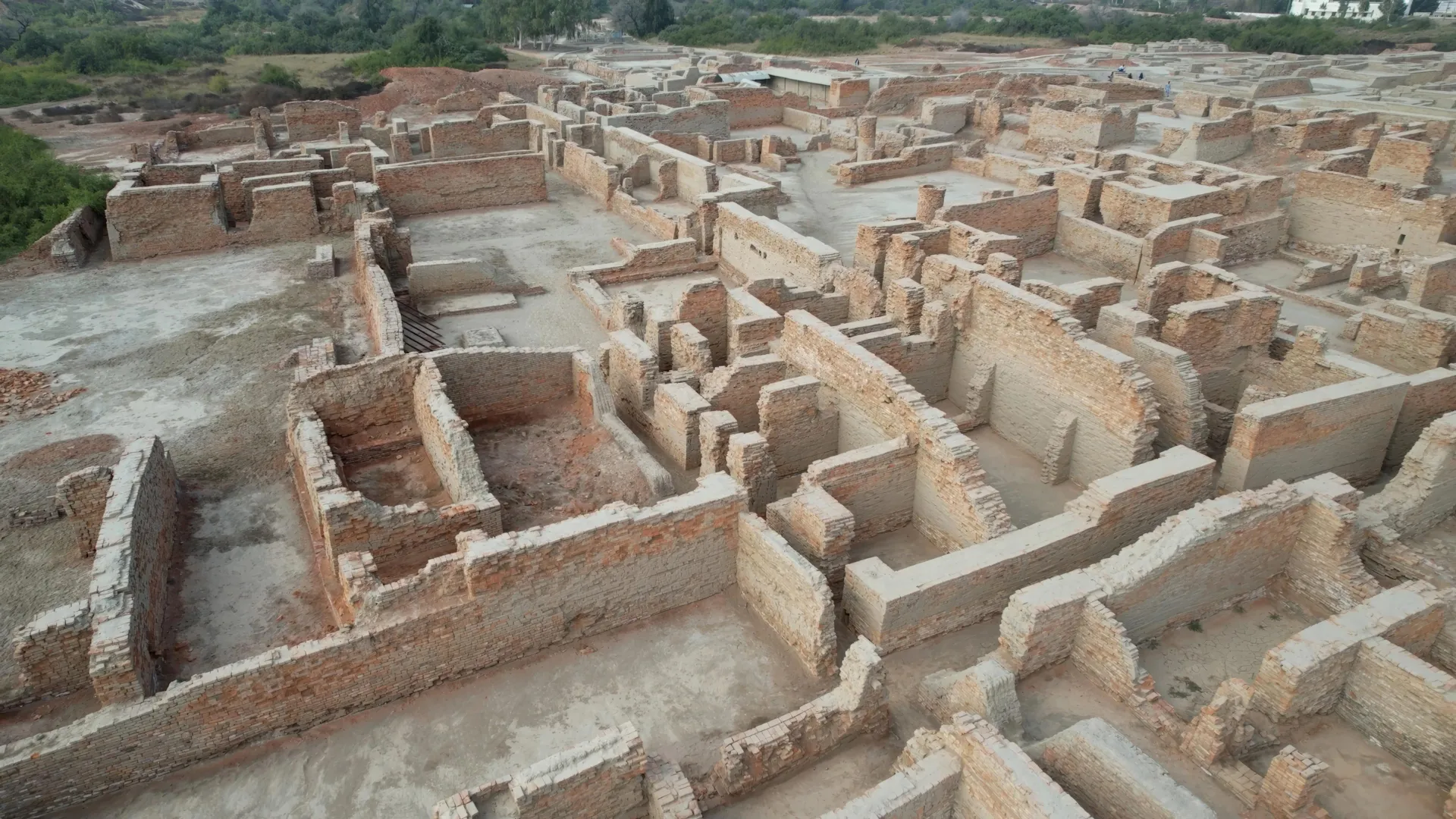
Bhirrana itself turns out to be significantly older than previously understood. The earliest occupation level, characterised by Hakra ware ceramics, has provided mean radiocarbon dates of approximately 8,350 years before present. Optically stimulated luminescence dating of pottery from the trench, conducted for the study, confirms that the settlement was occupied continuously from before 8,000 years ago through to about 2,800 years ago. That makes Bhirrana one of the oldest known Harappan sites in the Indian subcontinent, its origins predating the era of Egypt’s first pharaohs by several millennia.
Why This Ancient Civilisation Vanished
The oxygen isotope record from animal teeth and bones functions as a proxy for the composition of meteoric water the animals drank, which in turn reflects monsoon intensity. The Bhirrana data show that the pre-Harappan inhabitants settled the area when the Ghaggar-Hakra river system, now largely dry, was fed by an intensified monsoon between about 9,000 and 7,000 years ago. After 7,000 years ago, the monsoon entered a long, monotonic decline.

Yet the settlements did not disappear. The site shows continuous occupation through the Early Harappan phase (approximately 8,000 to 6,500 years ago), the Early Mature Harappan (6,500 to 5,000 years ago), and the Mature Harappan (5,000 to 2,800 years ago). The urban phase of the civilisation, with its planned cities, standardised weights, and extensive trade networks, flourished during a period of weakening monsoon.
“If climate change was the primary cause of collapse, you would expect to see a relatively abrupt cultural shift coinciding with a major isotopic shift,” the researchers state in their paper. “The data do not show that.”
Instead, the archaeological evidence from Bhirrana and other sites points to a different mechanism. During the late Harappan phase, settlements shifted from water-intensive crops such as wheat and barley to more drought-resistant varieties including millets and rice. That change in subsistence strategy reduced the need for large centralised storage facilities and dense urban centres. Populations dispersed into smaller settlements rather than collapsing outright.
A Civilisation Older than Assumed
The Times of India reported on the findings this week, noting that the revised chronology places the roots of the civilisation well before the emergence of Egypt’s first pharaohs. The newspaper’s coverage, published February 25 2026, draws on the same Scientific Reports study and on carbon dating of pottery fragments and animal bones from deep settlement layers at Bhirrana.
At its peak, the Indus civilisation may have supported more than five million people across a territory stretching from the Arabian Sea toward the Ganges basin. Its cities featured grid-pattern streets, covered drainage systems, and wells serving individual homes. Its craftspeople produced drilled gemstone beads, standardised stone weights, copper and bronze tools, and intricately carved seals bearing a script that remains undeciphered. The absence of large temples or conspicuous royal palaces suggests a form of political organisation different from that of contemporary Egypt or Mesopotamia.
The new climate data help explain how such a civilisation could persist through environmental change. The monsoon decline after 7,000 years ago was not a sudden drought event but a gradual process spanning millennia. That gave human populations time to adapt, which they did by modifying their agricultural base. The late Harappan dispersal into smaller settlements represents not a failure of adaptation but a successful response to changing conditions.
The research team analysed faunal remains from the Bhirrana trench identified to species level, including domestic cattle, buffalo, goat and sheep from the earliest levels, as well as wild fauna such as nilgai, spotted deer and antelope that supplemented the diet. The oxygen isotope measurements were performed on bulk tooth and bone phosphates from mandibular and maxillary molar teeth of cattle, goat, deer and antelope, and from rib and vertebra bones, after electron microprobe investigation confirmed preservation of original bioapatite suitable for isotopic analysis.
The pottery fragments dated by optically stimulated luminescence—one from the mature Harappan level at 42 centimetres depth, yielding an age of 4,800 years, and one from the early mature Harappan level at 143 centimetres depth, yielding an age of 5,900 years—confirm the stratigraphic integrity of the trench and the antiquity of the occupation sequence.
Enjoyed this article? Subscribe to our free newsletter for engaging stories, exclusive content, and the latest news.
What's Your Reaction?
 Like
0
Like
0
 Dislike
0
Dislike
0
 Love
0
Love
0
 Funny
0
Funny
0
 Angry
0
Angry
0
 Sad
0
Sad
0
 Wow
0
Wow
0