



























120,000 Tons with 88 Combat Drones: Meet China’s ‘Luanniao’ Space-Aircraft Carrier Built to Fly Above Air Defenses


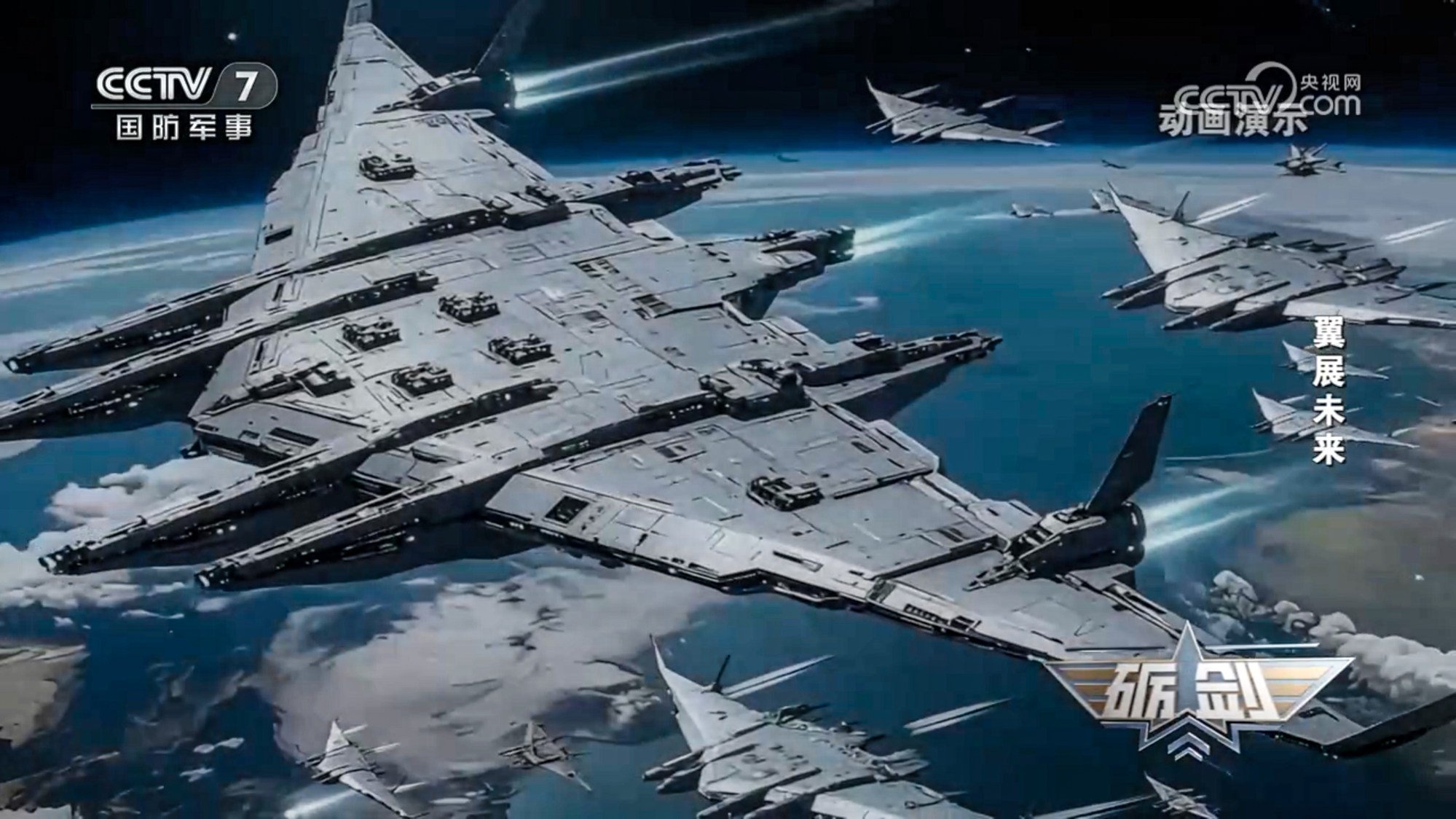
A flat grey triangle has started showing up in discussions of China’s next military aviation ideas, looking less like an aircraft and more like a moving base. The concept is called Luanniao, and it is presented as a near-space aircraft carrier meant to stay high above weather, patrol zones, and most interceptors. The pitch is easy to grasp: keep the platform out of reach, then launch combat aircraft from above.
The triangle is framed as part of the Nantianmen Project, a broader portfolio of future systems linked to the Aviation Industry Corporation of China (AVIC). In that framing, altitude is the primary defense, with the craft described as operating beyond the reach of today’s surface-to-air missiles. The result is a concept that reads like a strategy diagram turned into a vehicle.
What made the idea travel is not a leaked prototype photo but a set of published specifications that sound more like shipbuilding than aviation. The deeper you go into those numbers, the more the story stops being about sleek shapes and becomes a question of energy, thrust, and sustained flight in thin air.
The “Flying Aircraft Carrier” Claim Starts with Size
The concept’s specs are unusually specific: 242 meters long and 684 meters wide, with a maximum takeoff weight of up to 120,000 tonnes. Those figures are why the phrase “flying aircraft carrier” follows the concept wherever it appears. The platform is described as a strategic asset, not a tactical aircraft.
In reporting by The Nation Thailand, the craft is described as designed to operate above existing air defenses, effectively functioning as an airborne base. The same account frames it as a long-horizon concept rather than a near-term aircraft program. That timeline matters because it positions the vehicle as an ambition and a message as much as an engineering deliverable.
The concept is also tied to geographic flashpoints, including Taiwan and the South China Sea. That detail gives the altitude claim a practical use case: the platform is pitched as something that could be positioned directly over areas where overhead presence has military and political value. It turns the design from an abstract “future aircraft” into a specific kind of hovering leverage.
Luanniao’s Payload Is a Precise Number: 88 Stealth Drones
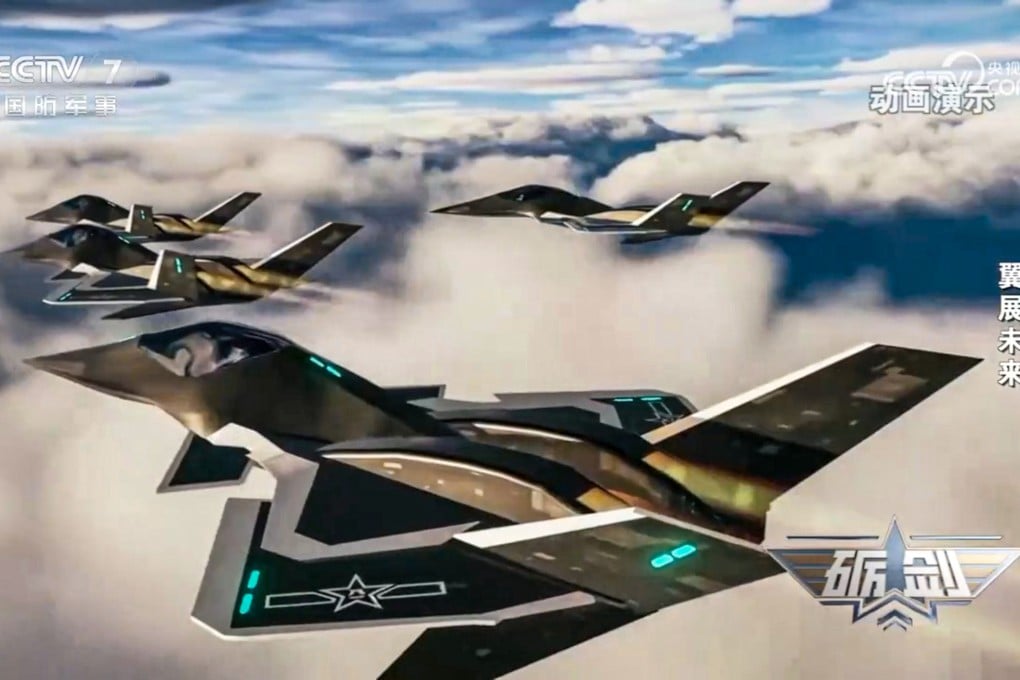
The most concrete operational detail is what Luanniao is supposed to carry and release. Public descriptions say it would launch 88 unmanned fighters, named Xuan Nu, described as stealthy and capable of carrying hypersonic missiles. That’s a distinctly modern threat package, built around volume, autonomy, and compressed warning time.
The logic implied by the concept is a separation of roles. Luanniao is depicted as the stable high-altitude host while its drones become the maneuvering edge. That helps explain why the craft is framed as a carrier rather than a bomber. The main weapon is not a single payload, but a sustained ability to launch many aircraft from a location that is difficult to challenge.
The Nation Thailand report also includes a conditional statement that captures the design’s intended advantage. Defense expert Peter Layton is quoted saying: “if successfully built, the craft would sit beyond the reach of almost all surface-to-air missiles, because it would operate outside the limits of weather and most existing defence systems.” The phrase “if successfully built” is the hinge, because the promise depends on a platform that can actually remain at that altitude for long periods.
The Thrust Math Is Where the Concept Meets Physics
Once the platform’s mass is taken literally, the dominant question becomes energy and sustained thrust. A summary published by Indian Defence Review describes the implied lift requirement at roughly 340 meganewtons of sustained thrust. It is the kind of number that forces comparisons, because there is no clear aviation parallel at this scale.
The same analysis reaches for a familiar benchmark: the Pratt & Whitney F135 engine that powers the F-35, listed there at about 191 kilonewtons of thrust. On that basis, it states a platform at Luanniao scale would require more than 1,700 F135-class engines operating at once. Even as an illustrative comparison, it highlights the propulsion gulf the concept creates.
To underline how far outside normal aviation the concept sits, the same source compares it with the Antonov An-225 Mriya at about 640 tons and notes the carrier concept would require scaling by nearly 200 times. It also uses rocket thrust as a yardstick while pointing to the difference between short bursts and sustained flight. The comparisons do not decide feasibility, but they show why the concept becomes controversial the moment engineers start counting.
Nantianmen Becomes a Public Attraction Before It Becomes Hardware
While Luanniao remains an image-and-specifications story, the Nantianmen label is also moving into a public-facing space with a fixed schedule. China Daily reported that a 40,000-square-meter Nantianmen-themed attraction is planned for Shanghai’s Lin-gang Special Area, built around an intellectual property launched in 2017 and expanded into lore and weapon designs. That matters because it shows Nantianmen functioning as a narrative ecosystem, not only a technical roadmap.
The same report ties the park to a hard opening date and includes a direct quote about construction progress. Zhou Yixiao, identified as general manager of the Nantianmen Project’s Shanghai base, said: “Major construction will be finished by year-end, allowing for internal testing. The public opening is fixed for August 1, 2027,” linking the franchise’s public presentation to a timeline in a way the aerospace concepts do not yet match.
That public infrastructure changes the way the story reads. A theme park does not validate a near-space carrier, but it does show the Nantianmen identity being packaged for mass public consumption. It suggests a dual track: speculative aerospace concepts on one side, and an immersive presentation pipeline on the other.
A U.S. Defense Outlet Calls It a Propaganda Risk, Not a Build Plan
A skeptical reading appears in The National Interest, which frames Nantianmen as something to watch without treating every concept image as an imminent capability. The outlet describes the program as “a bold initiative” while warning that “its cheerleaders on social media are also exaggerating what this project will do, or even if it can be achieved, as part of a wider propaganda push.” In that framing, the concept’s influence comes partly from perception, even if the hardware never arrives.
Across the sources, the public record stays narrow but specific: Luanniao is presented as a near-space carrier concept tied to the Nantianmen umbrella, described with scale, weight, payload, and a decades-long timeline. What is also on the record is that the next scheduled milestone attached to the Nantianmen name is a Shanghai opening date in 2027, not a rollout of a flying aircraft carrier.
Enjoyed this article? Subscribe to our free newsletter for engaging stories, exclusive content, and the latest news.
What's Your Reaction?
 Like
0
Like
0
 Dislike
0
Dislike
0
 Love
0
Love
0
 Funny
0
Funny
0
 Angry
0
Angry
0
 Sad
0
Sad
0
 Wow
0
Wow
0