





























Vanished Since the ’80s, a Zebra-Striped Bird with a Wild Crest Just Made a Dramatic Comeback

In January 2026, a bird not officially seen in Singapore for nearly four decades briefly returned, unannounced, unmistakable, and instantly headline-worthy. The Eurasian hoopoe, known for its bold crest and dramatic wing markings, was spotted near a temple in the eastern neighborhood of Tanjong Katong, where it remained visible for several days.
What began as a tip-off in birdwatching forums quickly escalated into a full-fledged urban wildlife event. Residents shared their yards with photographers. Ornithologists debated its origins. And online chatter ranged from delight to light sarcasm, with one Reddit user joking that the visitor was “foreign talent.”
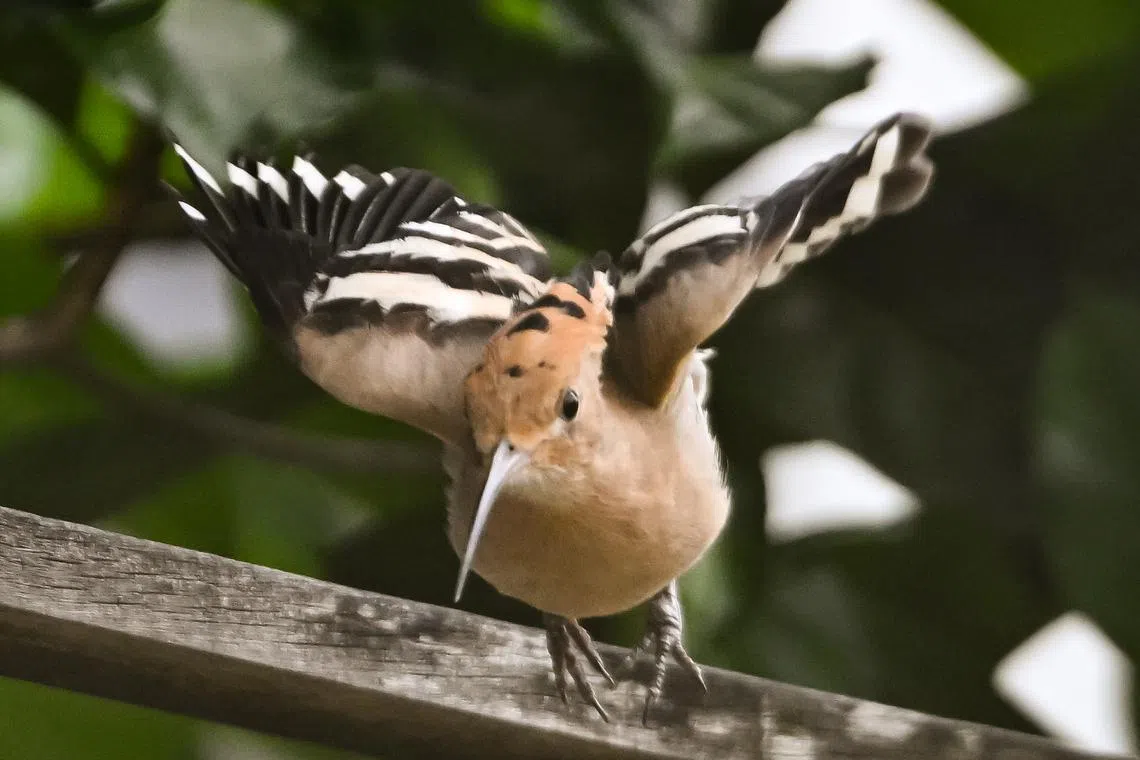
Beneath the social media buzz was a deeper ecological signal: a species last seen in Singapore in October 1987 had reappeared during a narrow window in the Asian migratory season. Whether the bird was merely lost or responding to broader environmental pressures remains unclear, but its confirmed presence reopens questions about avian movement across Southeast Asia.
First Recorded Sighting in Singapore Since 1987
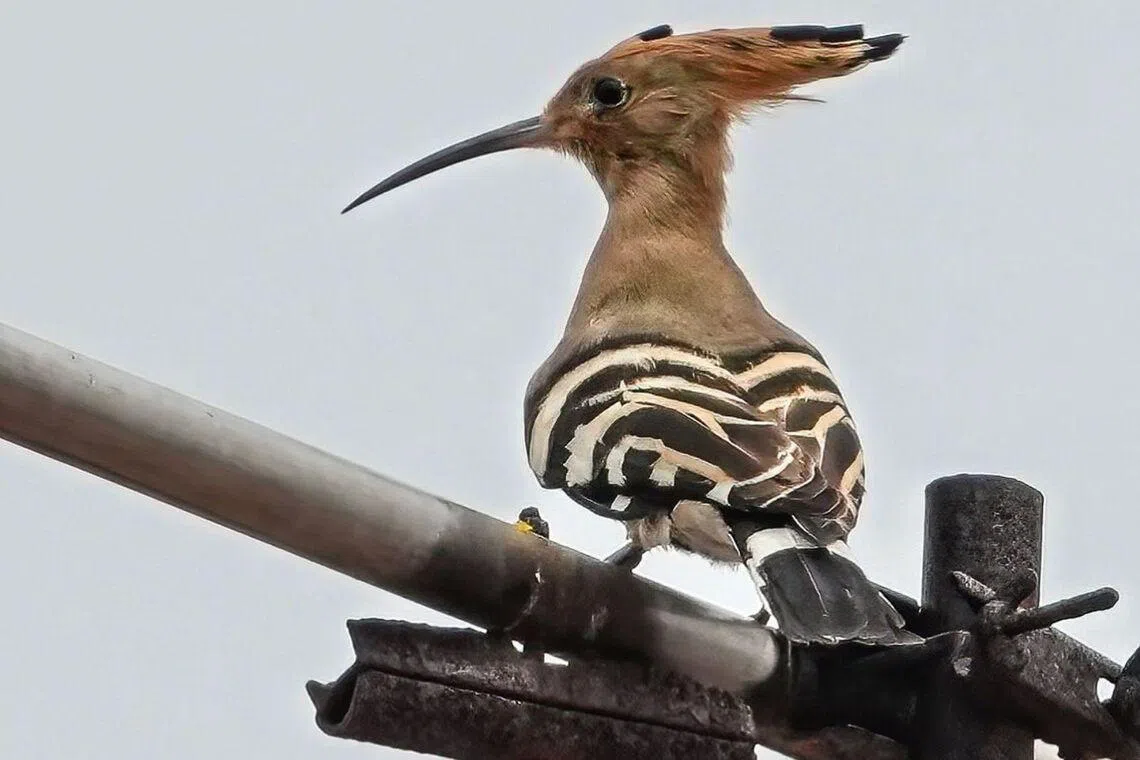
On the morning of 19 January, local wildlife photographer Andy Chew was cycling through Tanjong Katong after hearing reports in a birdwatching chat group. At around 10 a.m., near the Katong Gurdwara Sikh Temple, he noticed a bird fly into a tree. “It was a sight to behold,” Chew said, recalling the long, down-curved bill, zebra-striped wings, and distinctive crest.
The bird was later observed again perched in a mango tree in the compound of a private residence, where homeowners allowed birdwatchers to enter for a closer view. Multiple observers documented the bird and submitted reports to the Bird Society of Singapore, which formally logged the sighting as the first confirmed occurrence in nearly 40 years.
Coverage in The Cool Down corroborated the timeline and emphasized the rarity of the appearance, noting that the bird had not been seen in Singapore since 1987.
A Species Known for Long-Distance Movement
The Eurasian hoopoe (Upupa epops) breeds across large swathes of Europe, Asia, and North Africa, avoiding dense tropical forests, deserts, and high mountains. During the boreal winter, it migrates southward, with regular sightings in Thailand, Peninsular Malaysia, and parts of Indonesia. Its tendency to overshoot during migration has resulted in sporadic records as far as Japan, Australia, and even Alaska, as detailed in Birds of the World’s taxonomic profile.
Dr Yong Ding Li, a conservation biologist with BirdLife International Asia, said the occurrence was not entirely surprising. “Migratory birds don’t see the boundaries of countries,” he told The Straits Times, referencing how long-distance fliers can be blown hundreds of kilometers off course by wind systems or disorientation.
While the origin of the Singapore individual remains unconfirmed, the prevailing expert consensus leans toward natural migration rather than escape from captivity. Nonetheless, Richard White, chair of the Bird Society’s records committee, acknowledged both possibilities, noting that the hoopoe does appear in the caged-bird trade regionally. “Whatever the origin of this bird, it’s a very attractive and striking species, so many people have enjoyed the chance to see it locally,” he said.
Ecological Traits and Unusual Adaptations
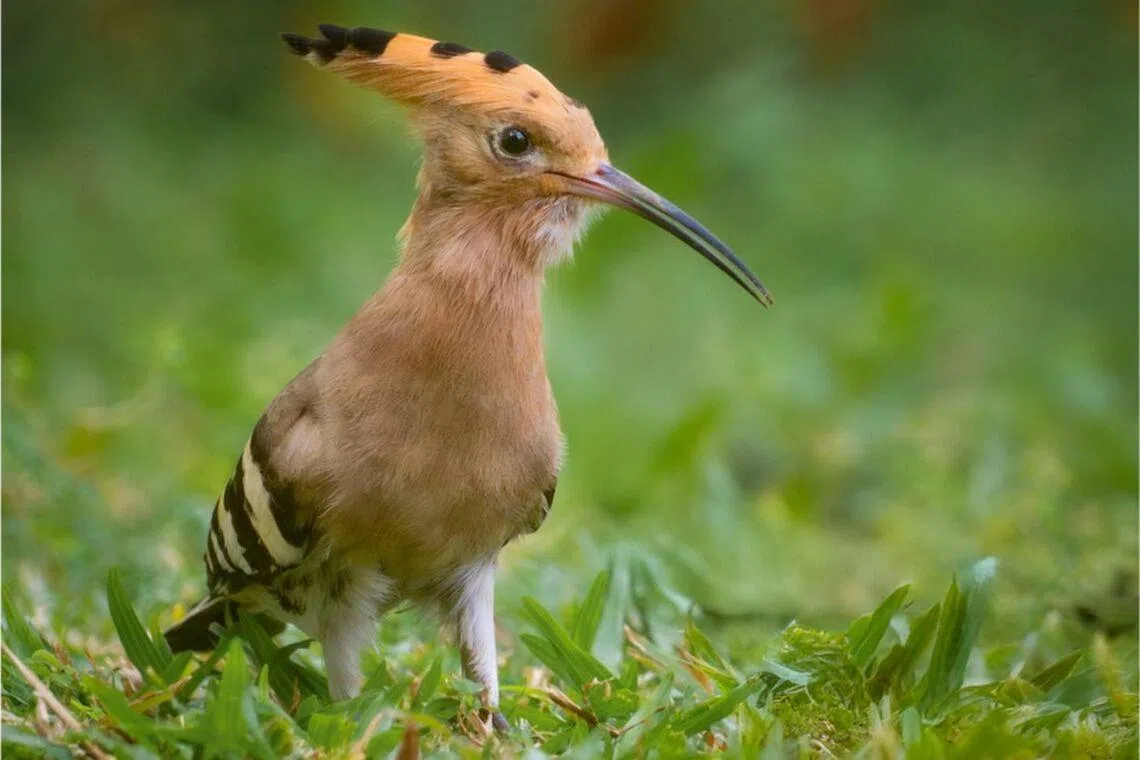
The Eurasian hoopoe’s morphology and behavior make it easy to identify and biologically distinctive. In its species overview on Ornithology.com, the bird is described as having a rufous-colored body, a fan-shaped crest, and a bill adapted for ground foraging. Its call, “oop, oop, oop”, is the source of both its scientific and common names.
The hoopoe is a secondary cavity nester, often occupying tree hollows, wall crevices, or abandoned structures. It does not build a nest, instead favoring cavities pre-lined with organic materials. A striking adaptation occurs during the breeding season: females produce a bactericidal secretion from their preen glands that coats the eggs, helping to prevent microbial infection. This secretion also produces a pungent odor, which may deter predators.

Global population estimates range between 5 and 10 million individuals, according to data cited in Birds of the World, but the species is sensitive to intensifying agriculture, loss of nesting sites, and insecticide use in parts of its range.
Rare Appearance, Broader Monitoring Value
The Tanjong Katong hoopoe joins a growing list of irregular bird sightings in Singapore, including a documented flock of Himalayan vultures in Clementi in 2025. Such occurrences may reflect shifting migratory corridors, better detection through citizen science, or a combination of both.
While no formal conservation action has been triggered by the sighting, local verification networks like the Bird Society of Singapore continue to play a key role in validating anomalous records. Experts emphasize that a single event does not indicate a trend, but rare sightings, especially of migratory species far from expected range, can provide early indicators of environmental change.
The hoopoe has since left the area, and no follow-up sightings have been recorded. Whether this bird’s journey was an isolated deviation or part of a broader regional pattern is yet to be determined. Tracking such irregular appearances will remain a priority for ornithologists as they assess species resilience and ecological signals in a changing climate.
Enjoyed this article? Subscribe to our free newsletter for engaging stories, exclusive content, and the latest news.
What's Your Reaction?
 Like
0
Like
0
 Dislike
0
Dislike
0
 Love
0
Love
0
 Funny
0
Funny
0
 Angry
0
Angry
0
 Sad
0
Sad
0
 Wow
0
Wow
0